Your first meeting with a defense lawyer should leave you knowing five things: how experienced the lawyer is with charges like yours, what the fee covers and how it is handled, what strategy and outcomes to expect, who will actually work your case, and how you will communicate going forward. The American Bar Association treats this meeting as the critical time to size up experience, so use it that way.
TL;DR:
- Ask how often the lawyer handles your charge, their trial experience, and familiarity with the assigned judge and prosecutor; reject guaranteed outcomes.
- Get the fee, included services, extra costs, payment schedule, and unused retainer refund terms in writing; ask whether advance funds remain in a client trust account.
- Ask for case strengths, weaknesses, realistic outcome ranges, and facts that could change them; confirm you decide whether to plead, waive a jury, or testify.
- Name the lawyer and primary contact who will handle your case, appear in court, and report updates; establish response times, especially for plea offers.
- Keep your account truthful and limited to facts you know; ask whether consultation communications are privileged, and avoid contacting witnesses or posting about the case.
Table of Contents
- 1. Which questions reveal real criminal defense experience?
- 2. What should you ask about fees, retainers, and trust accounts?
- 3. How should you ask about strategy and likely outcomes?
- 4. Who will handle your case, and how will you hear from them?
- 5. What should you bring, and what happens next?
- 6. What should you avoid saying in the consultation?
- 7. How do we use a consultation to judge fit?
- 8. What should you ask about diversion programs and plea agreements in Florida?
- 9. How can a defense be tailored for military personnel or special circumstances?
- Why a free consultation shouldn’t be your only filter
- Book a free consultation with The Law Office of John Vernon Moore, P.A.
- FAQ
- Sources
1. Which questions reveal real criminal defense experience?
Start with the lawyer’s practice focus. The ABA suggests asking how much of the practice is devoted to criminal defense and how long the lawyer has handled similar cases. A lawyer who splits time across several practice areas may still be excellent, but you deserve to know.
Then get specific. These questions are factual, so the answers can be checked:
- How many cases like mine have you handled?
- How many jury trials and bench trials have you actually tried?
- What happened in those cases: dismissals, acquittals, pleas, convictions?
- Have you appeared before the judge and prosecutor assigned to my case?
- Do you handle this type of charge regularly, or is it occasional work?
Familiarity with the courthouse matters more than most people expect. A lawyer who knows how a particular prosecutor negotiates, or how a judge handles pretrial motions, can set realistic expectations early. Be wary of anyone who promises results. Honest lawyers talk in ranges and likelihoods, not guarantees.
2. What should you ask about fees, retainers, and trust accounts?
Money questions feel awkward, but surprises later are worse. Ask whether the fee is flat or hourly, and which services are included versus billed separately. Engagement-letter best practices say the fee amount, rate, and terms belong in writing, and that clients should ask about retainers, payment plans, and what happens to unused funds.
- Is the fee flat or hourly, and what does it cover?
- Are motions, experts, investigators, or appeals billed separately?
- How often will I be billed, and can I set up a payment plan?
- Is my advance payment held in a client trust account?
- If the case resolves early or I change lawyers, how is the unused portion returned?
That trust account question has real ethical weight. ABA Formal Opinion guidance explains that advance fees generally must stay in a client trust account until earned, and that calling a fee “nonrefundable” does not necessarily make it earned on receipt. Rules vary by jurisdiction, so ask how this lawyer handles it.
Pro Tip: Ask for the engagement letter before you pay anything, and read the refund terms line by line.
3. How should you ask about strategy and likely outcomes?
A good consultation gives you an honest picture, not a sales pitch. The ABA recommends asking for a realistic assessment of strengths, weaknesses, and the range of possible outcomes. Push for the full range, including the worst case.
- What are the strongest and weakest parts of the state’s case?
- What outcomes are realistic: dismissal, reduced charge, plea, trial, sentence?
- Which defenses, motions, or experts would you consider, and why?
- Do you expect plea talks, diversion, or trial, and what would change that?
- What facts or evidence could shift your assessment?
Also ask who decides what. The client generally keeps authority over fundamental choices such as whether to plead, waive a jury, or testify, while the lawyer advises on tactics. Confirm when your consent is required so nothing is decided without you.
4. Who will handle your case, and how will you hear from them?
The person you meet in the consultation may not be the person who shows up in court. Ask directly:
- Will you personally manage my case and appear at every hearing?
- Will associates, paralegals, or contract counsel do any of the work?
- Who is my primary contact, and what is the typical response time?
- How often will I get updates, even when nothing dramatic has happened?
- How are urgent messages handled, such as a new court date or a plea offer?
Professional rules back you up here. Rule 1.4 of the Model Rules requires lawyers to keep clients reasonably informed, and its commentary stresses prompt communication, including quickly telling you about plea offers. Also ask how the lawyer advises clients about contact with victims and witnesses, and about social media.
5. What should you bring, and what happens next?
A prepared client gets more from a short meeting. Bring:
- Charging documents, citations, or arrest paperwork
- Police reports and court notices you have received
- Any evidence you hold, such as texts, photos, or videos
- Names and contact information for possible witnesses
- Information about any prior record
- Government-issued ID
Then ask about immediate steps. Bail, release conditions, and protective orders can all affect what happens next. If release is the pressing issue, this overview of when bail and criminal defense overlap explains why early legal help matters. Ask what the timeline looks like for discovery, motions, and court dates, and how discovery will be requested, reviewed, and shared with you. Our guide to how the criminal defense process works walks through the stages, and our piece on admissibility of evidence shows why evidence handling shapes strategy.
6. What should you avoid saying in the consultation?
Keep your account short, factual, and truthful. Do not volunteer incriminating details before representation is confirmed, and do not speculate about what witnesses might say.
- Stick to the facts you personally know.
- Do not guess at timelines or motives.
- Do not discuss the case with anyone else beforehand.
- Do not contact victims or witnesses on your own.
- Do not post about the case online.
Ask whether the consultation and later communications are protected by attorney-client privilege, and what disclosures could waive it. The ABA Defense Function standards say counsel should establish confidentiality and trust at the initial meeting, so a lawyer who skips that conversation is a red flag.
7. How do we use a consultation to judge fit?
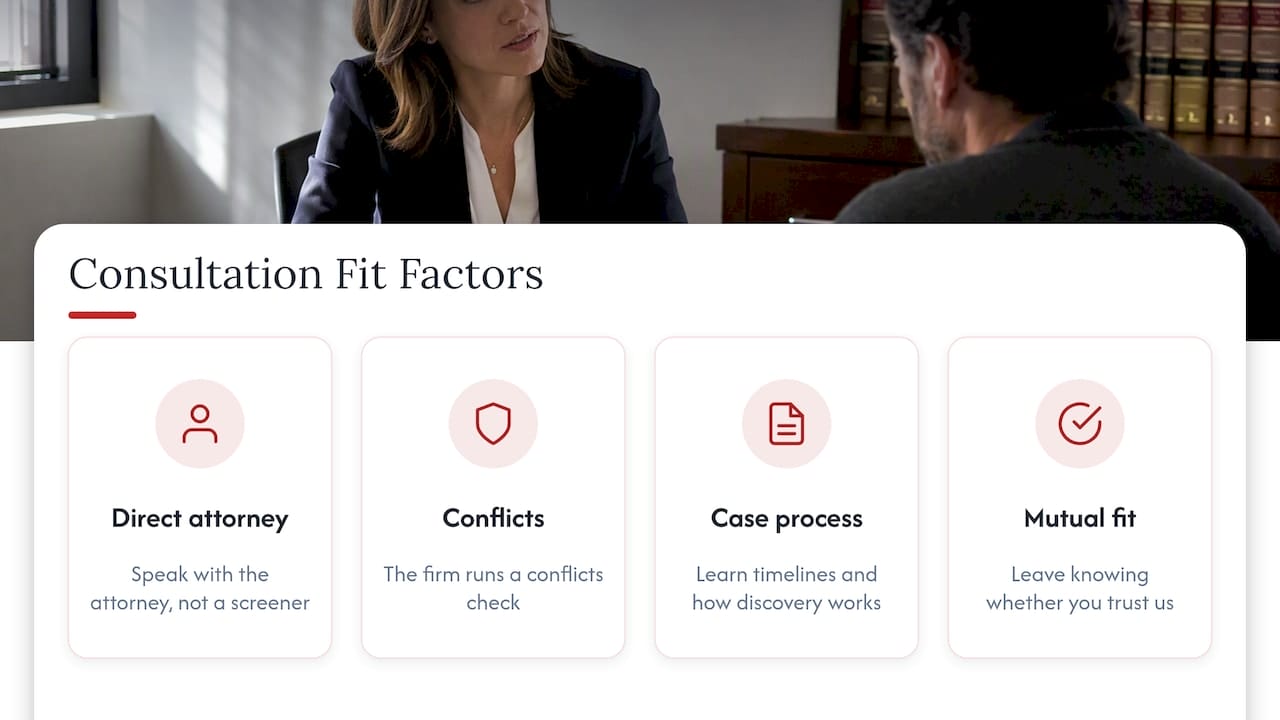
When you meet with us, we gather the facts, ask about your goals, run a conflicts check, and talk openly about fees and immediate next steps. You speak directly with the attorney, not a screener. We also explain timelines and how discovery works. Our mediation certification shapes how we think about resolution, but fit is a two-way judgment: you should leave knowing whether you trust us.
8. What should you ask about diversion programs and plea agreements in Florida?
Not every case ends in trial, so ask early about alternatives. Ask a lawyer whether pretrial diversion or intervention may be available in your case and what factors could affect eligibility. Ask the lawyer:
- Is my charge potentially eligible for a diversion or intervention program?
- Who decides eligibility, and what conditions would I have to meet?
- What happens to the charge if I complete the program, and what if I do not?
- If a plea offer comes, what are the terms, the sentence, and the long-term consequences?
- Would a plea affect my record, license, employment, or immigration status?
- How do you negotiate with the prosecutor in my county?
Ask how the lawyer will tell you about offers, too, since the Rule 1.4 commentary expects prompt notice of plea offers. Mitigation can matter in these talks. Some defendants use clinical assessments and treatment planning to support diversion eligibility, and providers such as court-approved mitigation services coordinate with defense attorneys on that work. Ask whether your lawyer would recommend it. Our page on why expert witnesses matter explains related support.
9. How can a defense be tailored for military personnel or special circumstances?
Some cases carry extra layers. If you serve in the military, ask a lawyer whether a civilian charge could affect your command, security clearance, or military proceedings. Ask whether the lawyer has worked with service members and understands how a plea or conviction could affect your career and benefits.
- Have you represented active-duty members or veterans before?
- How could this charge affect my service, clearance, or benefits?
- Will you coordinate with my command or military counsel, if needed?
- How would a deployment or transfer affect court dates?
The same logic applies to other special circumstances, such as mental health conditions, substance use issues, or domestic violence allegations that involve family court. Ask whether the defense plan accounts for those realities and who else on your team may need to be involved. Our domestic violence defense strategy guide and drug possession defense guide show how we think about charge-specific planning.
Why a free consultation shouldn’t be your only filter
Here is my honest view. People walk into these meetings hoping to hear “we’ll win,” and a confident lawyer is a comfort. But confidence is cheap. The better signal is whether the lawyer explains the worst case calmly, puts the fee terms in writing, and tells you plainly who will do the work. The ABA frames the consultation as a two-way interview, and I think most clients underuse that. They ask about price first and communication last, when communication can shape their experience. Prioritize three things: honest outcome ranges, a written trust-account and refund policy, and a named person who answers your calls. Then compare lawyers.
— John
Book a free consultation with The Law Office of John Vernon Moore, P.A.
Facing a charge is stressful, and you do not have to sort it out alone. We offer a free initial consultation, and you speak directly with an attorney. We will cover your charge, realistic outcomes, fees, and your immediate next steps. Bring the documents listed above, and read about our Florida criminal defense practice before we meet.

Call us or request your free consultation through our site today, and take the first step toward a clear defense plan.
This article is general information, not a substitute for advice from a qualified lawyer. Consult a qualified legal professional about your own circumstances before acting on anything here.
FAQ
What questions should I ask a lawyer during a consultation?
Ask about their experience with your type of charge, how fees and advance payments are handled, what outcomes are realistic, and who will handle your case. The ABA’s consumer guidance also suggests asking about staff involvement and whether the lawyer will likely settle or go to trial.
What are some common criminal defenses?
Common defenses include challenging the evidence, arguing the police violated your rights, disputing identification, or showing lack of intent. Which defense fits depends entirely on your facts and charge, so ask the lawyer which approaches they would consider and why.
What should I not say during an initial consultation?
Do not guess, exaggerate, or volunteer incriminating details beyond the facts you know. Keep your account concise and truthful, and ask first whether your conversation is protected by attorney-client privilege.
Who will actually work on my case?
Ask this directly, since the lawyer you meet may delegate parts of the work. Request the name of your primary contact, who will appear in court, and the expected response time for calls and messages.