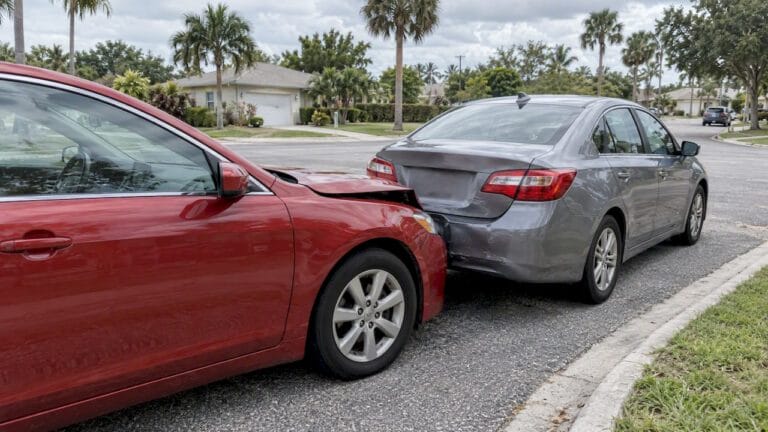
PIP pays for medical bills, lost wages, and replacement household services after a crash. MedPay covers medical and funeral expenses only, with no wage or household benefit. Which one lands on your policy usually comes down to your state: PIP is mandatory in no-fault states like Florida and Michigan, while MedPay is typically an optional add-on in tort states. If you’re in a no-fault state, carry PIP at or above the statutory minimum. If you’re in a tort state and your health plan has a high deductible, MedPay fills the gap PIP leaves open.
TL;DR:
- PIP pays for lost wages and household services, making it more comprehensive than MedPay, especially for working drivers supporting families.
- States determine coverage requirements: no-fault states mandate PIP, while tort states make MedPay optional or offer it as an add-on.
- MedPay limits often range from $1,000 to $25,000 and usually pay upfront with no deductible, covering medical and funeral costs only.
- Proper documentation and prompt notification are crucial in preserving your settlement and managing subrogation rights regardless of coverage type.
- Consulting a legal professional is advisable when dealing with complex claims, policy limits, or subrogation to maximize net recovery.
Table of Contents
- PIP vs. MedPay: What Personal Injury Protection Covers
- PIP vs. MedPay: What Medical Payments Coverage Covers
- Comparing PIP and MedPay Side by Side
- Where PIP Is Required and Where MedPay Fills the Gap
- How PIP and MedPay Interact With Health Insurance and Settlements
- When a Personal Injury Attorney Should Review Your Claim
- The Real Difference Isn’t Coverage. It’s Timing.
- Sources
- FAQ
PIP vs. MedPay: What Personal Injury Protection Covers
Personal Injury Protection is built to replace income and pay for care after an accident, regardless of who caused it. It’s a first-party coverage, meaning your own insurer pays your claim before anyone argues about fault.
PIP typically covers:
- Emergency room visits, surgery, and follow-up rehabilitation
- Ambulance transport and prosthetics
- Lost wages, commonly 60% to 80% of your regular income
- Replacement services, like paying someone to do household work you can’t do while recovering
- A death benefit in many states
Statistic Callout: In no-fault states, PIP acts as the primary payer for accident-related medical costs, ahead of your regular health insurance.
That primary-payer status matters more than most drivers realize. It means your health insurer doesn’t get billed first, and any third-party liability claim against the at-fault driver usually can’t proceed until PIP benefits are exhausted or a serious-injury threshold is met, though the exact thresholds vary by state.
PIP vs. MedPay: What Medical Payments Coverage Covers
MedPay is narrower by design. It pays medical and funeral expenses connected to a car accident, full stop. No wage replacement, no household services, no death benefit beyond funeral costs.
What MedPay typically pays for:
- Doctor visits, hospital stays, and diagnostic imaging like X-rays
- Ambulance fees and emergency transport
- Dental treatment tied to the accident
- Funeral expenses
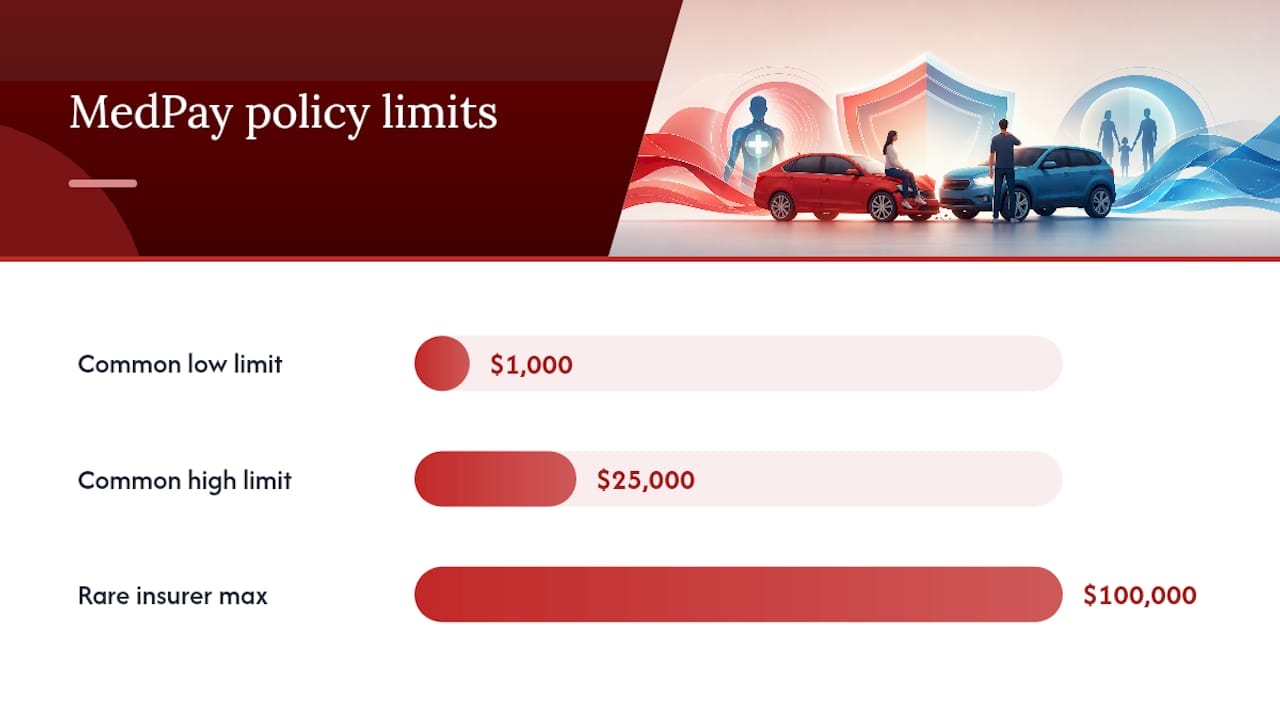
Statistic Callout: MedPay limits commonly run $1,000 to $25,000, though some insurers offer policies up to $100,000. Unlike PIP, MedPay usually pays on a first-dollar basis, meaning there’s no deductible to satisfy before benefits kick in.
Coverage extends beyond just the policyholder. It generally applies to household family members, passengers riding in your car, and sometimes even pedestrians struck by your vehicle. State Farm notes that MedPay availability varies by state, so the same policy might not exist in every market, and it can pay for things your health plan skips, like chiropractic visits or ambulance rides billed separately from the hospital stay.
Comparing PIP and MedPay Side by Side
The core distinction is scope. MedPay handles medical bills and nothing else. PIP handles medical bills plus the financial fallout of not being able to work or manage your household. That single difference is why PIP tends to carry more real-world value for working drivers, especially anyone supporting a family on one paycheck.
| Factor | PIP | MedPay |
|---|---|---|
| Covers | Medical, lost wages, household services, sometimes funeral | Medical and funeral only |
| Deductible | Often $1,000, then 80% coverage | Usually none, first dollar paid |
| Typical limits | Varies by state minimum | $1,000 to $25,000 common |
| Subrogation | Varies by state | Insurer may seek repayment from settlement |
| Availability | Required in no-fault states | Usually optional, not sold everywhere |
- MedPay premiums tend to run lower than PIP because the coverage is narrower.
- Higher MedPay limits make sense if you carry a high-deductible health plan and want first-dollar protection.
- Forbes Advisor points out that buying both is often redundant when PIP is already available and its limits are adequate.
Pro Tip: If your state doesn’t require PIP and your health insurance has a low deductible, a modest MedPay policy, often $5,000, is usually cheaper than PIP and covers most of what you’d actually use.
Where PIP Is Required and Where MedPay Fills the Gap
Coverage rules split the country roughly into two camps. No-fault states require drivers to carry PIP, while tort states leave medical coverage largely optional or fold it into MedPay.
- States that mandate PIP include Florida, New York, Michigan, and New Jersey, among roughly a dozen no-fault jurisdictions nationwide.
- Required PIP minimums vary widely by state. Florida’s statutory minimum, for example, differs sharply from Michigan’s, so don’t assume one number applies everywhere.
- In tort states, MedPay is typically optional, though some states require insurers to at least offer it, with drivers signing a written rejection if they decline.
- Not every insurer sells MedPay in every state, which is worth confirming before you assume it’s available as an add-on.
Because minimums and rules shift by jurisdiction, check your own state’s statutes or contact your state insurance department directly rather than relying on a national average. Florida drivers dealing with an accident claim can find more detail on how these rules apply locally in this overview of auto accident injury law in Florida.
How PIP and MedPay Interact With Health Insurance and Settlements
Payer order matters more than most drivers think about until a bill shows up. PIP and MedPay generally pay before your health insurance touches an accident claim, with health insurance stepping in only after those limits are exhausted.
That order creates a wrinkle: subrogation. If you later recover money from the at-fault driver’s insurer, your MedPay carrier may have the right to be repaid from that settlement, depending on your state’s rules. Subrogation rights for MedPay vary considerably, some states allow full repayment, others limit or bar it entirely. That single variable can shrink your net settlement more than people expect.
A few practical steps protect you:
- Document every bill, wage statement, and household-service cost as it happens.
- Notify both your auto insurer and health insurer promptly after treatment begins.
- Keep copies of everything before signing any settlement release.
Pro Tip: Ask your insurer in writing whether your state allows MedPay subrogation before you settle. If the answer is unclear or contested, that’s exactly when legal help earns its fee.
When a Personal Injury Attorney Should Review Your Claim
Some claims are simple: minor bills, quick payout, done. Others aren’t. Serious injuries, disputed subrogation claims, or policy limits too low to cover real medical costs are exactly the situations where a lawyer’s involvement changes the outcome.
An attorney’s job here isn’t just paperwork. It’s preserving your net recovery, negotiating down liens before they eat your settlement, documenting medical bills and wage loss properly so nothing gets challenged later, and determining whether a third-party liability claim is worth pursuing once PIP or MedPay limits run out.
Legal professionals have extensive experience handling these exact disputes for clients, including mediation-certified resolution work when insurers and claimants can’t agree on a number. That combination of courtroom experience and mediation training matters most precisely when a subrogation claim threatens to swallow a chunk of your recovery.
The Real Difference Isn’t Coverage. It’s Timing.
Most articles on this topic treat PIP and MedPay like a simple checklist: pick the one with more coverage. That advice misses the part that actually costs people money, which is timing and documentation, not the fine print of what each policy pays.
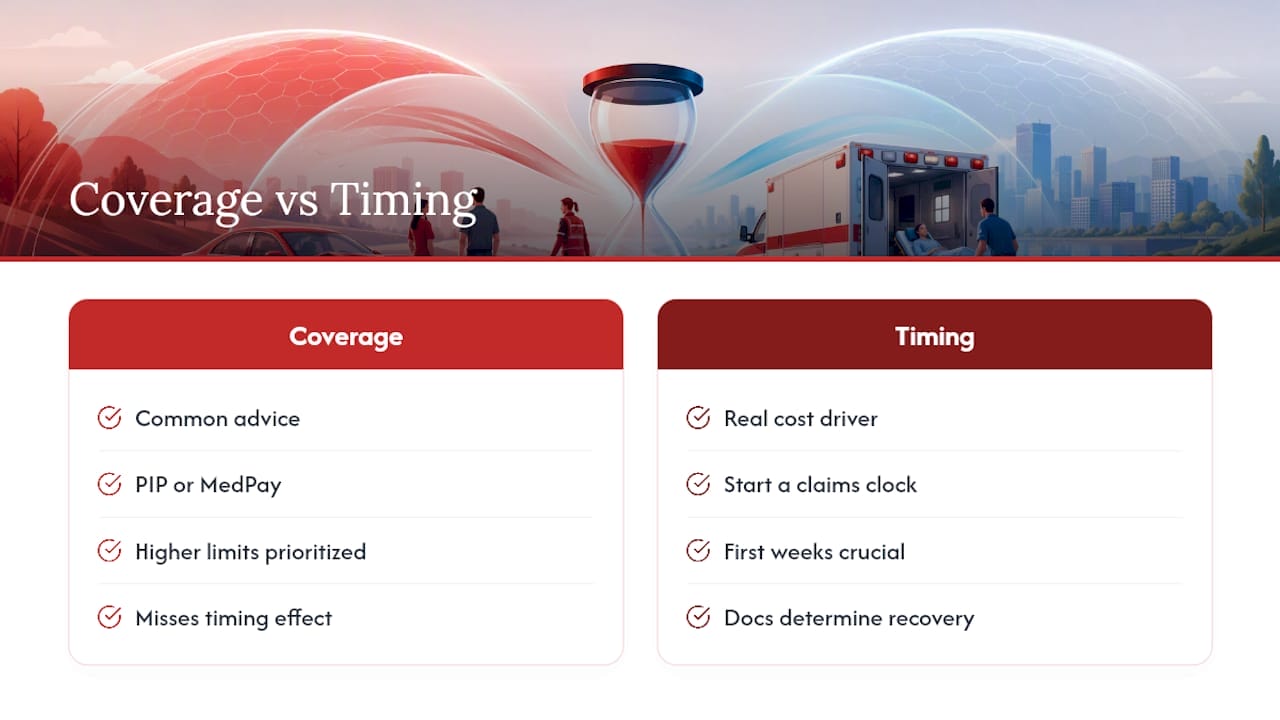
Here’s what I think gets underweighted: the moment you get hurt, you’re not just filing a claim, you’re starting a clock. Subrogation rights, settlement negotiations, and third-party claims all depend on records you create in the first few weeks. A driver with strong PIP coverage but sloppy documentation often nets less than a driver with modest MedPay and a clean paper trail.
If you take one thing from this, it’s this: know your state’s rule before you’re in an accident, not after. Florida drivers don’t get to choose whether PIP is required. They get to choose how well they document everything once it happens. That’s where the real leverage sits, and it’s the part conventional advice skips entirely.
— John
This article is general information, not a substitute for advice from a qualified lawyer. Consult a qualified legal professional about your own circumstances before acting on anything here.
Sources
- Med pay vs PIP: what each covers and which to choose
- What Is Personal Injury Protection (PIP) And Do You Need It? – Forbes Advisor
- What is MedPay? Comprehensive Guide to Medical Payments Coverage
- Medical payments coverage — State Farm
- What Is PIP Insurance and Do You Need It?
FAQ
Is PIP the Same as MedPay in Texas?
No. Texas is a tort state where PIP is offered but can be declined in writing, while MedPay is a separate optional add-on that pays medical and funeral costs only, without the wage or household benefits PIP includes.
Is PIP the Same as MedPay in Connecticut?
No. Connecticut doesn’t require PIP under a no-fault system, but insurers there commonly offer MedPay as an optional coverage that pays medical bills regardless of fault.
Can You Have Both MedPay and PIP?
Yes, some drivers carry both, though industry guidance generally treats this as redundant when PIP limits are already sufficient. Stacking makes more sense when PIP limits are low or your state doesn’t require PIP at all.
Does Pennsylvania Have PIP or MedPay?
Pennsylvania is a choice no-fault state that uses PIP-style first-party medical benefits, not MedPay by that name, and drivers select between full tort and limited tort options that affect their right to sue.
Which Pays First After an Accident, PIP or Health Insurance?
PIP or MedPay typically pays first as the primary coverage for accident-related bills, with your health insurance stepping in only after those limits are used up.
Does PIP or MedPay Cover the Other Driver’s Injuries?
No. Both are first-party coverages that pay for you, your household members, and your passengers. Injuries to other drivers are covered by liability insurance, not your PIP or MedPay policy.
If a subrogation claim or a low policy limit is putting your settlement at risk, the personal injury team at the Law Office of John Vernon Moore, P.A. offers a free initial consultation to review your case and explain your options before you sign anything.