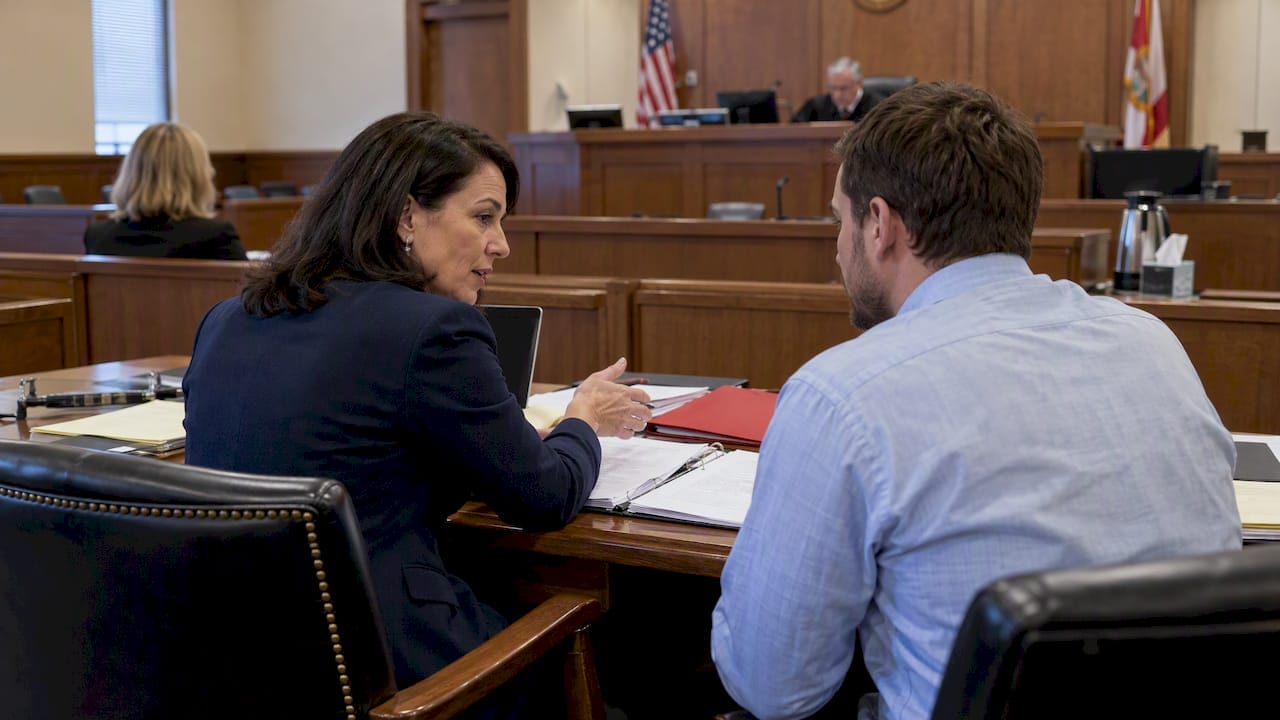
Florida does not criminalize parental alienation or list it as a separate statutory offense. Instead, courts treat alienating conduct as a factor under Florida’s child custody statute, Fla. Stat. §61.13, and can order parenting plan modification, supervised visitation, reunification therapy, or contempt sanctions when the conduct harms a child.
TL;DR:
- Document patterns of missed visits, canceled calls, and interfering communications to establish a concrete record of harmful conduct in alienation disputes.
- Courts prioritize documented, sustained behavior over clinical labels or isolated incidents when considering custody modifications related to alienation.
- Evidence from third-party reports, witness statements, and organized exhibits typically outweighs parental affidavits in demonstrating harmful conduct.
- Family law measures include enforcing existing parenting plans, ordering supervised visitation, and directing reunification therapy when alienation harms the child.
- Filing delays and detailed preparation, including stakeholder documentation and clear timelines, improve chances of court success and appropriate remedies.
Table of Contents
- What Florida law says about parental alienation
- How courts evaluate alienation claims and what you must prove
- Practical evidence checklist for alienation cases
- Legal remedies Florida courts can order
- Working with guardians ad litem and social investigators
- How to start: motions, timeline, and realistic costs
- How our firm approaches alienation cases
- How the Law Office of John Vernon Moore, P.A. can help
- FAQ
- Sources
What Florida law says about parental alienation
Florida’s family law framework does not use the phrase “parental alienation.” Judges instead evaluate the conduct through the lens of the best interests of the child, the standard built into Fla. Stat. §61.13. That statute presumes both parents should maintain frequent, continuing contact with their children after separation, and it lists specific factors judges must weigh, including each parent’s willingness to encourage a close relationship between the child and the other parent.

Modifying an existing parenting plan is not automatic. A parent asking the court to change time-sharing or parental responsibility because of alienating behavior must show a substantial, material, and unanticipated change in circumstances since the last order, a threshold Chapter 61 Section 13 sets deliberately high.
Two other statutes shape how these disputes get investigated:
- Fla. Stat. §61.20 lets a judge order a social investigation when a parenting plan is contested.
- Fla. Stat. §61.403 defines the powers of a guardian ad litem appointed to represent the child’s interests.
Together, these three statutes form the backbone of almost every Florida alienation case.
How courts evaluate alienation claims and what you must prove
Judges rarely care whether a parent’s behavior fits a clinical label. What matters is whether the court can point to specific, harmful conduct that violates the best-interest factors in Fla. Stat. §61.13. A parent who argues the other is practicing “parental alienation syndrome” without tying that claim to concrete, documented actions usually loses ground. Framing the argument around statutory factors, missed exchanges, disparaging statements, interference with communication, tends to carry far more weight than invoking a syndrome by name.
Timing and pattern matter as much as the behavior itself:
- A single angry outburst rarely meets the legally required threshold for modification.
- A documented pattern stretching across months, especially one that intensified after a prior custody order, is what judges look for.
- Neutral, third-party reports almost always outweigh competing affidavits from the parents themselves.
Pro Tip: Keep a dated log of every missed exchange or canceled visit as it happens. A contemporaneous record is far more persuasive than a reconstructed memory months later.
Courts have little patience for a credibility contest where each parent accuses the other with no outside corroboration. That is why the evidence you bring matters more than how forcefully you argue it.
Practical evidence checklist for alienation cases
Evidence wins these cases, not labels. Judges respond to documentation that is organized, dated, and corroborated by someone outside the family whenever possible. Practitioners consistently emphasize that allegations without objective support rarely move a court, while a well-documented pattern often does.
- Build a chronological log of missed visits, late exchanges, and canceled calls, noting dates, times, and any stated reasons.
- Preserve direct communications, including text messages, emails, and social media posts, that show disparagement of you or active interference with scheduled time.
- Gather third-party records from schools, pediatricians, or therapists that reflect behavioral changes in the child tied to the other parent’s conduct.
- Collect witness statements from coaches, relatives, or neighbors who observed specific incidents, not general impressions.
- Organize everything into exhibits with a timeline summary and sworn affidavits so your attorney can present the pattern clearly at a hearing.
Neutral evaluations carry outsized weight in these disputes. A recent Florida appellate decision, LYNNE MACDONALD v. BRIAN D. MACDONALD, underscores how much courts rely on guardian ad litem findings and reunification therapy records when deciding how to respond to alienation allegations. A single incident, no matter how upsetting, almost never satisfies the burden; a sustained pattern tied to the time period since your last order is what the statute requires.
Legal remedies Florida courts can order
Once a judge finds that alienating conduct has harmed the child, several tools are available under Florida law, and the remedy usually matches the severity of the conduct.
- Motion to enforce the existing parenting plan, often paired with a request for contempt and sanctions when the other parent has repeatedly violated time-sharing terms.
- Temporary or interim modification of time-sharing or parental responsibility while the case proceeds, used when the court sees an urgent risk to the child’s relationship with you.
- Supervised visitation, detailed further on our supervised visitation page, ordered to protect contact while concerns are investigated.
- Reunification therapy, aimed at rebuilding a damaged parent-child relationship under professional guidance rather than through court orders alone.
- Cost allocation, including guardian ad litem fees and evaluation costs, which a judge may assign to one party or split based on ability to pay.
Contempt proceedings, explained in more detail on our contempt in family court page, remain one of the more direct enforcement tools when a parent simply ignores the existing order.
Working with guardians ad litem and social investigators
A guardian ad litem, appointed under Fla. Stat. §61.403, investigates the family’s circumstances and advocates for the child’s best interests, not for either parent. Our guardian ad litem page walks through how that role differs from a volunteer GAL program versus an attorney GAL retained privately.
- A social investigation under Fla. Stat. §61.20 is ordered when the parenting plan is genuinely contested, and the court may require the parents to cover the cost unless one is indigent.
- You request a GAL by filing Florida Supreme Court Approved Family Law Form 12.942(a), the standard motion for appointment.
- Preparing for an evaluation means organizing your documentation in advance and answering the investigator’s questions directly, without rehearsing a script.
The appellate opinion in Macdonald is a useful reminder here: the court reversed a fee order because the trial judge never made findings about each parent’s ability to pay the guardian ad litem’s full costs. Expect the court to examine that question before assigning fees.
How to start: motions, timeline, and realistic costs
Moving a case forward follows a fairly predictable sequence, even though every file has its own wrinkles.
- Document first. Start your log of incidents and preserve messages before you file anything, since courts respond to patterns, not impressions.
- Consult counsel to determine whether a motion to enforce the current order or a motion to modify is the right first step; enforcement addresses violations of an existing plan, while modification requires the substantial-change showing under Fla. Stat. §61.13.
- File the motion and expect a hearing to be set within weeks to a few months depending on your circuit’s docket, with interim orders possible if the court sees urgent risk to the child.
- Budget for evaluation costs, since a guardian ad litem appointment or social investigation often carries fees that the court may split, defer, or assign based on each parent’s finances.
The process rewards patience and preparation over speed. A rushed filing with thin documentation tends to produce a weaker outcome than a well-organized motion filed a few weeks later.
How our firm approaches alienation cases
We treat every alienation claim as a child-centered problem first and a legal dispute second, which shapes when we recommend mediation versus litigation. We can explore whether a negotiated resolution can protect the relationship faster than a drawn-out court fight. We encourage parents to call us as soon as a pattern emerges, not after months of escalation have made the relationship harder to repair.
— John
How the Law Office of John Vernon Moore, P.A. can help
Parental alienation cases demand both careful documentation and someone who knows how Brevard County judges actually rule on these motions. We handle custody disputes, parenting plan modifications, and enforcement actions tied to alienating conduct, and our parental alienation page walks through how we build these cases from the first consultation.

Whether you are facing a co-parent who is undermining your relationship with your child or you need guidance on a military divorce where deployment complicates time-sharing, we offer a free initial consultation to review your situation directly with an attorney, not a case manager. Our family law practice page covers custody, child support, and parenting plan modifications in one place. If a negotiated path makes more sense than a courtroom fight, our mediation services may resolve the dispute faster and at lower cost. Reach out to schedule your consultation and talk through what your evidence actually supports.
This article is general information, not a substitute for advice from a qualified lawyer. Consult a qualified legal professional about your own circumstances before acting on anything here.
FAQ
How long does a parent have to be absent to be considered abandonment in Florida?
Florida law does not set a fixed number of days for abandonment in a custody context; instead, courts look at the pattern and intent behind a parent’s absence under the best-interest factors in Fla. Stat. §61.13. A brief absence tied to work, military deployment, or illness is treated differently than a sustained pattern of disengagement. An attorney can help you determine whether your situation meets the threshold judges actually apply.
Is it hard to prove parental alienation in court?
Proving alienation is difficult because Florida courts focus on documented, harmful conduct rather than a clinical label, and a single incident rarely satisfies the substantial-change standard under Fla. Stat. §61.13. Neutral reports from a guardian ad litem or social investigator, discussed in the Macdonald opinion, often carry more weight than either parent’s own testimony. A sustained, well-documented pattern gives your case the best chance of success.
What are signs that a parent is alienating their child?
Common signs include a parent badmouthing you in front of the child, blocking phone calls or visits, coaching the child to reject you, and making unilateral decisions that exclude you from the child’s life. Florida courts weigh these behaviors against the best-interest factors in Fla. Stat. §61.13 rather than checking off a fixed list. Documenting specific instances, with dates and context, is more useful in court than relying on general descriptions.
Do fathers have the same rights as mothers in Florida child custody cases?
Yes, Florida law does not favor either parent based on gender, and the same best-interest factors under Fla. Stat. §61.13 apply equally to both parents. Our fathers’ rights page addresses common concerns fathers raise about being treated fairly in custody disputes. If you believe you are facing unequal treatment, a consultation can clarify what the court actually requires.
Sources
- Chapter 61 Section 13 – 2025 Florida Statutes – The Florida Senate
- 61.20 Social investigation and recommendations regarding a parenting plan — 2025 Florida Statutes
- 61.403 Guardians ad litem; powers and authority — The Florida Legislature
- LYNNE MACDONALD v. BRIAN D. MACDONALD, No. 4D2025-3043 (April 29, 2026)