
How relocation affects child custody arrangements across the U.S.
When a custodial parent wants to move with a child, that decision triggers a formal legal process, not just a personal one. Relocation custody refers to the court-supervised procedure that kicks in whenever a proposed move would materially interfere with an existing custody or visitation order. The child’s best interests drive every decision, and courts will override a parent’s personal reasons for moving if those interests are not met.
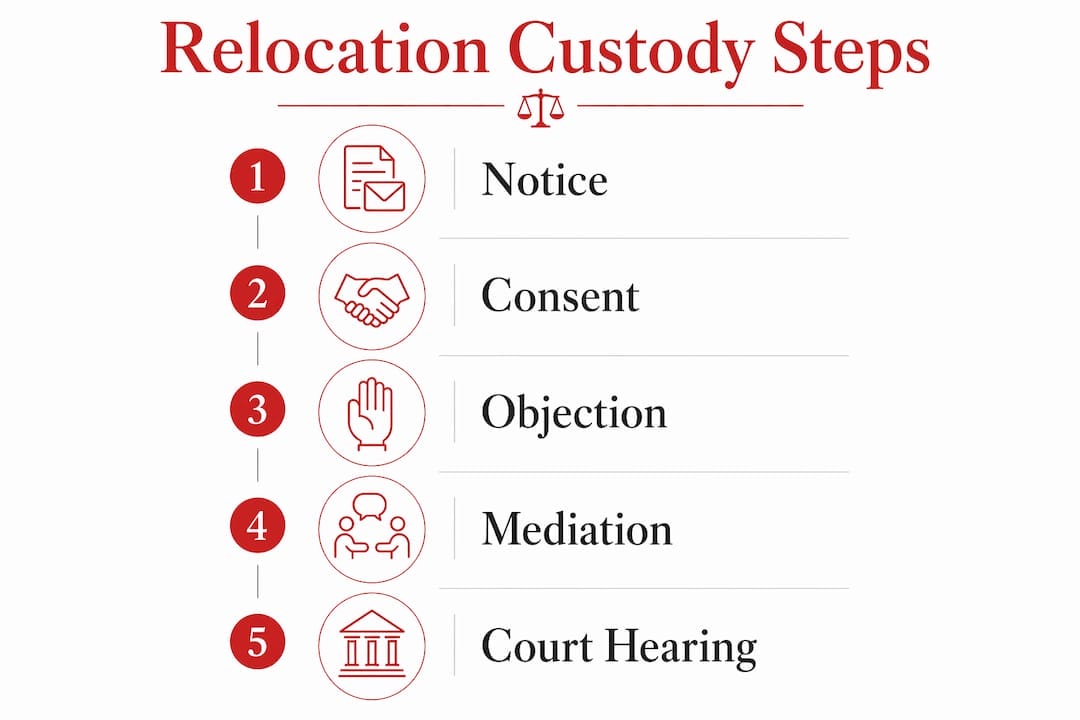
Here is what the process generally involves:
- Formal written notice to the other parent before the move, with advance timing requirements that vary by state
- Court review if the non-relocating parent objects, with a hearing to weigh competing interests
- Custody modification when the move substantially changes the child’s living situation or contact with the other parent
- Jurisdiction rules under the Uniform Child Custody Jurisdiction and Enforcement Act (UCCJEA), which determines which state’s court retains authority after an interstate move, typically the original “home state” for six months post-move
- Post-move parenting plan detailing revised visitation, travel costs, and communication arrangements
The UCCJEA framework matters most in interstate moves. The original court keeps jurisdiction for roughly six months after the child leaves, which means legal proceedings often stay in the state you are leaving, not the one you are moving to.
What are the legal requirements for relocating with a child?
Every state has its own relocation statute, but the core requirements follow a consistent pattern. Getting the process wrong, even by a few days, can cost you the right to move.
- Written notice timing: Most states require advance notice before the intended move date, with specific requirements varying by state.
- Notice content: The written notice must include your current address, the new residence address, your phone numbers, the planned move date, the reason for relocating, a proposed revised custody or visitation schedule, and a statement that the other parent has 30 days to object in writing.
- Delivery method: Send notice by certified mail with return receipt, or through a tracked commercial courier, to the other parent’s last known address.
- Filing in the existing case: Relocation forms are filed in the same case where custody was originally established, not as a new civil action.
- Objection window: If the other parent objects, they must do so within 30 days of receiving notice. Once an objection is filed, the move cannot proceed until a court authorizes it.
- Court hearing: After an objection, the court schedules a hearing. Both parents present their case, and the judge decides based on the child’s best interests.
- Mediation option: Many courts require or strongly encourage mediation before the hearing, particularly when parents have a history of cooperative co-parenting.
Pro Tip: Filing your relocation notice, even when you believe the other parent will consent, protects you legally. If consent later falls through, you have already started the clock on the required notice period.

What factors do courts weigh when deciding relocation cases?
Judges do not rubber-stamp relocation requests, and they do not automatically deny them either. The analysis is fact-specific, and several factors consistently appear across state courts.
- Reason for the move: Courts distinguish between moves driven by genuine opportunity (a new job, family support, better schooling) and moves designed to limit the other parent’s access. Good faith is a threshold requirement in most states.
- Co-parenting history: A parent who has blocked phone calls, withheld visitation, or spoken negatively about the other parent in front of the child faces an uphill battle. Judges scrutinize this record closely.
- Impact on the child: The court examines the child’s ties to the current community, school performance, friendships, extended family relationships, and how the move would affect each of those.
- Feasibility of the post-move plan: A vague promise to “work something out” on visitation will not satisfy a judge. Courts want a concrete, workable schedule that preserves the non-relocating parent’s relationship with the child.
- Child’s preference: Some states give weight to the child’s own wishes, particularly for older children and teenagers, though no state treats a child’s preference as controlling.
- Opposition motives: Courts also evaluate why the non-relocating parent is objecting. Genuine concern for the child’s welfare is treated differently from an attempt to control the other parent’s life choices.
How custody type changes the relocation process
The type of custody arrangement you hold directly determines how hard relocation will be to obtain. This is one of the most misunderstood aspects of how custody changes work.
- Sole physical custody: A parent with sole physical custody has broader latitude. Courts generally allow the move unless the opposing parent proves it would harm the child. The burden of proof sits with the objecting parent.
- Joint physical custody: The burden flips. A parent with joint physical custody must affirmatively prove the move benefits the child’s best interests. Courts are far more skeptical of relocation requests in these cases.
- Shared legal custody: Even when one parent has primary physical custody, shared legal custody means the move affects the other parent’s ability to participate in major decisions about education, healthcare, and activities. Courts factor this in heavily.
- Distance thresholds trigger automatic review: In Iowa, for example, a move of 150 miles or more by a parent with joint legal custody and physical care is treated as a substantial change in circumstances, automatically opening the door to custody modification.
- No formal custody order: Parents without a court order are not necessarily exempt from relocation statutes, but they face a different risk. Moving without communication or agreement can generate accusations of custodial interference, which courts treat seriously.
What happens if you move without court permission?
Moving without authorization is one of the fastest ways to lose custody rights. Courts treat it as a serious breach of the existing order, and the consequences can be swift and lasting.
- Contempt of court: A parent who relocates without proper notice or court approval can be held in contempt, facing fines or other sanctions.
- Mandatory return order: Courts can order the child’s return to the previous residence, often at the relocating parent’s expense.
- Loss of custody: If the court finds the move was made in bad faith to frustrate the other parent’s relationship with the child, it may transfer primary custody to the non-relocating parent.
- Financial penalties: The relocating parent may be ordered to pay the opposing parent’s attorney fees and travel costs incurred during the dispute.
- Long-term damage to your case: An unauthorized move becomes part of your custody record. Future modification requests will be evaluated against that history, and judges remember it.
The distinction between giving notice and getting permission is critical. Notice alone does not authorize a move if the other parent objects.
How to build a post-move parenting plan that courts approve
A strong parenting plan is often the deciding factor in close relocation cases. Courts want to see that the relocating parent has thought carefully about maintaining the child’s relationship with the other parent, not just about the logistics of the move itself.
- Extended holiday and summer visits: Offset reduced weekly contact with longer blocks of time, including full summer breaks, spring break, and alternating major holidays.
- Travel and transportation: Specify who pays for flights or driving costs, who accompanies the child, and how travel arrangements are made. Post-move parenting plans that address travel costs in detail consistently perform better in court.
- Virtual communication: Build in regular video calls, not just as a fallback but as a scheduled part of the parenting plan. Courts view consistent virtual contact as a meaningful supplement to in-person time.
- Flexibility provisions: Include language allowing the non-relocating parent to visit the child in the new location, and vice versa, outside the formal schedule.
- School and activity coordination: Commit to sharing school calendars, medical appointments, and extracurricular schedules so the non-relocating parent stays genuinely involved.
A child relocation attorney can help you draft a plan that addresses the specific concerns a judge in your jurisdiction is likely to raise.
Expert legal insights from The Law Office of John Vernon Moore, P.A.
Relocation cases are among the most emotionally charged and legally complex matters in family law. The Law Office of John Vernon Moore, P.A. handles these cases with a focus on what courts actually need to see, not just what parents want to argue.
A parent’s constitutional right to travel does not override a custody order. Courts will not approve a relocation simply because a parent wants to move. The relocating parent must demonstrate, with real evidence, that the move serves the child’s interests, not just their own. Procedural compliance, a credible parenting plan, and a documented history of supporting the other parent’s relationship with the child are the three pillars of a successful relocation case.
Pro Tip: Start gathering evidence of your co-parenting cooperation well before you file. Text messages, emails, and school records showing you have consistently facilitated the other parent’s involvement carry more weight than anything you say in court.
Jurisdiction issues add another layer of complexity in interstate moves. The original court typically retains authority for six months after the child leaves the state, which can mean traveling back for hearings even after you have already moved. Planning for that logistical and financial reality before filing is part of sound case preparation. For parents facing custody modification after a move, early legal counsel makes a measurable difference.
How to respond when the other parent opposes your relocation
An objection from the other parent does not end your case. It starts a new phase of it. Once you receive a written objection, you typically have 30 days to file a court application seeking approval for the move. From that point, the case proceeds to a hearing where both sides present evidence.
Your response strategy should focus on three things. First, document your reasons for moving with concrete evidence: an employment offer letter, a lease agreement, school enrollment records, or medical referrals. Second, present a detailed parenting plan that addresses the other parent’s specific concerns, not a generic template. Third, demonstrate your history of supporting the other parent’s relationship with the child through records of communication, visitation compliance, and shared decision-making.
If the other parent’s objection appears motivated by control rather than genuine concern for the child, your attorney can present that pattern to the court. Judges are experienced at distinguishing protective parenting from obstruction.
Can mediation resolve a relocation dispute before court?
Mediation resolves many relocation disputes before they reach a full hearing, and courts in most states either require it or strongly encourage it. A family court mediator works with both parents to find a parenting arrangement that addresses the move without requiring a judge to impose one.
The advantages are real. Mediation is faster and less expensive than litigation. It also produces agreements that both parents have shaped, which tends to mean better compliance over time. Parents who reach a mediated agreement on relocation can submit it to the court for approval, converting it into a binding order without a contested hearing.
Mediation works best when both parents are willing to negotiate in good faith. If the other parent is using the objection process as leverage rather than out of genuine concern, mediation may not resolve the dispute, and litigation becomes the path forward. Jmoorelegal is mediation certified, which means the firm can represent you in both mediation and court proceedings without switching counsel mid-case. You can also review estate planning considerations for parents navigating major life transitions like relocation.
How to prepare evidence and testimony for a relocation hearing
Walking into a relocation hearing without organized evidence is the single biggest mistake parents make. Judges decide these cases on facts, and the parent who presents clearer, more specific documentation almost always has the stronger position.
Documents to gather:
- Employment offer letters, promotion notices, or business records supporting the reason for the move
- Lease agreements or property purchase documents for the new residence
- School enrollment or program information showing educational benefits for the child
- Medical records or specialist referrals if the move is health-related
- Communication records (texts, emails) showing your history of facilitating the other parent’s contact
- Visitation logs demonstrating compliance with the existing custody order
Testimony preparation:
- Prepare to explain, specifically and concisely, why the move benefits the child, not just you
- Anticipate the other parent’s objections and have factual responses ready
- If the child is old enough for their preference to carry weight in your state, understand how that testimony is typically presented (often through a guardian ad litem, not direct testimony)
- Character witnesses who can speak to your co-parenting conduct are more persuasive than those who simply describe you as a good parent
Courts also respond well to parents who acknowledge the difficulty the move creates for the other parent and show they have made genuine efforts to minimize it. Judges notice the difference between a parent who is trying to solve a problem and one who is trying to win an argument.
Jmoorelegal handles relocation custody cases in Brevard County
Relocation custody cases move fast once an objection is filed, and the procedural deadlines are unforgiving. Jmoorelegal, The Law Office of John Vernon Moore, P.A., gives parents in Brevard County direct access to an attorney who knows Florida’s relocation statutes, has handled contested custody hearings, and is certified in mediation.

The firm’s approach is built around your specific facts, not a generic playbook. Whether you need to file a relocation notice, respond to an objection, or pursue a custody modification after a move has already happened, Jmoorelegal offers a free initial consultation so you understand your options before committing to a course of action. Contact the firm through the family law practice page to schedule your consultation today.
Key Takeaways
Relocation custody requires formal notice, court approval when the other parent objects, and a detailed parenting plan that demonstrates the move serves the child’s best interests, not just the relocating parent’s convenience.
| Point | Details |
|---|---|
| Notice is mandatory | Most states require formal written notice 30 to 60 days before moving, with specifics such as Texas requiring 60 days and South Dakota requiring 45 days; exact timing requirements vary by state. |
| Custody type shifts the burden | Sole physical custody holders face a lower bar; joint physical custody holders must prove the move benefits the child. |
| Unauthorized moves carry serious penalties | Courts can order the child’s return, hold the parent in contempt, and transfer custody if bad faith is found. |
| A strong parenting plan is decisive | Detailed post-move schedules covering travel costs, extended visits, and virtual contact directly influence court outcomes. |
| Jmoorelegal offers direct attorney guidance | The firm provides free initial consultations and mediation-certified representation for relocation custody cases in Brevard County, Florida. |
Recommended
- Child Custody Agreement Guide for Parents in 2026 – The Law Office of John Vernon Moore, P.A.
- Temporary Custody Order Process: A Parent’s Guide – The Law Office of John Vernon Moore, P.A.
- How Domestic Violence Affects Custody: 2026 Guide – The Law Office of John Vernon Moore, P.A.
- Child Relocation – The Law Office of John Vernon Moore, P.A.