
A family court mediator is a neutral, impartial facilitator who helps divorcing or separated parents reach agreements on custody, visitation, and child support without a judge making those decisions for them. The role of mediator in family court is fundamentally different from a judge or an arbitrator. The mediator holds no authority to impose outcomes. Instead, the mediator guides communication, keeps discussions focused, and helps both parents explore options that serve their children’s best interests. Understanding this distinction is the first step toward using mediation effectively.
What is the role of a mediator in family court?
The mediator’s job is to create a structured space where both parents can speak, listen, and problem-solve. Mediators act as neutral facilitators and do not issue rulings, take sides, or provide legal advice. That neutrality is the foundation of the entire process. Without it, neither parent would trust the process enough to speak openly.
Family court mediation focuses on future arrangements, not past grievances. A mediator will redirect conversations away from blame and toward practical questions: Where will the children sleep on school nights? How will holiday schedules work? Who covers medical expenses? This forward focus is what makes mediation productive where courtroom arguments often are not.
The mediator also provides general procedural information about how courts handle custody and support matters. That is different from legal advice. The mediator explains what courts typically consider, not what you personally should agree to. That distinction matters, and parents who blur it often leave mediation without fully protecting their rights.
What happens during the mediation process in family court?
Family court mediation follows a predictable structure, even though each session is shaped by the specific dispute. Here is how the process typically unfolds:
- Opening statements. The mediator explains the ground rules, confidentiality protections, and the session’s purpose. Each parent gets uninterrupted time to describe their concerns.
- Issue identification. The mediator lists the specific topics that need resolution, such as legal custody, physical custody schedules, child support, and school decisions.
- Discussion and negotiation. The mediator facilitates back-and-forth dialogue, asking questions and reframing positions to find common ground.
- Option generation. Both parents brainstorm possible solutions. The mediator does not evaluate which option is best but helps parents assess the practical consequences of each.
- Agreement drafting. When parents reach consensus, the mediator documents the terms. This written summary then goes to each parent’s attorney for review before becoming a formal court order.
Sessions typically last 90 to 120 minutes, and most cases resolve within 1 to 3 sessions. Straightforward disputes can sometimes conclude in a single meeting. That timeline is far shorter than the months or years a contested custody trial can take.
Many jurisdictions require mediation before a judge will hear a contested custody case. Courts mandate good faith participation but cannot force parents to settle. You must show up and engage honestly. You do not have to sign anything you disagree with.
Mediation is also a “without prejudice” process, meaning what you say during sessions generally cannot be used against you in court if mediation fails. Financial disclosures may be an exception, so be thoughtful about what documents you share.
In high-conflict situations, shuttle mediation places parents in separate rooms. The mediator moves between them, carrying proposals and responses. This format reduces intimidation and keeps the process safe when direct communication is not realistic.
Pro Tip: Bring a written list of your priorities to the first session. Parents who arrive with clear goals spend less time in session and reach agreements faster.

What can and can’t a mediator do in family court disputes?
Parents often arrive at mediation with misplaced expectations. Knowing the boundaries of the mediator’s role prevents frustration and protects your legal position.
What a mediator can do:
- Facilitate structured conversation between both parents
- Explain general court procedures and what judges typically consider in custody cases
- Help parents identify shared interests beneath opposing positions
- Reframe emotionally charged statements into practical questions
- Document agreed terms in a written memorandum
- Use shuttle mediation to protect a parent who feels unsafe in direct sessions
What a mediator cannot do:
- Make decisions or issue any binding ruling
- Represent either parent or advocate for a specific outcome
- Give legal advice about whether a proposed agreement is fair or legally sound
- Compel either parent to sign an agreement
- Guarantee that a mediated agreement will be approved by the court without attorney review
Mediators cannot provide legal advice, and all agreements should be reviewed by independent attorneys before signing. This is not a formality. A mediator might help you draft a parenting plan that feels fair in the room but contains terms a court would later modify or reject. An attorney catches those problems before they become binding.
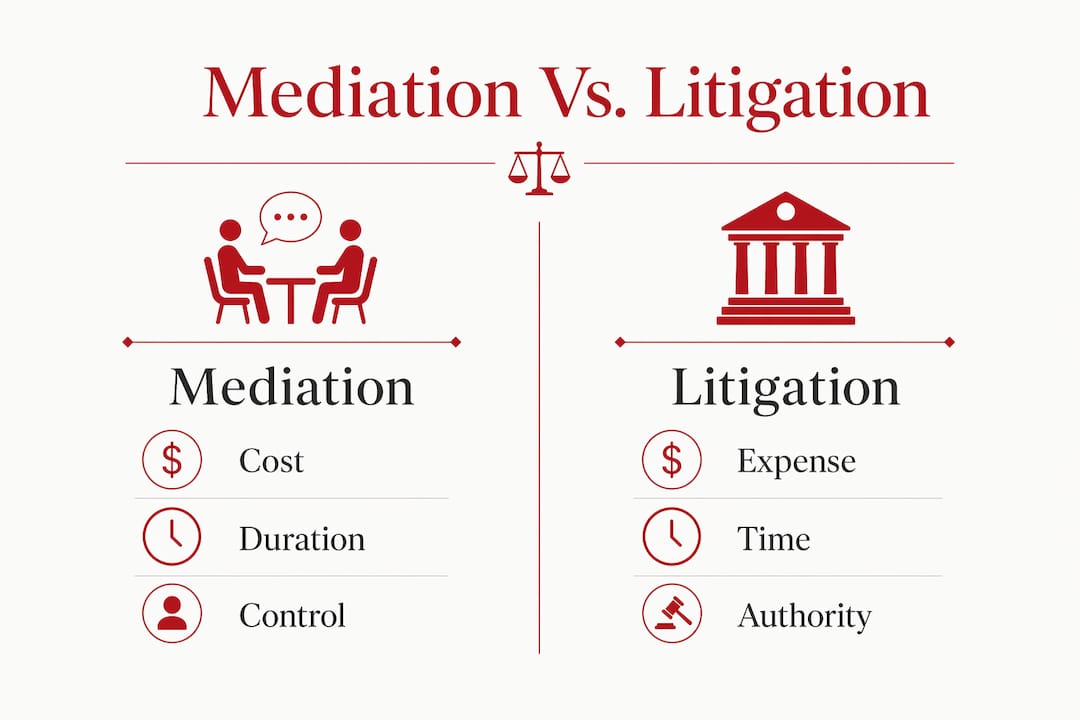
The difference between mediation, arbitration, and litigation is authority. A mediator facilitates. An arbitrator decides. A judge rules with the full power of the court. Mediation gives you control. The other two take it away.
Pro Tip: Never sign a mediated agreement on the same day it is drafted. Take it to your attorney first, even if the session felt productive and cooperative.
What are the benefits and challenges of mediation in family court?
Mediation is generally faster and less expensive than litigation, and it lets parents retain control over outcomes instead of leaving decisions to a judge. That control matters enormously when the decisions involve your children’s daily lives.
| Factor | Mediation | Courtroom litigation |
|---|---|---|
| Cost | Significantly lower | High attorney and court fees |
| Timeline | Weeks to a few months | Months to years |
| Control over outcome | Parents decide | Judge decides |
| Privacy | Confidential sessions | Public court record |
| Emotional impact | Lower conflict | Higher adversarial stress |
| Child focus | Built into the process | Determined by legal standards |
Mediation also reduces the adversarial dynamic that damages co-parenting relationships long after the legal dispute ends. Parents who negotiate their own parenting plan are more likely to follow it because they created it. A judge-imposed order carries no such ownership.
The challenges are real, though. Mediation requires both parents to participate in good faith. Success depends on parents prioritizing their child’s needs over personal grievances. When one parent uses mediation to delay proceedings or pressure the other into a bad agreement, the process breaks down. Power imbalances, especially in cases involving controlling behavior or narcissistic personality patterns, can make unassisted mediation unsafe or ineffective.
Mediation is also not counseling. It does not address the emotional wounds of a marriage ending. Parents who expect the mediator to validate their pain or referee past wrongs will find the process frustrating. The mediator’s job is legal dispute resolution, not emotional reconciliation.
How can parents prepare for family court mediation?
Preparation is the single biggest factor separating parents who reach durable agreements from those who leave mediation empty-handed.
- Gather documents before the first session. Bring school records, medical records, your current work schedule, and any existing court orders. The mediator cannot help you build a realistic parenting plan without this information.
- Set specific, realistic goals. Know which issues matter most to you and where you have flexibility. Entering mediation with rigid, all-or-nothing positions wastes time and goodwill.
- Separate your needs from your children’s needs. The mediator will keep redirecting to the child’s best interests. Get there first. Parents who frame requests around their children’s stability reach agreements faster.
- Manage your emotions before the session. Mediation is not the place to process grief or anger. If you need that support, seek it from a therapist separately. Emotional flooding in session derails productive negotiation.
- Consult your attorney before and after each session. Review your goals before you go in and review any proposed terms before you agree to them. This is especially important for Florida child custody cases, where specific statutory standards govern parenting plan requirements.
- Know what happens if mediation fails. If you cannot reach agreement, the dispute returns to the court. A judge will then decide custody and support based on the evidence presented. That outcome is not necessarily worse, but it is out of your hands.
Once an agreement is reached, the mediator’s written summary goes to both attorneys. Each attorney reviews it, suggests revisions if needed, and then the final document is submitted to the court for approval. The court reviews it to confirm the terms serve the child’s best interests before entering it as an order. Understanding this follow-up process helps parents see mediation as one step in a larger legal procedure, not the final word.
Pro Tip: If you are dealing with a high-conflict co-parent, ask the mediator about shuttle mediation before the first session. You do not have to sit in the same room to reach an agreement.
Key takeaways
The role of a family court mediator is to facilitate agreement, not make decisions. Parents who understand that distinction use mediation more effectively and protect their legal rights throughout the process.
| Point | Details |
|---|---|
| Mediator role | The mediator facilitates discussion and never decides outcomes or gives legal advice. |
| Session structure | Most cases resolve in 1–3 sessions of 90–120 minutes each. |
| Confidentiality | Mediation is a without-prejudice process; most statements cannot be used in court. |
| Attorney review | Always have an attorney review any mediated agreement before signing. |
| Child focus | Agreements that center on the child’s needs are more durable and court-approved faster. |
What I’ve learned after years of family court mediation cases
Parents consistently walk into mediation expecting the mediator to be a referee. They want someone to hear their side and declare them right. That expectation sets them up for disappointment, and sometimes for a bad agreement.
The mediator is not there to validate you. The mediator is there to keep the conversation moving toward a resolution that works for your children. Once parents accept that, the process becomes far more productive. I have seen parents who arrived furious at each other leave with a detailed parenting plan they both felt good about, simply because they stopped trying to win and started trying to solve.
The most common mistake I see is parents treating mediation as a legal shield. They believe that agreeing to something in mediation protects them from further court involvement. It does not. A mediated agreement is only as strong as the legal review behind it. Parents who skip independent attorney review often discover months later that their agreement has gaps a judge will fill in ways they did not expect.
My strongest advice: treat mediation as a negotiation tool, not a final answer. Use it to reach a workable framework, then let your attorney tighten the language before it becomes a court order. The benefits of collaborative resolution are real, but they require informed participation, not blind trust in the process.
— John
Jmoorelegal is ready to support your mediation process
Mediation works best when you have experienced legal counsel alongside you, not after the fact.

Jmoorelegal, the Law Office of John Vernon Moore, P.A., is mediation certified and has served families in Brevard County, Florida for decades. The firm’s family law services cover every stage of the mediation process, from preparing your goals before the first session to reviewing and finalizing your agreement before it becomes a court order. Whether your case involves standard custody disputes, military divorce complexities, or high-conflict co-parenting situations, the firm provides direct attorney involvement and a free initial consultation. Contact Jmoorelegal to discuss your case before your next mediation session.
FAQ
What is the role of a mediator in family court?
A family court mediator is a neutral facilitator who guides parents through structured discussions to reach agreements on custody, visitation, and support. The mediator does not make decisions, give legal advice, or represent either party.
Is mediation mandatory in family court?
Many jurisdictions allow judges to order mediation before a contested custody trial, requiring good faith participation but not forcing a settlement. Check your local court rules or consult a family law attorney to confirm the requirements in your jurisdiction.
How long does family court mediation take?
Sessions typically run 90 to 120 minutes, and most disputes resolve within 1 to 3 sessions. Simpler cases can sometimes conclude in a single meeting.
Can what I say in mediation be used against me in court?
Mediation is generally a without-prejudice process, meaning statements made during sessions cannot typically be used as evidence if mediation fails. Financial disclosures may be an exception, so consult your attorney before sharing sensitive documents.
Do I need a lawyer if I am going through mediation?
Yes. A mediator cannot give you legal advice or tell you whether a proposed agreement protects your rights. Having an attorney review any agreement before you sign is the most important step you can take to protect yourself and your children.
Recommended
- Benefits of a Collaborative Divorce – The Law Office of John Vernon Moore, P.A.
- Divorce Procedure in Florida: Complete Legal Guide – The Law Office of John Vernon Moore, P.A.
- Why Choose Our Family Law And Divorce Lawyers? – The Law Office of John Vernon Moore, P.A.
- Navigating the Complexities of Narcissism in Divorce – The Law Office of John Vernon Moore, P.A.