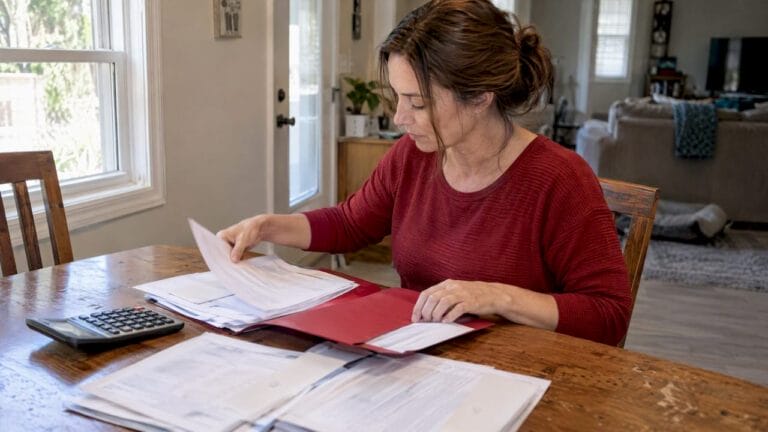
Yes, a hospital can place a lien on your injury settlement in Florida, but only if your county has an ordinance or special act authorizing it. There is no single statewide hospital lien statute. Before you sign anything or accept a settlement check, take two steps:
- Check the county clerk’s records to see whether a lien was actually filed against your case.
- Request the hospital’s itemized bill, lien statement, and admission paperwork in writing, or hand those documents to a personal injury attorney for review.
One more thing to know upfront: Florida’s homestead exemption generally shields your primary residence from most creditors, including hospitals. A hospital lien in Florida almost always targets your settlement or judgment proceeds, not the deed to your house. That distinction matters when you are deciding how urgently to act.
Key Takeaways
Florida hospital liens are county-specific, often challengeable, and almost always negotiable before settlement closes.
| Point | Details |
|---|---|
| No statewide lien law | After Shands (2012), lien authority comes from county ordinances only; your county may not allow liens at all. |
| Filing deadlines are critical | Some counties require perfection within 10 days of discharge; a late filing loses lien priority. |
| Homestead is usually protected | Hospital liens target settlement proceeds, not your primary residence under Florida’s homestead exemption. |
| Medicare and Medicaid are separate | Government recovery rights operate under federal and state statutes, not county ordinances, and carry their own priority rules. |
| Jmoorelegal can help | The Law Office of John Vernon Moore, P.A. offers free consultations to review lien validity and negotiate reductions for Brevard County clients. |
Table of Contents
- What is a hospital lien in Florida and how does it work?
- Why Florida is different: the Shands decision and the county-by-county system
- Can a hospital put a lien on your house in Florida?
- How to confirm whether a hospital lien is valid — step-by-step checklist
- How a hospital lien affects your settlement proceeds
- How to challenge, reduce, or negotiate a Florida hospital lien
- What to do at settlement to protect your recovery
- When should you hire a Florida personal injury attorney?
- How Medicaid and Medicare affect hospital liens in Florida
- How to handle a hospital lien when you were uninsured or underinsured
- Florida case law on successful challenges to hospital liens
- What experienced attorneys see most often with Florida hospital liens
- Facing a hospital lien on your Florida injury claim?
- Sources
What is a hospital lien in Florida and how does it work?
A hospital lien is a legal claim that a hospital asserts against the money you recover from a third party after an injury. It is not a mortgage or a judgment lien on your property in the typical sense. The hospital is essentially saying: “We treated you after someone else hurt you. When you collect from that person’s insurer, pay us first.”
The typical flow looks like this:
| Stage | What happens |
|---|---|
| Injury and treatment | You receive emergency or inpatient care at a hospital. |
| Lien filing | The hospital files a lien with the county clerk (if the county ordinance allows it). |
| Settlement or judgment | You reach a settlement or win a verdict against the at-fault party. |
| Lien claim | The hospital asserts its right to be paid from those proceeds before you receive the balance. |
Three types of claims often get lumped together under the label “lien,” and they work differently:
Hospital lien (county ordinance-based): A claim filed under a local ordinance, targeting settlement or judgment proceeds. Validity depends entirely on whether your county authorizes it and whether the hospital followed the filing rules.
Insurer subrogation: Your own health insurer or PIP carrier may have a contractual right to recover what it paid from your settlement. This is a contract right, not a lien on property.
Medicare and Medicaid conditional payments: Federal and state government programs have statutory recovery rights that operate separately from any county ordinance. These carry their own deadlines and priority rules and must be handled on their own track.
Only hospitals in counties with an enabling ordinance or special act can file a true hospital lien. Doctors’ offices, clinics, and other providers generally cannot use the same county hospital-lien mechanism, though they may pursue other collection remedies.
Why Florida is different: the Shands decision and the county-by-county system
Florida does not have a uniform statewide hospital lien law. That fact surprises most people, and it is the single most important thing to understand about Florida hospital liens.
In 2012, the Florida Supreme Court decided Shands Teaching Hospital and Clinics, Inc. v. Mercury Ins. Co. of Florida. The court struck down the statewide “special act” hospital lien law as unconstitutional under Article III, section 11(a)(9) of the Florida Constitution, which restricts special or local-application laws concerning liens based on private contracts. The practical result: hospitals can no longer rely on a single statewide statute. Instead, lien authority comes from individual county ordinances or pre-existing special acts that survive constitutional scrutiny.
A Florida House staff report documented the resulting patchwork, noting that a number of counties historically had lien provisions, with rules that varied widely on who could file, how long they had to do it, and what notice was required. The report recommended a uniform statewide approach, but that reform has not happened.
What this means for you:
- Your county may not allow hospital liens at all. If there is no enabling ordinance, the hospital has no lien right, only an unsecured debt claim.
- Filing deadlines vary sharply. Some counties require perfection within 10 days of discharge; others allow up to 12 months. A county-by-county chart compiled by practitioners covers all 67 Florida counties and lists which hospitals qualify and what the deadlines are.
- Notice requirements differ. Some ordinances require the hospital to notify the patient and the at-fault party’s insurer within specific windows.
- Government subrogation is separate. Florida Statute § 402.24 gives the Department of Health a statutory lien and subrogation right to recover third-party payments for medical services in certain contexts, with a one-year filing window after the last item of service in some cases. That right exists regardless of whether your county has a hospital lien ordinance.
To verify whether your county authorizes liens, search the county’s official code of ordinances (most are available at municode.com or the county’s own website) and check the county clerk’s online docket for any filed instruments.
Can a hospital put a lien on your house in Florida?
The short answer is: probably not on your primary residence, but the full picture depends on how the lien is structured and what kind of property you own.
Florida’s homestead exemption is one of the strongest in the country. Article X, Section 4 of the Florida Constitution protects a primary residence from forced sale to satisfy most creditor judgments. A county hospital lien ordinance that targets settlement proceeds does not attach to your home’s title the way a mortgage or judgment lien does. The hospital’s claim is against the money you recover from the at-fault party, not against your real estate.
Where the protection may not hold:
- Non-homestead real property. A second home, rental property, or vacant land does not carry homestead protection. If a hospital obtained a court judgment (not just a lien filing) and recorded it in the county where that property sits, it could attach.
- Recorded judgments predating homestead establishment. If a judgment was recorded before you established homestead status, the protection may not apply retroactively.
- Court-ordered distribution of settlement funds. If settlement proceeds are deposited into a court registry and the hospital has a valid lien claim, the court can order distribution to the hospital from those funds before you receive them. That is not a lien on your house, but it has the same financial effect on your recovery.
Practical step: Search your county’s official property records (most Florida counties offer a free online search through the clerk of court or property appraiser’s website) for any recorded instrument naming you as a debtor. If you find one tied to a hospital, consult an attorney before the settlement closes.
How to confirm whether a hospital lien is valid — step-by-step checklist
Lien validity is not automatic. A hospital that misses a filing deadline, skips a required notice, or files in a county without an enabling ordinance may end up as an unsecured creditor with no lien priority at all. Here is how to check before you negotiate or settle.
- Request the hospital’s verified lien statement in writing. Ask for the lien statement, the itemized bill with dates of service, a record of all payments posted (insurance, PIP, Medicare, Medicaid), and copies of any admission or consent forms you signed.
- Search the county clerk’s docket. Go to your county clerk’s official website and search for liens or recorded instruments under your name. Look for filings labeled “hospital lien,” “medical lien,” or “notice of lien.” Note the filing date and compare it against the discharge date.
- Check your insurer’s Explanation of Benefits (EOB). Pull every EOB from your health insurer and PIP carrier. These show what was billed, what was contractually adjusted, and what was actually paid. A hospital that already received full payment from an insurer has a much weaker lien claim.
- Identify any government subrogation claims. If you were on Medicaid or Medicare at the time of treatment, contact those programs directly. CMS provides reporting and conditional-payment recovery procedures for attorneys and claimants. Government recovery rights must be resolved separately from any county hospital lien.
- Confirm the filing deadline. Using the county-by-county chart or the county’s own ordinance text, verify whether the hospital filed within the required window. Some large counties have windows as short as 10 days from discharge.
Documents to request in writing (send via certified mail or email with read receipt):
- Itemized bill with CPT codes and dates of service
- Lien statement or notice of lien (with filing date)
- Record of all insurance payments and contractual adjustments
- Admission and consent forms
- Any correspondence with your insurer or PIP carrier
Pro Tip: When you search the county clerk’s online records, try multiple search terms: your full legal name, the hospital’s name, and “medical lien.” Some counties index these instruments under different labels. Screenshot and date-stamp every result you find.
How a hospital lien affects your settlement proceeds
When you settle a personal injury claim, the money does not flow directly to you if liens exist. Settlement funds typically sit in escrow until all lien claims are resolved, which can delay your actual payout by weeks or months.
The general priority order at settlement looks like this: attorney fees and costs come off the top (by contract), then government recovery rights (Medicare and Medicaid conditional payments carry federal priority), then valid hospital liens under county ordinances, then other subrogation claims, and finally the plaintiff’s net recovery. Some county ordinances explicitly give hospital liens priority over other distributions, which can squeeze your share further.
A few scenarios illustrate how this plays out. If your settlement is $100,000 and a hospital has filed a valid lien for $60,000 in billed charges, your net recovery after attorney fees and the lien could be a fraction of what you expected. That is why verifying lien validity and negotiating reductions before settlement closes is not optional; it is the difference between a meaningful recovery and a nominal one.
Priority conflicts get complicated fast. A hospital lien under a county ordinance may compete with a Medicaid conditional payment, a PIP insurer’s subrogation claim, and a health insurer’s contractual right of reimbursement, all at the same time. When those claims collectively exceed the settlement amount, the parties typically negotiate a pro-rata reduction or ask the court to allocate the funds.
Escrow is your friend here. Never agree to a final release before all lien amounts are confirmed in writing. If the hospital has not responded to your lien inquiry, the settlement funds should stay in escrow until it does.
How to challenge, reduce, or negotiate a Florida hospital lien
Most hospital liens can be reduced. Billed charges are almost never what a hospital actually expects to collect, and several common vulnerabilities give you real leverage.
Common grounds to challenge a lien’s validity:
- Wrong patient name, wrong dates of service, or treatment unrelated to the injury at issue
- Failure to bill your health insurer or PIP carrier before asserting the lien
- Missing contractual write-offs (the difference between billed charges and the insurer’s contracted rate)
- Late filing under the county ordinance
- No enabling ordinance in your county at all
Negotiation tactics that work:
- Present the insurer’s EOB showing the contracted rate. If the hospital accepted $8,000 from your insurer for a service billed at $25,000, the lien should reflect the contracted amount, not the full billed charge.
- Use charity-care and financial-assistance policies. Most Florida hospitals are required to have financial-assistance programs. If your income qualifies, apply formally and use the application as negotiation leverage.
- Offer a prompt, discounted payoff. Hospitals prefer certainty over litigation. An offer of a substantial percentage of the billed amount, payable promptly, often gets accepted, especially when the case has limited policy coverage.
- Document the attorney-effort argument. When your attorney’s work produced the settlement fund that the hospital is now claiming against, some courts and hospitals will agree to reduce the lien to reflect a proportionate share of attorney fees and costs.
When to escalate beyond negotiation:
If the hospital refuses a reasonable reduction and the lien would consume most of your recovery, you have legal options. A declaratory action can ask a court to determine the lien’s validity and scope. Some county ordinances and statutes allow fee-shifting when a lienholder’s position was unreasonable. A court can also allocate settlement funds and limit the hospital’s recovery to its proportionate share of the total damages. These are attorney-level moves, but knowing they exist gives you real leverage at the negotiation table.
What to do at settlement to protect your recovery
Signing a release before lien issues are resolved is one of the most common and costly personal injury case mistakes. Here is what to do instead.
Before you sign the release, insist on written confirmation of every lien amount. “We’ll figure it out after settlement” is not acceptable. Get payoff letters or agreed reduction amounts in writing from every lienholder, including the hospital, any government program, and your health insurer.
Use escrow. If any lien is unresolved at the time of settlement, the settlement funds should go into an escrow account held by your attorney or a neutral third party. The release can be signed, but the money does not move until liens are satisfied. This protects you from a hospital later claiming it never agreed to a reduction.
Include protective language in the settlement agreement. Ask defense counsel to include a clause that conditions full disbursement on written lien resolution, or that reserves a specific dollar amount in escrow pending final payoff letters. Defense counsel often agrees because it protects them from later claims too.
If a lienholder rejects every negotiated payoff and the amount is genuinely disputed, the funds can be deposited into the court registry through an interpleader action. The court then decides how to distribute them. It adds time, but it prevents a hospital from holding your entire recovery hostage.
When should you hire a Florida personal injury attorney?
Some lien situations you can navigate on your own. Most cannot. Here are the concrete triggers that mean you need a lawyer:
- The hospital’s lien would consume more than a third of your expected settlement
- You received Medicare or Medicaid benefits and have not yet addressed conditional payment obligations
- The hospital is threatening to enforce the lien against property rather than just settlement proceeds
- You are in a county with a short filing deadline and are not sure whether the lien was timely perfected
- Multiple lienholders are competing for the same limited settlement funds
- The hospital is refusing to produce itemized billing or lien documentation
A Florida personal injury attorney does several things in a lien situation that are genuinely hard to do alone: verifies lien validity against the county ordinance, identifies filing defects, negotiates reductions using insurer contract rates and EOBs, coordinates with Medicare and Medicaid on conditional payment resolution, and structures settlement language to protect your net recovery. Understanding how Florida auto accident personal injury law works is also useful context before you enter any settlement negotiation.
How Medicaid and Medicare affect hospital liens in Florida
Medicare and Medicaid do not operate under county hospital lien ordinances. They have their own federal and state statutory recovery rights, and those rights take priority over most other claims.
Medicare: When Medicare pays for treatment related to a third-party injury, it makes a “conditional payment” and then seeks reimbursement from your settlement. CMS tracks these payments and expects to be notified when a personal injury case is pending. Failure to reimburse Medicare from settlement proceeds can result in double damages and penalties under the Medicare Secondary Payer Act. The CMS attorney services page outlines the reporting and recovery process. Medicare’s conditional payment amount can often be negotiated down, but only through CMS’s formal process.
Medicaid: Florida’s Agency for Health Care Administration (AHCA) has a statutory right to recover Medicaid payments from third-party settlements. This right is separate from any county hospital lien. AHCA must be notified of the settlement, and its recovery amount is subject to a proportionate-share reduction formula under Florida law, which can meaningfully reduce what you owe. Ignoring an AHCA claim does not make it go away; it can result in recoupment long after you have spent the settlement money.
The practical lesson: if either program paid for any of your treatment, address those claims on a separate track from the hospital lien negotiation. They require different paperwork, different contacts, and different legal arguments.
How to handle a hospital lien when you were uninsured or underinsured
Being uninsured or underinsured at the time of injury actually changes your negotiating position, sometimes in your favor.
Without a health insurer, there is no contractual write-off to point to. The hospital’s billed charges are the starting number. But that also means the hospital cannot claim it already accepted a contracted rate, which gives you room to negotiate from a different angle: financial hardship, charity care, and the limited size of the settlement fund.
Most Florida hospitals that receive federal funding are required to have charity-care and financial-assistance programs. Apply formally, in writing, even if you think you may not qualify. The application itself creates a paper trail and signals to the hospital that full collection is unlikely. Many hospitals will negotiate a significant reduction rather than litigate against an uninsured patient with limited resources.
For underinsured patients, the key document is the PIP insurer’s EOB showing what was paid. If PIP paid $10,000 of a $40,000 bill and the hospital accepted that payment without objection, that acceptance can be used to argue the remaining balance should be proportionally reduced. Combine that with a limited-policy-limits argument (showing the total settlement is $50,000 and multiple parties are competing for it) and you have a credible basis for a substantial reduction.
Florida case law on successful challenges to hospital liens
The Shands decision itself is the most consequential example of a successful challenge. By striking down the statewide special-act lien law as unconstitutional, the Florida Supreme Court effectively invalidated liens that hospitals across the state had been asserting for years under that authority. Any hospital that had filed liens under the statewide special act and had not yet collected was left as an unsecured creditor.
Beyond Shands, Florida courts have consistently held that strict compliance with county ordinance requirements is mandatory. When a hospital misses the filing deadline, even by a short margin, courts have found the lien invalid. The hospital does not lose its right to sue for the debt, but it loses lien priority, which means it stands behind secured creditors and, practically speaking, often collects nothing from a limited settlement.
Challenges based on billing errors have also succeeded. Courts and arbitrators have reduced lien amounts when hospitals could not produce itemized bills matching the lien amount, when billed charges included services unrelated to the injury, or when the hospital had already received full payment from an insurer and failed to credit it against the lien. The lesson from these cases is consistent: the burden is on the hospital to prove the lien is valid, timely, and accurately calculated. Demanding documentation puts that burden where it belongs.
What experienced attorneys see most often with Florida hospital liens
The cases that concern me most are the ones where a client comes in after already signing a release. They accepted a settlement, the hospital’s lien was never formally resolved, and now the hospital is pursuing them directly for the balance. That outcome is entirely avoidable, but it requires addressing the lien before the release is signed, not after.
The most common lien issue in practice is not fraud or bad faith. It is a hospital asserting a lien for full billed charges when the insurer’s contracted rate is a fraction of that amount. The hospital knows the difference. When the case also has limited policy coverage, that argument gets even stronger because courts are reluctant to let a hospital’s lien consume a recovery that the plaintiff’s attorney worked to produce.
One non-obvious point: the earlier you raise the lien issue, the better your leverage. A hospital negotiating a lien reduction six months before settlement closes has more flexibility than one being asked to accept a discount on the day of closing. Early contact signals that you are organized, that you know the rules, and that you are prepared to challenge the lien in court if necessary.
Facing a hospital lien on your Florida injury claim?
If a hospital lien is threatening to consume your settlement, Jmoorelegal offers something most injured people do not have: direct access to an experienced Florida personal injury attorney who handles lien disputes as part of every case, not as an afterthought.

The Law Office of John Vernon Moore, P.A. serves clients in Brevard County and the surrounding area. When you come in for a free initial consultation, you get a real review of your lien situation: whether the filing was valid, whether the county ordinance applies, and what a realistic negotiated payoff looks like. No generic advice. No hand-off to a paralegal. If a hospital is standing between you and your recovery, that is exactly the kind of problem the firm was built to solve. Schedule your free case evaluation and find out where you actually stand.
Sources
Florida Supreme Court decision (controlling authority):
Shands Teaching Hospital and Clinics, Inc. v. Mercury Ins. Co. of Florida — the constitutional ruling that eliminated the statewide special-act lien law. Search the case name to find the full opinion and any subsequent citations.
Florida House staff report on county lien laws:
Feasibility of Establishing a Statewide Lien Law — documents which counties historically had lien provisions and what each required.
County-by-county practitioner chart:
Florida Hospital Lien Laws in All 67 Counties — lists eligible hospitals, filing deadlines, and notice requirements for every Florida county.
Florida Statute § 402.24:
Recovery of third-party payments for medical services — governs the Department of Health’s separate subrogation and lien rights.
CMS conditional payment procedures:
CMS Attorney Services: Reporting a Case — the starting point for resolving Medicare conditional payment obligations.
County clerk records: Search your county clerk’s official website for recorded instruments under your name. Most Florida counties offer free online access. Search terms to try: “hospital lien,” “medical lien,” “notice of lien,” and the hospital’s name.
County ordinance text: Search municode.com or your county’s official website for the county code. Look for chapters titled “Hospital Liens,” “Medical Liens,” or “Health Care Liens.” The ordinance text will state the filing deadline, eligible filers, and notice requirements.
This article provides general information about Florida hospital lien law and is not legal advice. Lien rules vary by county and change over time. Confirm current rules with the applicable county ordinance, the Florida statutes, or a qualified Florida personal injury attorney before making decisions about your case.
This article is general information, not a substitute for advice from a qualified lawyer. Consult a qualified legal professional about your own circumstances before acting on anything here.
- Shands Teaching Hospital and Clinics, Inc., v. Mercury Ins. Co. of Florida
- Feasibility of Establishing a Statewide Lien Law (Florida House report)
- FLORIDA HOSPITAL LIEN LAWS IN ALL 67 COUNTIES
- Florida Hospital Liens – Matthiesen, Wickert & Lehrer S.C.
- Florida Hospital Lien Guide 2026: Cut Your Payoff