Yes, Florida dog owners are strictly liable when their dog bites someone in a public place or lawfully on private property, under F.S. §767.04. That liability applies even if the dog never bit anyone before. But it isn’t absolute: comparative negligence can reduce a payout, a posted “Bad Dog” sign can shift the outcome (unless the victim is under 6), and you still need to get medical care, report the bite, and document everything before you talk to any insurer.
TL;DR:
- Florida law imposes strict liability on dog owners for bites occurring in public or lawfully on private property, regardless of the dog’s viciousness history.
- The owner is liable if the victim was lawfully present, and the burden is on the victim to prove lawful presence when caught trespassing.
- Posting a visible “Bad Dog” sign may protect owners unless the victim is under six, but the sign’s effectiveness depends on jury assessment of visibility and wording.
- victims should seek immediate medical care, report the bite to authorities, and preserve evidence like photos and witness contacts within the first hour.
- Florida law limits damages to two years from the bite date, and insurers often try to reduce payouts by claiming victim fault or enforcing breed-specific coverage exclusions.
Table of Contents
- What Florida Law Actually Says About Dog Bites
- Who Counts as an Owner, and Who Counts as Lawfully Present
- Defenses That Can Reduce or Bar a Dog Bite Claim
- What to Do Immediately After a Dog Bite in Florida
- Damages You Can Recover in a Florida Dog Bite Case
- How Long You Have to File a Florida Dog Bite Claim
- What Happens to the Dog and the Owner Afterward
- Why Legal Help Matters After a Serious Dog Bite
- The Gap Between the Statute and What Actually Gets You Paid
- Getting Legal Help After a Dog Bite in Brevard County
- Sources
What Florida Law Actually Says About Dog Bites
Florida Statute §767.04 is short, but it does a lot of work. It says a dog owner is liable for damages when their dog bites a person who is in a public place or lawfully on private property, “regardless of the former viciousness of the dog or the owner’s knowledge of such viciousness.”
That last clause is the whole ballgame. Most states still run on a “one bite” rule, where a victim has to prove the owner knew or should have known the dog was dangerous. Florida dropped that requirement decades ago. The Florida Bar’s own analysis traces the shift to a 1949 statutory change that moved the state to strict liability, and that history still shapes how courts read the statute today.
One nuance matters: the statute is cumulative, not exclusive. A victim can still bring a separate negligence claim alongside the statutory one, particularly useful when facts blur the line between a bite and other harm. And per the official statute text, the liability standard applies specifically to bites, a distinction that matters more than most victims realize.
Who Counts as an Owner, and Who Counts as Lawfully Present
“Owner” under Florida law isn’t limited to the person who signed the adoption papers. Courts look at who has possession, custody, or control of the dog at the time of the bite. A dog sitter, a family member watching the animal for the weekend, or a landlord who keeps a dog on the property can all fall under the statute’s reach depending on the facts.
The second half of the equation, “lawfully on private property,” trips up a lot of claims. It covers invited guests, but also people with a legal right to be there without a personal invitation: a postal carrier delivering mail, a utility worker reading a meter, a contractor scheduled for a repair. It does not cover trespassers.
Disputes over lawful presence come up constantly. If someone wandered into a fenced yard uninvited, the owner will argue trespass to defeat the claim entirely. The burden falls on the injured person to show they had a legitimate reason to be where they were bitten.
Defenses That Can Reduce or Bar a Dog Bite Claim
Strict liability doesn’t mean automatic full recovery. Florida applies comparative negligence to dog bite cases: if the victim’s own carelessness contributed to the bite, say they were teasing the dog or ignored a clear warning, their recovery drops by their percentage of fault.
The “Bad Dog” sign defense gets cited constantly, but it’s weaker than most owners assume. Posting a legible warning sign can shield an owner from liability, but courts treat the sign’s visibility, wording, and placement as fact questions for a jury to decide, not an automatic shield, according to Florida Bar case-law analysis. The defense also has a hard limit: it never applies when the victim is under age 6, regardless of how well the sign was posted.
What to Do Immediately After a Dog Bite in Florida
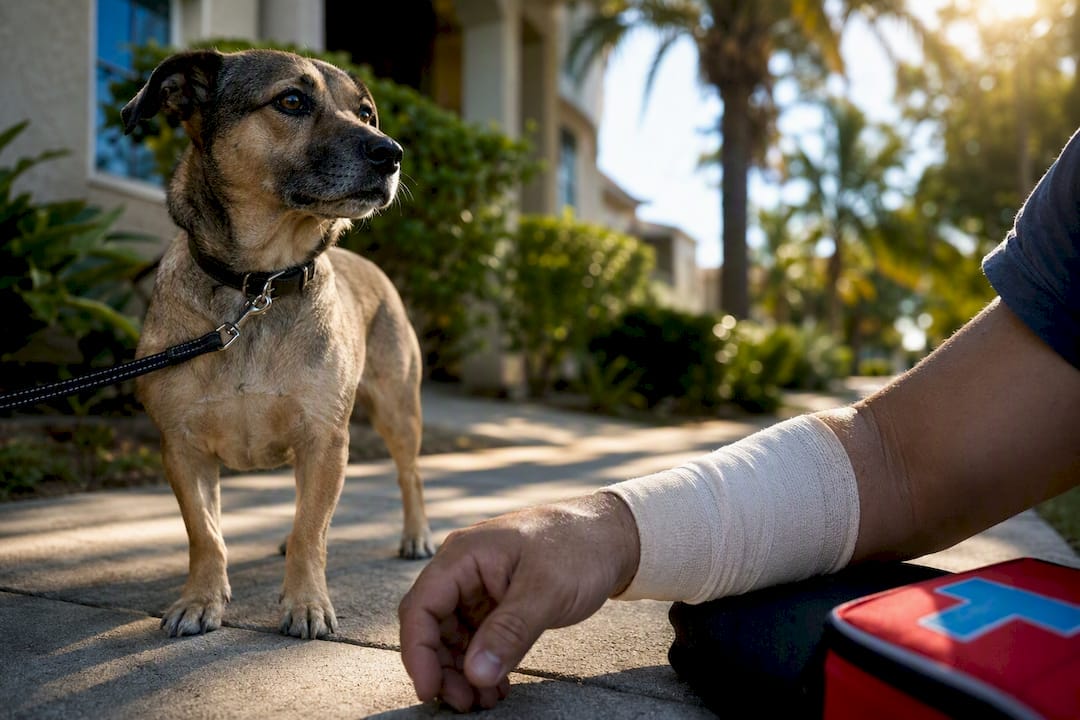
The first hour after a bite shapes both your health outcome and your legal claim. Puncture wounds carry real infection risk, and Mayo Clinic’s first-aid guidance recommends immediate wound cleaning and prompt professional evaluation, especially for deep punctures or bites to the hands and face.
- Get medical care first. Clean the wound, seek treatment, and ask for documentation of every injury, including photos.
- Report the bite. Notify local animal control or police. The Florida Department of Health’s reporting guidance exists partly because reports trigger rabies checks and create an official record you’ll need later.
- Collect evidence on the spot. Get the owner’s contact and insurance information, witness names, scene photos, and the dog’s vaccination status if it’s available.
- Preserve everything else. Save the clothing you were wearing, keep a written timeline of symptoms and events, and avoid giving a detailed statement to any insurance adjuster before speaking with an attorney.
Pro Tip: Take photos of the bite site itself, not just the wound. The location often becomes evidence in disputes over whether you were lawfully present when the dog attacked.
Damages You Can Recover in a Florida Dog Bite Case
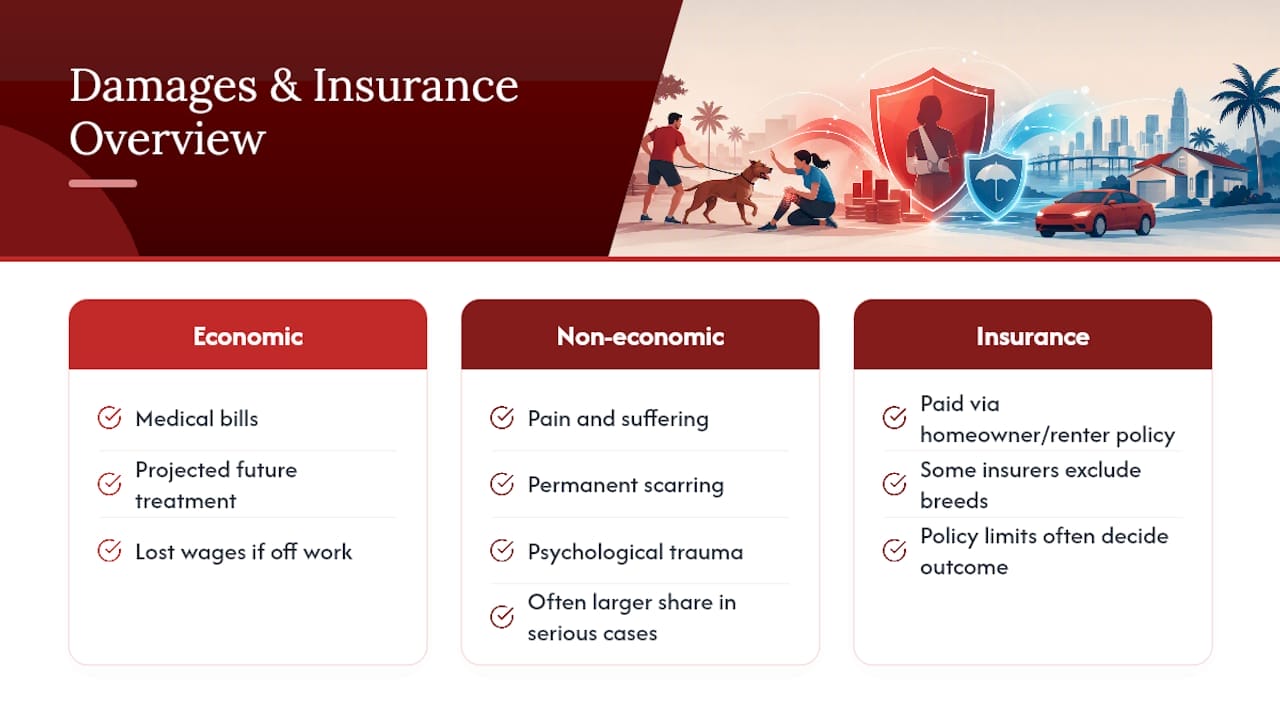
Florida dog bite claims typically split into two buckets. Economic damages cover medical bills, projected future treatment (reconstructive surgery or physical therapy, for example), and lost wages if the injury kept you from work. Non-economic damages cover pain and suffering, permanent scarring, and psychological trauma, categories that are harder to quantify but often make up the larger share of a settlement in serious cases.
Insurance shapes almost every outcome here. Most claims get paid through the dog owner’s homeowner’s or renter’s liability policy, and Florida Bar commentary notes dog bites make up a real share of homeowner liability payouts nationally. Some insurers exclude certain breeds from coverage entirely, an issue explored in breed-specific homeowner’s insurance rules that can complicate a claim before it even starts. Finding out early what policy limits apply, and whether the breed is even covered, often determines whether a case settles fairly or drags into litigation.
How Long You Have to File a Florida Dog Bite Claim
Florida gives personal injury victims two years from the date of the bite to file suit. Miss that window and the claim is generally barred for good, regardless of how strong the underlying facts are. Certain circumstances can pause or extend that clock, but they’re the exception, not the rule, so don’t count on one applying to you.
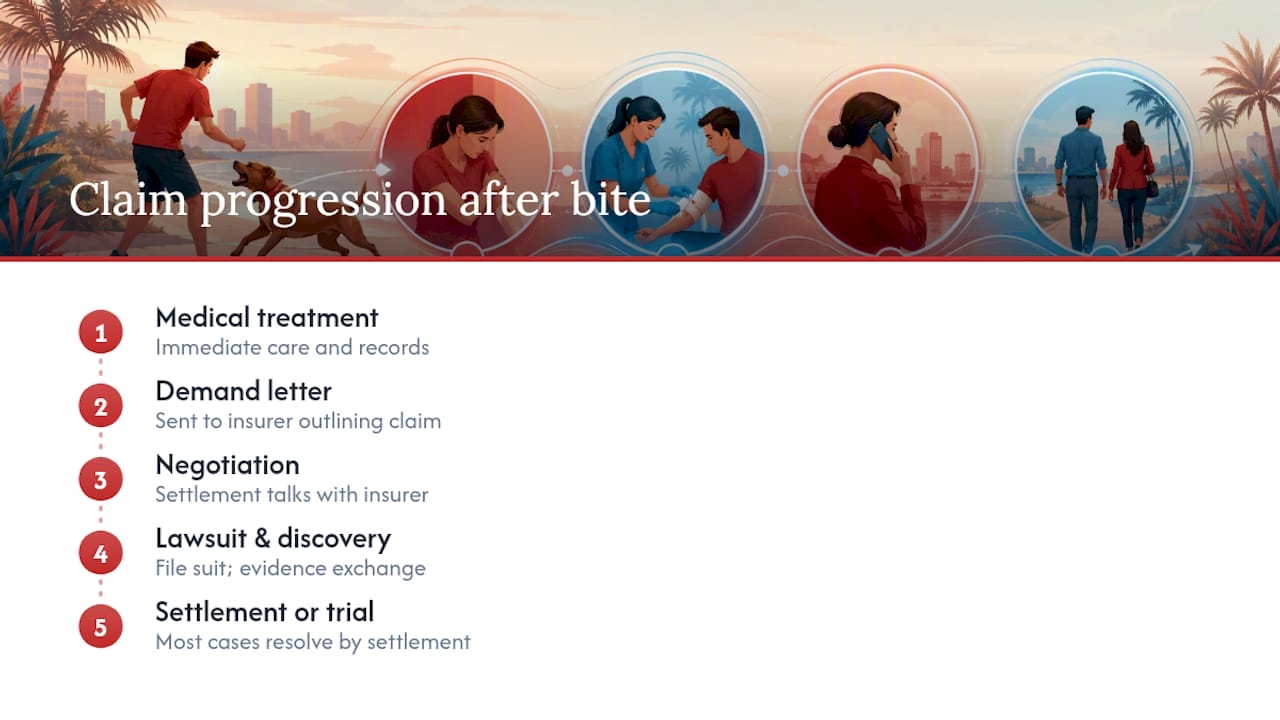
A typical claim moves through treatment, a demand letter to the insurer, negotiation, and, if that stalls, a lawsuit followed by discovery and either settlement or trial. Most cases resolve before trial, but the timeline still often runs many months from injury to resolution.
What Happens to the Dog and the Owner Afterward
Animal control typically responds to a reported bite with a rabies check and a quarantine period for the dog, sometimes ten days, to confirm it isn’t showing signs of infection. Depending on the bite’s severity and the animal’s history, local authorities may initiate a dangerous-dog investigation, which can lead to registration requirements, muzzle orders, or in repeat cases, euthanasia orders.
Criminal or municipal penalties vary heavily by county and city ordinance. Some jurisdictions add fines or misdemeanor charges when an owner violated leash laws or ignored a prior dangerous-dog designation. None of this happens automatically; it depends on whether you or animal control actually files the report, which is one more reason documenting the incident matters for your civil claim too.
Why Legal Help Matters After a Serious Dog Bite
Insurers don’t pay strict-liability claims at face value. Their first move is almost always to build a comparative negligence argument, claiming you provoked the dog, trespassed, or ignored a warning sign, because every percentage point of fault they can shift onto you lowers their payout.
The Law Office of John Vernon Moore, P.A. brings combined experience to personal injury claims in Brevard County, including attorneys who understand how insurers negotiate before a case ever reaches a courtroom. On a dog bite claim, that means collecting medical records the right way, preparing a demand package that accounts for future treatment costs, negotiating directly with the insurer’s adjuster, and filing suit when a fair settlement isn’t on the table. Readers who want a broader look at what a personal injury claim actually involves, or the benefits of hiring an injury attorney, can find more detail on how that process plays out.
The Gap Between the Statute and What Actually Gets You Paid
Most explanations of Florida’s dog bite statute stop at “strict liability” and treat that as the end of the analysis. It isn’t. The statute tells you who can be held responsible in theory; it says almost nothing about how much you’ll actually collect, and that gap is where most victims lose ground without realizing it.
The overlooked variable is timing, not law. Waiting a week to report a bite, skipping the follow-up doctor visit, or giving a recorded statement to an adjuster before understanding comparative negligence exposure can cost more than any legal technicality. Insurers exploit exactly that kind of delay, and Florida’s statute won’t rescue a claim that was undermined in its first 48 hours.
If there’s one thing worth prioritizing above all else, it’s evidence collected in real time, not evidence reconstructed later from memory. A strong statute paired with weak documentation still produces a weak settlement.
— John
Getting Legal Help After a Dog Bite in Brevard County
Legal services handle personal injury and dog bite claims throughout Brevard County, and initial consultations are offered.

When you come in after a dog bite, the work starts immediately: reviewing the incident and any animal-control report, preserving evidence before it disappears, contacting the dog owner’s insurer, and drafting a demand that accounts for both current medical bills and future treatment you might need. Direct attorney involvement, rather than a call center or a rotating case manager, can differentiate a legal practice built around individual case strategy from a volume practice. If you’re weighing whether to handle an insurer on your own or bring in counsel, start with a conversation about your personal injury claim before you sign anything or give a recorded statement. If a dog bite happened alongside a car accident or another incident, the firm’s personal injury practice page covers the broader range of cases it takes on across the county.
This article is general information, not a substitute for advice from a qualified lawyer. Consult a qualified legal professional about your own circumstances before acting on anything here.
Sources
- Florida Statutes — F.S. §767.04
- Chapter 767 Section 04 – 2025 Florida Statutes
- Dog bites human: Why Florida lawyers should care and what they need to know – The Florida Bar
- Animal bites: First aid — Mayo Clinic