Insurance bad faith in Florida means an insurer failed to handle your claim fairly and honestly, and that failure harmed you. Under Fla. Stat. § 624.155, you can bring a civil action if the insurer violated a listed rule or did not try in good faith to settle when it could and should have. Before you sue, you generally have to file a written civil remedy notice and give the insurer 60 days to fix the problem. A slow, low or disappointing offer is not automatically bad faith. This guide explains where the line sits, what the 2023 reforms changed, and what to do first.
TL;DR
- Bad faith is more than a denial you disagree with. The insurer must have failed to act fairly and honestly toward you, and you must show it caused damage.
- A civil remedy notice is the required first step. The Department of Financial Services and the insurer must both receive it, and the insurer has 60 days to pay or correct the problem.
- Third-party (liability) and first-party (your own policy) claims follow different paths. Property claims need a court ruling against the insurer first.
- Since 2023, mere negligence is not enough, and liability insurers get a 90-day window to tender and avoid a bad-faith action.
- Keep every letter, estimate, photo and call note. Be accurate and brief when you talk to an adjuster.
Table of Contents
- What bad faith means under Florida law
- What insurer conduct can support a claim
- The civil remedy notice, step by step
- Deadlines and preconditions that catch people off guard
- What you can recover
- What to preserve and how to talk to the insurer
- Our perspective
- When to talk to a lawyer
- Talk to us about your claim
- FAQ
- Sources
What bad faith means under Florida law
Every insurer owes its policyholder a duty to handle claims with honesty and fair dealing. Bad faith is the breach of that duty. The statute describes it as an insurer not attempting in good faith to settle a claim when, under all the circumstances, it could and should have done so, had it acted fairly and honestly toward its insured and with due regard for the insured’s interests (Fla. Stat. § 624.155).
Two categories matter, and which one you are in changes almost everything.
Third-party bad faith
This arises when you are the insured and someone else makes a claim against you. Imagine you cause a crash, the other driver demands your policy limits, and your insurer refuses a reasonable settlement. If the case then ends in a judgment above your limits, you could be personally exposed. Florida has long recognized this kind of claim, because the insurer controls the defense and settlement, so it owes the insured a duty similar to a fiduciary’s.
First-party bad faith
This arises when you claim against your own insurer: a homeowners loss, an uninsured motorist claim, a property claim after a storm. The Florida Senate has noted that these claims were not recognized before the statute, because the insured was not exposed to liability and there was no fiduciary duty like the one in third-party cases. Today the statutory route is how first-party claimants pursue them.
| Third-party bad faith | First-party bad faith | |
|---|---|---|
| Who is the claimant | Insured (or someone who stepped into the insured’s position) after an excess judgment | Policyholder claiming under their own policy |
| Typical trigger | Insurer refuses a reasonable chance to settle within limits | Unjustified delay, denial or underpayment of your own claim |
| Key hurdle | Showing the failure to settle caused the excess exposure | Notice, then a prior ruling that the insurer breached the contract (for property claims) |
| Main source of law | Common law plus § 624.155 | § 624.155, and § 624.1551 for property |
What insurer conduct can support a claim
There is no single list that proves bad faith, because courts look at the totality of the circumstances. The conduct that tends to appear in real disputes includes:
- Denying a claim without a reasonable investigation.
- Failing to answer your communications or to explain a denial in writing.
- Refusing to settle within policy limits when liability is clear and damages obviously exceed the limits.
- Misrepresenting what the policy covers.
- Dragging out a claim so you accept less.
The statute also lists specific violations that can support a first-party claim, and the notice you file has to name the one you allege. Florida’s 2023 reform added a floor: the statute now says mere negligence alone is insufficient to constitute bad faith. A careless mistake, an honest valuation fight or a reasonable coverage disagreement does not cross the line by itself.
One thing helps claimants: a person pursuing the statutory remedy does not need to prove that the insurer’s actions happened often enough to show a general business practice. One mishandled claim can be enough if the other elements are met.
What you have to prove
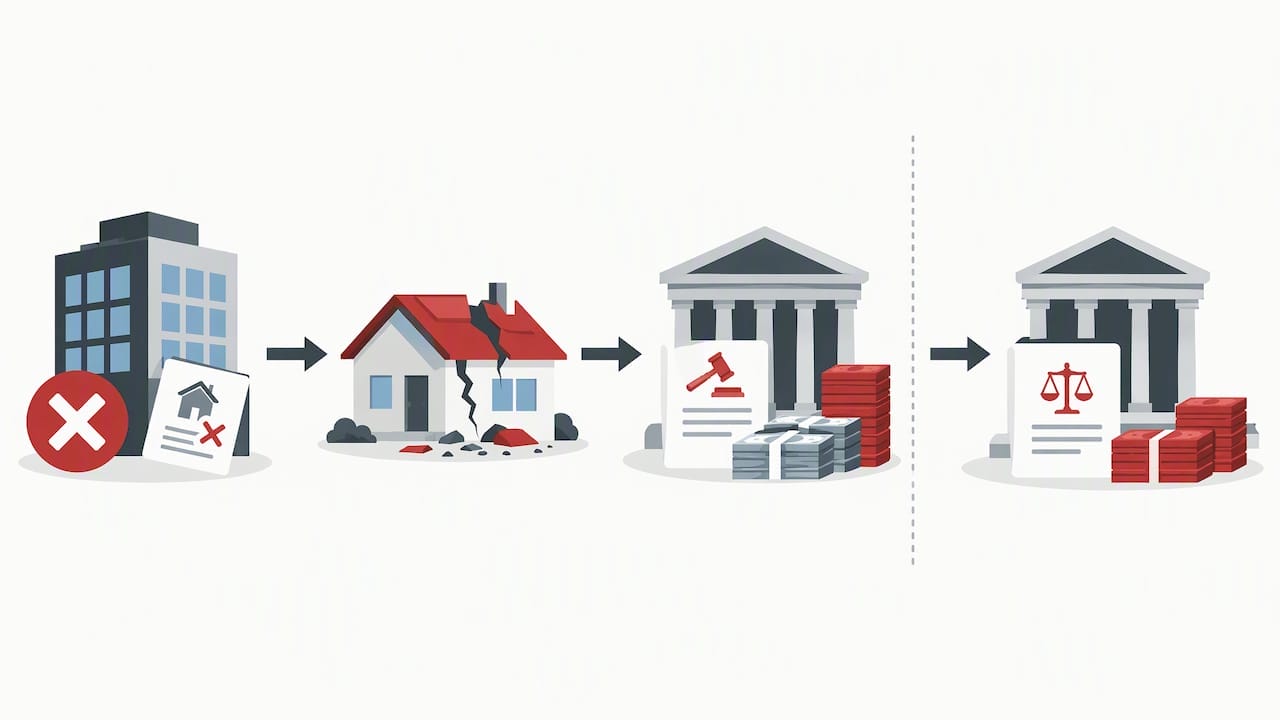
In short: that the insurer acted unfairly or dishonestly toward you, and that this caused damage. Causation is where many cases are won or lost. In third-party claims, an excess judgment is generally the most straightforward way to show it, as the Eleventh Circuit explained in Perera v. United States Fidelity & Guaranty Co.. In practice that means the underlying case usually has to end before a bad-faith case can start. Florida courts treat the cause of action as one that typically does not accrue until damages such as an excess judgment are determined.
The civil remedy notice, step by step
The civil remedy notice (often shortened to CRN) is the gate to a statutory bad-faith lawsuit. It is a written notice of the violation, and the statute makes it a condition that the Department of Financial Services and the insurer receive it 60 days before you sue (Fla. Stat. § 624.155).
What the notice must contain
Per the statute, the notice must state:
- The statutory provision, including the specific language, the insurer allegedly violated.
- The facts and circumstances giving rise to the violation.
- The name of any individual involved in the violation.
- Reference to the specific policy language that is relevant, if any.
- A statement that the notice is given to perfect the right to pursue the civil remedy.
Vague notices cause problems. If the notice does not tie the facts to the exact statutory language, the insurer will argue it was defective, and that fight can cost you months.
How you file it
The Department of Financial Services runs an online Civil Remedy filing system for the 60-day notice. The department forwards it to the insurer. Use the official system rather than relying on a letter you mailed yourself, and save the confirmation.
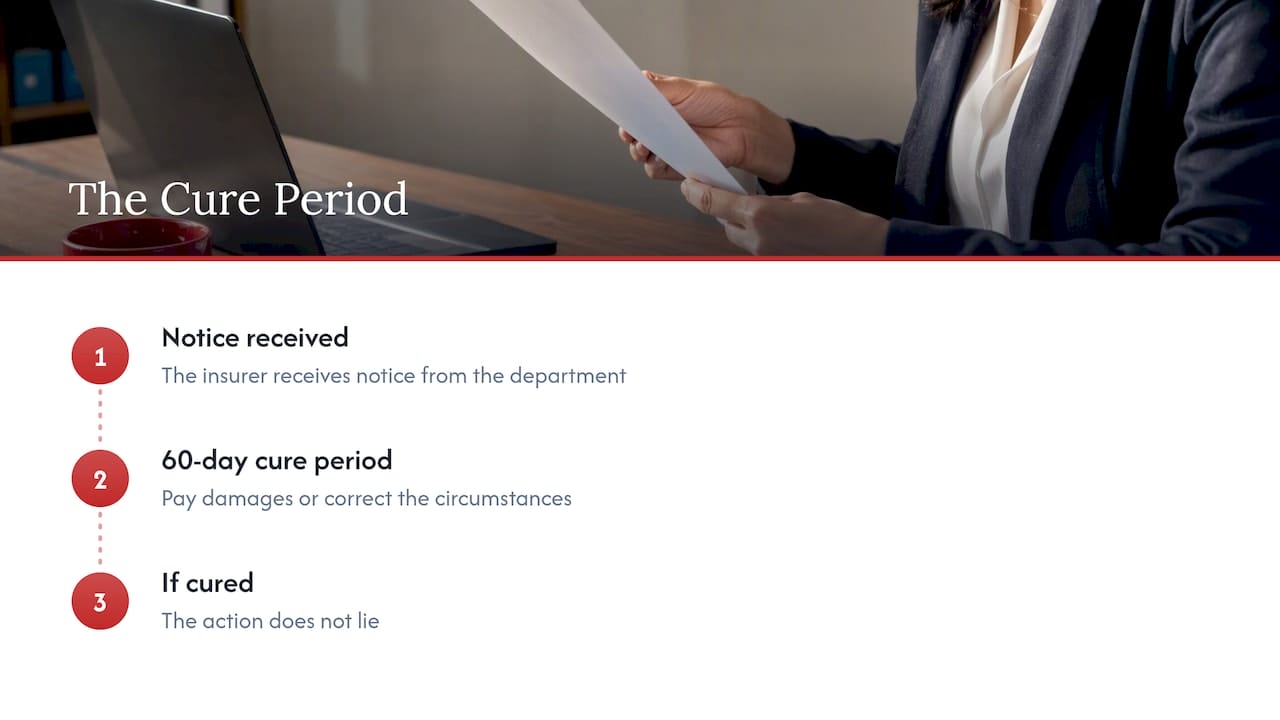
The 60-day cure period
The insurer has 60 days after receiving notice from the department to pay the damages or correct the circumstances. If it does, the action does not lie. This is why a notice is useful even when you never sue: it often prompts a payment that the adjuster would not otherwise make. It also means the notice should describe exactly what correction you want, such as paying an undisputed amount or issuing a written explanation.
Deadlines and preconditions that catch people off guard
Liability claims: the 90-day tender window
For claims against a liability policy, the statute says an action does not lie if the insurer tenders the lesser of the policy limits or the demand within 90 days after it receives actual notice of the claim accompanied by sufficient evidence to support its amount. If the insurer fails to tender, any applicable limitation period is extended by 90 days. This is part of the 2023 HB 837 package, and it is why a well-documented demand matters so much. Evidence sent late, or incomplete, gives the insurer an argument that the clock never started.
Property claims: win the contract case first
For property insurance, Section 624.1551 provides that no action for extracontractual damages lies until the insured, or a named beneficiary, establishes through an adverse court adjudication that the insurer breached the contract, and a final judgment or decree is entered against the insurer. The same statute says that accepting an offer of judgment or being paid an appraisal award does not count as that adverse adjudication. So a storm-damage claim that settles through appraisal generally cannot be turned into a bad-faith suit afterward.
Do not forget the ordinary limitation period
Bad faith sits on top of the underlying claim, and that claim has its own deadline. Florida shortened the general negligence limitation period for most new cases to two years under HB 837. We explain how that works in our guide to the Florida injury statute of limitations. If your underlying injury claim is at risk of expiring, address that first.
What you can recover
The statute allows a person damaged by a violation to recover damages. The measure is generally the damages the insurer’s conduct caused, which in an excess-judgment case can include the amount of the judgment above the policy limits. Punitive damages are not routine: the statute reserves them for conduct showing a general business practice carried out with willful, wanton and reckless disregard (Fla. Stat. § 624.155). Court costs and attorney fees are tied to an adverse adjudication at trial or on appeal under the same section.
Because the available damages depend on the type of policy, the underlying judgment and the exact violation, treat any number you read online as a ceiling for conversation, not a prediction. An attorney reviewing the claim file can tell you what is realistic.
What to preserve and how to talk to the insurer
A bad-faith case is built from the claim file, so you start building it on day one of the original claim.
- Written communications. Keep every email, letter, portal message and denial. If something happens by phone, follow up in writing: “Confirming our call today at 2 p.m., you said…”
- Dates. Note when you reported the loss, when you sent each document, and when the insurer responded. Delay is only provable if the timeline is.
- Proof of loss. Photos, repair estimates, medical bills, receipts, and any contractor or expert reports.
- Demands and responses. If you or your lawyer made a settlement demand, keep the demand, its deadline, and every reply.
- The policy. Keep the complete policy with declarations and endorsements, not just the summary page.
When you speak with an adjuster, be truthful, specific and short. Give the facts you know. Do not guess at fault, speculate about injuries you have not had evaluated, or minimize symptoms. You have to cooperate with your own insurer’s reasonable requests under the policy, but you can ask for requests in writing and take time to review documents before agreeing to a recorded statement. If you are claiming against someone else’s insurer, you generally have no duty to give that company a statement at all. Before you sign a release or accept a final payment, have a lawyer read it: a release can end the claim you needed to preserve. Our page on common personal injury case mistakes covers other early errors that hurt claims.
Our perspective
Most people who call us about a stalled claim are not looking for a fight. They want the claim paid and they want to understand why it has not been. We start with the file: what was reported, what was sent, what the insurer said back and when. In many cases the first step is not a lawsuit but a clear, documented demand and a close read of the statute so the notice, if one is needed, is specific enough to hold up.
We also tell people plainly when the facts look like a hard coverage dispute rather than bad faith. Florida’s 2023 changes made the standard tougher, and a weak notice or a rushed filing can hand the insurer an easy defense. The strongest position usually comes from a well-documented underlying claim, a demand with a real deadline, and a client who has kept everything. We work with injured people and families in Brevard County, and we give straight answers about timing and cost in the first conversation.
— John
When to talk to a lawyer
Talk to an attorney sooner rather than later if any of these apply:
- The insurer denied or underpaid a claim and gave no clear written reason.
- A policy-limits demand was made and the insurer let it expire.
- There is a judgment or a likely judgment above the policy limits.
- A deadline, either the 60-day cure period or the underlying limitation period, is approaching.
If your underlying case is an auto accident, our guides to Florida auto accident personal injury law and car accident settlements and PIP show how the claim itself is built, which is the foundation of any later bad-faith argument.
Talk to us about your claim
The Law Office of John Vernon Moore, P.A. represents injured people and families across Brevard County through our personal injury practice, including car accidents, slip and fall, and wrongful death. We offer a free 30-minute consultation, and you speak directly with an attorney. Bring your policy, your claim correspondence and any denial letter, and we will tell you where the claim stands and what to do about the clock.

You can contact the firm through our main site to schedule.
FAQ
Is a denied claim the same as bad faith?
No. A denial can be wrong without being bad faith. Florida law says mere negligence alone is not enough, so you need to show the insurer did not act fairly and honestly toward you, and that this caused damage. A well-documented denial based on a reasonable reading of the policy is usually a contract dispute.
Do I always need a civil remedy notice?
For a statutory bad-faith action under § 624.155, yes: the Department of Financial Services and the insurer must receive 60 days’ written notice before you sue. The notice is filed through the department’s online Civil Remedy system. If the insurer pays or corrects the problem inside the 60 days, the action does not go forward.
Can I file a bad-faith claim over a property insurance dispute right away?
Not usually. Under § 624.1551, you must first get an adverse court adjudication that the insurer breached the policy, with a final judgment entered against it. Accepting an offer of judgment or an appraisal award does not satisfy that requirement.
Can the insurer’s bad faith make it pay more than the policy limit?
It can. When an insurer fails to settle within limits and a judgment exceeds them, the damages caused by that failure may include the excess amount. Whether that applies depends on the facts, the type of policy and the proof of causation, so have an attorney review the file.
Sources
- Chapter 624, Section 155, 2026 Florida Statutes
- Section 624.1551, Florida Statutes
- Florida Department of Financial Services: Civil Remedy and Required Legal Notices
- Florida Senate interim report on bad faith claims
- Florida House final bill analysis, HB 837 (2023)
- Perera v. United States Fidelity & Guaranty Co., Eleventh Circuit opinion