An expert witness can change the outcome of a criminal case by translating, validating, or undermining technical evidence that a jury cannot evaluate on its own. Under Federal Rule of Evidence 702 and the gatekeeping standard established in Daubert v. Merrell Dow Pharmaceuticals, Inc., courts require that expert testimony rest on qualified knowledge, reliable methods, and a sound application of those methods to the facts at hand. When those standards are met, expert testimony does three things for the defense:
- Clarifies technical evidence so jurors understand what a DNA match, a toxicology screen, or a cell-site record actually proves and what it does not.
- Exposes investigation or lab errors that the prosecution’s own witnesses may gloss over or fail to acknowledge.
- Provides alternative causation or intent explanations that create reasonable doubt where the prosecution’s narrative seemed airtight.
Key Takeaways
Expert witnesses in criminal defense cases are most effective when engaged early, properly vetted, and prepared to testify within the reliable bounds of their methodology under Rule 702 and Daubert.
| Point | Details |
|---|---|
| Engage experts early | Early involvement lets experts preserve evidence and shape defense strategy before trial. |
| Rule 702 and Daubert apply | Experts must be qualified, use reliable methods, and stay within what the data supports. |
| 2023 Rule 702 amendment | Courts now scrutinize overstatement; expert reports must reflect the method’s actual limits. |
| Vet prior testimony | Check transcripts and deposition records before retaining any expert for trial. |
| Jmoorelegal can help | The firm connects Brevard County defendants with vetted experts and handles the full defense strategy. |
Table of Contents
- Why expert witnesses matter in criminal defense
- How experts concretely help the defense
- What types of experts do defense teams typically use?
- What legal standards govern whether an expert can testify?
- Testifying vs. advisory vs. court-appointed experts
- How do you choose and vet the right expert?
- Preparing an expert for testimony and handling cross-examination
- A criminal defense attorney’s perspective on engaging experts early
- Jmoorelegal’s criminal defense team is ready to help
- Sources
Why expert witnesses matter in criminal defense
The term “expert witness” refers to someone with specialized knowledge, skill, training, or experience that goes beyond what an average juror brings to the courtroom. Their job is not to tell the jury what happened, but to help the jury understand evidence they could not fairly evaluate without that background.
Defense teams use two distinct types. A testifying expert appears at trial, submits a report, and is subject to cross-examination and disclosure rules. A non-testifying or advisory expert works behind the scenes: reviewing evidence, identifying weaknesses in the prosecution’s theory, and helping counsel prepare without being disclosed as a trial witness. That distinction matters tactically, and it shapes discovery obligations on both sides. The Legal Information Institute’s overview of expert witnesses lays out both roles and the qualification standards that apply under Rule 702.
Common defense scenarios where experts become necessary: a defendant challenges a DNA report that may have been contaminated during collection; a mental-health professional explains a defendant’s state of mind at the time of the alleged offense; a digital forensics analyst contests the prosecution’s timeline built from cell-tower data; or an accident reconstructionist disputes the prosecution’s account of how a shooting or collision unfolded. Each of these situations involves technical questions that a jury simply cannot resolve fairly without expert guidance.
How experts concretely help the defense
Expert testimony helps jurors understand technical issues and gives defense counsel a tool to both explain the defense theory and directly challenge prosecution evidence. The primary functions break down this way:
- Explaining complex science in plain language so jurors grasp what a result actually means, rather than deferring to the prosecution’s expert by default.
- Rebutting prosecution experts by identifying methodological flaws, cherry-picked data, or conclusions that exceed what the underlying method can support.
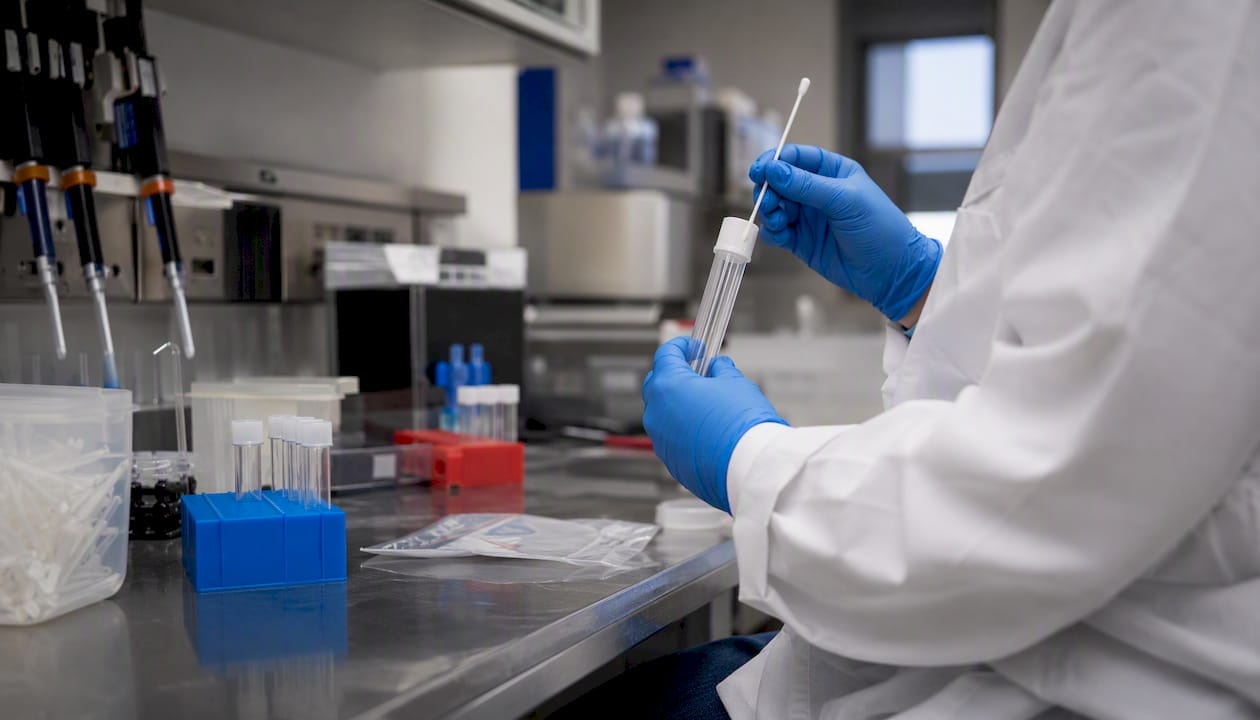
- Identifying evidence-handling errors such as chain-of-custody gaps, improper storage, or cross-contamination in a forensic lab.
- Offering alternative causation or intent explanations that are consistent with the physical evidence but point away from guilt.
- Evaluating competency and mental state in cases where the defendant’s capacity to stand trial or form criminal intent is genuinely at issue.
Consider a few archetypes. A forensic DNA analyst might show that a mixed-source profile was misinterpreted, with the lab overstating the probability of a match. A cell-site expert might demonstrate that the prosecution’s location evidence places the defendant within a radius of several miles, not at a specific address. A toxicologist might explain that a blood-alcohol reading taken hours after an arrest does not reliably retrodict the defendant’s level at the time of the alleged offense. In each case, the expert does not fabricate an alternative story. They reveal the limits of the prosecution’s evidence, and that is often enough to create reasonable doubt.
Rule 702 and Daubert make expert credibility decisive. A poorly qualified or methodologically sloppy expert can be excluded before the jury ever hears a word, which is why choosing and preparing the right witness matters as much as finding one at all. Understanding how admissibility of evidence works in a criminal case is a prerequisite for using experts effectively.
What types of experts do defense teams typically use?
The right expert depends entirely on the evidence at the center of the case. Here are the most common categories and the triggers that call for each:
- Forensic DNA analysts: Unexpected or contested DNA results, mixed profiles, or questions about lab protocol.
- Forensic toxicologists: Drug or alcohol charges, poisoning allegations, or cases where medication effects on behavior are disputed.
- Forensic pathologists and medical examiners: Cause-of-death disputes, injury timing, or cases where the prosecution’s medical conclusions are contested. Medical experts are expected to provide objective, scientifically sound testimony grounded in standard-of-care analysis, not advocacy.
- Ballistics and firearms experts: Shooting cases where trajectory, distance, or weapon function is in dispute.
- Digital forensics and cell-site analysts: Cases built on phone records, GPS data, computer evidence, or electronic communications.
- Forensic accountants: White-collar cases involving fraud, embezzlement, or complex financial transactions.
- Accident reconstructionists: Vehicle collisions, DUI crashes, or any case where the physical sequence of events is contested.
- Mental health and competency evaluators: Insanity defenses, competency-to-stand-trial hearings, and sentencing mitigation.
Specialty areas overlap more than people expect. A digital forensics expert may need to coordinate with a cell-site analyst and a forensic accountant in a fraud case that also involves location evidence. Multi-disciplinary teams are not unusual in complex federal cases, and the defense attorney’s job is to identify which disciplines are genuinely necessary rather than assembling experts for show.
What legal standards govern whether an expert can testify?
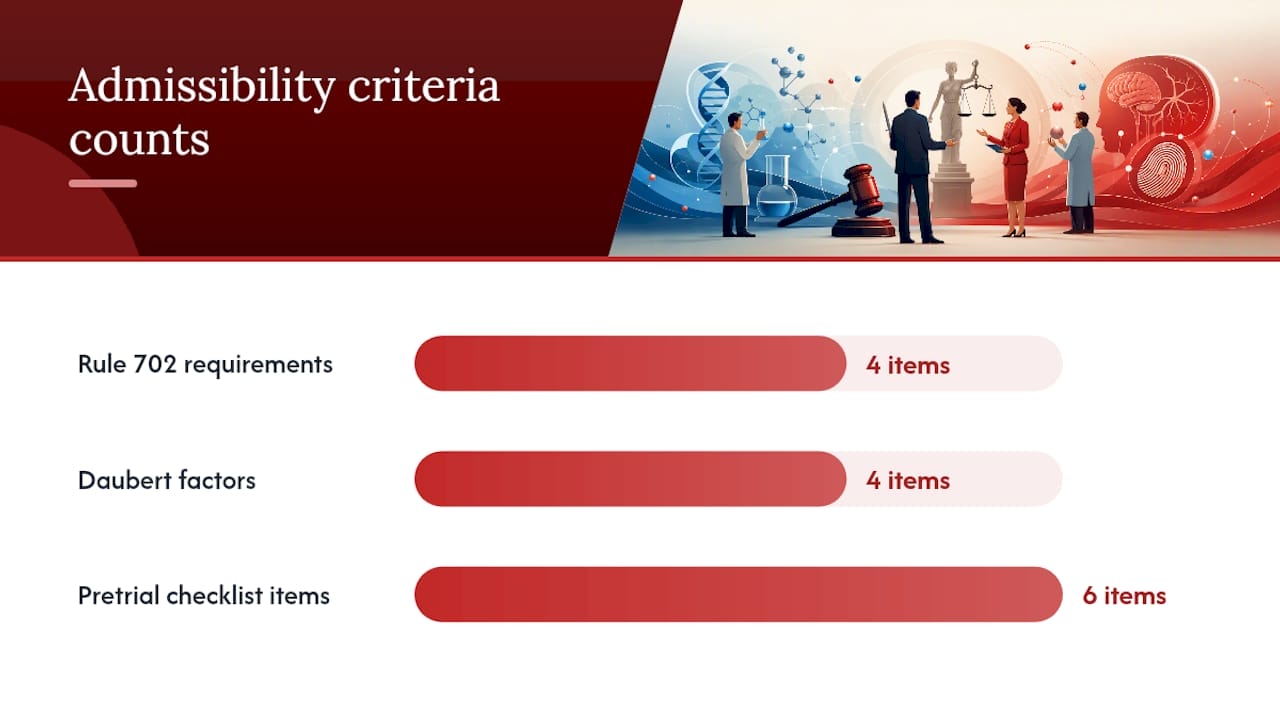
Federal Rule of Evidence 702 sets four requirements: the expert must be qualified by knowledge, skill, experience, training, or education; the testimony must help the trier of fact understand the evidence or determine a fact in issue; the opinion must be based on sufficient facts or data; and it must be the product of reliable principles and methods, reliably applied to the facts of the case. The judge acts as a gatekeeper under Daubert v. Merrell Dow Pharmaceuticals, Inc., evaluating these factors before the jury hears a word.
The 2023 amendment to Rule 702 added an important clarification: an expert’s opinion must stay within the bounds of what can reliably be concluded from the methodology used. Courts have excluded or criticized testimony that claims higher precision than the underlying method supports, including cell-site location evidence presented as pinpoint-accurate and fiber analysis overstated as definitive identification. The amendment directly targets that kind of overreach.
Under Rule 104(a), the judge resolves preliminary admissibility questions, which means Daubert motions and hearings are where the real fight over expert testimony often happens, before trial begins.
Pretrial admissibility checklist for defense counsel:
- Is the expert qualified in the specific sub-discipline at issue, not just the general field?
- Will the testimony help the jury understand a fact that is actually in dispute?
- Is the opinion based on sufficient facts and data from this case?
- Is the methodology peer-reviewed, tested, and does it have a known error rate?
- Did the expert apply the method reliably to the specific facts, without extrapolating beyond what the data supports?
- Does the expert’s report avoid overstatement, consistent with the 2023 Rule 702 amendment?
Statistic callout: Courts applying Daubert evaluate method transparency, peer review status, known error rates, and whether the technique has support in the relevant scientific community. These factors are flexible and context-specific, not a rigid checklist, which means preparation and method documentation are what determine whether an expert survives a challenge.
Testifying vs. advisory vs. court-appointed experts
The operational differences between expert roles carry real tactical consequences.
A testifying expert must be disclosed to the prosecution, submits a written report, and is deposed and cross-examined. Everything that expert produces in connection with the case is potentially discoverable.
A non-testifying advisory expert helps counsel understand the evidence, identify weaknesses, and prepare for cross-examination of the prosecution’s witnesses. Work product protections generally shield communications with advisory experts from disclosure, which gives the defense room to explore unfavorable findings without handing ammunition to the prosecution.
A court-appointed expert is selected by the judge, typically in cases involving indigent defendants or highly technical issues where the court itself needs neutral guidance. The National Institute of Justice explains that court-appointed experts can save time and expense and provide neutral technical assistance when parties lack resources, though the defense gives up control over the expert’s conclusions.
| Feature | Testifying expert | Advisory expert | Court-appointed expert |
|---|---|---|---|
| Disclosed to prosecution | Yes | Generally no | Yes |
| Subject to deposition | Yes | Generally no | Yes |
| Courtroom presence | Yes | No | Yes |
| Defense controls conclusions | Yes | Yes | No |
| Cost responsibility | Defense | Defense | Shared or court-funded |
| Tactical use | Trial testimony, jury education | Strategy, cross-exam prep | Neutral technical guidance |
How do you choose and vet the right expert?
The American Bar Association advises bringing experts in early so they can inspect evidence, preserve perishable material, and advise on investigatory priorities before evidence degrades. That timing recommendation also shapes the vetting process: you need someone who can move quickly and work collaboratively with counsel.
Vetting checklist:
- Verify credentials: degrees, current licensure, and board certifications in the specific sub-discipline.
- Review publications and peer-reviewed work to confirm the expert is active in the field, not just a professional witness.
- Pull prior testimony transcripts and deposition records. An expert who cannot withstand cross-examination loses credibility fast, and their prior performance is the best predictor of future performance.
- Confirm methodology transparency: the expert should be able to explain their process clearly and acknowledge its limits without prompting.
- Run a conflict check against the prosecution, the investigating agency, and any labs involved.
- Ask directly: “What are the weaknesses in your opinion?” An expert who cannot answer that question is a liability at trial.
Fee and timeline guidance: Retain experts as early as possible. Analysis and report delivery timelines vary by discipline, but complex forensic reviews can take weeks to months. Most experts bill hourly with a retainer deposit; some offer flat fees for defined scopes. Budget for both the analysis phase and trial preparation time separately.
Pro Tip: Engage the expert as a consultant first. Work-product protections apply to consultant communications, which gives you space to evaluate their usefulness and the strength of their opinion before committing to disclosure. Convert them to a testifying expert only after you have confirmed their methodology is sound, their opinion is favorable, and there are no conflicts.
Preparing an expert for testimony and handling cross-examination
Preparation starts long before the trial date. Here is a practical sequence:
- Document review: The expert reviews all relevant materials, not just the items the prosecution relied on. Gaps in what they reviewed become cross-examination targets.
- Method audit: Counsel and the expert walk through the methodology together. Any step that cannot be clearly explained to a non-scientist needs to be simplified or reconsidered.
- Report drafting: The written report should state conclusions precisely, avoid overstatement, and acknowledge limitations. A report that overpromises is a gift to opposing counsel.
- Direct-examination narrative: Build a clear story arc: qualifications, methodology, findings, conclusions. Jurors follow experts who teach, not experts who lecture.
- Mock cross-examination: Stress-test assumptions. Have someone play an aggressive cross-examiner who attacks credentials, methodology, error rates, and prior inconsistent testimony.
Train the expert to use plain English under pressure. Technical jargon under cross-examination reads as evasion to jurors. Practice concession language: “That is a fair point, and here is why it does not change my conclusion” is far more credible than a flat denial.
Pro Tip: Frame limitations proactively on direct examination. An expert who volunteers the boundaries of their opinion before cross-examination gets to control the narrative. Jurors read candor as credibility.
A criminal defense attorney’s perspective on engaging experts early
Early expert engagement is not just a best practice. It is often the difference between a defense that reacts to the prosecution’s evidence and one that shapes the investigation from the start. When an expert is brought in at the charging stage or shortly after, they can flag which physical evidence needs independent testing before it degrades, identify which prosecution lab reports deserve a hard look, and advise on whether the defense theory is scientifically supportable before counsel commits to it publicly.
That early work also tends to reduce costs over the life of a case. An expert who identifies a fatal flaw in the prosecution’s forensic evidence early can focus the defense’s resources on the right issues, rather than chasing every angle through trial. In some cases, a well-documented expert report shapes plea negotiations or even prompts the prosecution to reconsider charges before a case reaches a jury.
At Jmoorelegal, the approach to criminal defense treats expert engagement as a strategic decision made at the outset of representation, not an afterthought when trial is weeks away.
Jmoorelegal’s criminal defense team is ready to help
Facing criminal charges in Brevard County means navigating forensic evidence, prosecution experts, and admissibility battles that require more than general legal knowledge. Jmoorelegal brings local court experience and a network of vetted experts across forensic, medical, and digital disciplines, supporting both the advisory work that shapes strategy and the trial testimony that puts the defense in front of a jury.

The firm offers free initial consultations, so you can discuss your case, understand what expert resources may apply, and get a clear picture of next steps without a financial commitment upfront. Whether the case turns on DNA evidence, cell-site data, toxicology, or mental-health evaluation, the right expert engaged at the right time can change what is possible. Schedule a consultation with Jmoorelegal’s criminal defense team to start building that strategy today.
Sources
These are the primary U.S. references worth reviewing with your attorney:
- expert witness | Wex | US Law | LII / Legal Information Institute
- The Admissibility of Expert Testimony – Reference Manual on Scientific Evidence – NCBI Bookshelf
- Archived | Reasons to Appoint an Expert Witness
- Selecting right expertise for defense strategy – American Bar Association
- Expert Witnesses in Criminal Defense Case | Hogan Eickhoff
This article provides general legal information, not legal advice. Laws and procedural rules vary by jurisdiction and change over time. Consult a qualified criminal defense attorney to evaluate how these standards apply to your specific case.
This article is general information, not a substitute for advice from a qualified lawyer. Consult a qualified legal professional about your own circumstances before acting on anything here.
Recommended
- How Admissibility Of Evidence Is Important For A Criminal Case? – The Law Office of John Vernon Moore, P.A.
- Forensic Accounting in Divorce | Brevard County FL Lawyer
- How the Criminal Defense Process Works: A Clear Guide – The Law Office of John Vernon Moore, P.A.
- Criminal Law – The Law Office of John Vernon Moore, P.A.