A property damage claim is a formal request for money to repair or replace damaged property. You file it either with your own insurer (a first-party claim) or against an at-fault party’s insurer (a third-party claim). Before anything else: make sure the scene is safe, photograph everything, take reasonable steps to stop further damage, and notify the right party promptly.
Here is what matters most, right up front:
- Who pays: Your own insurer covers first-party claims (home, auto, renters policies). A third party’s liability insurer pays when someone else caused the damage.
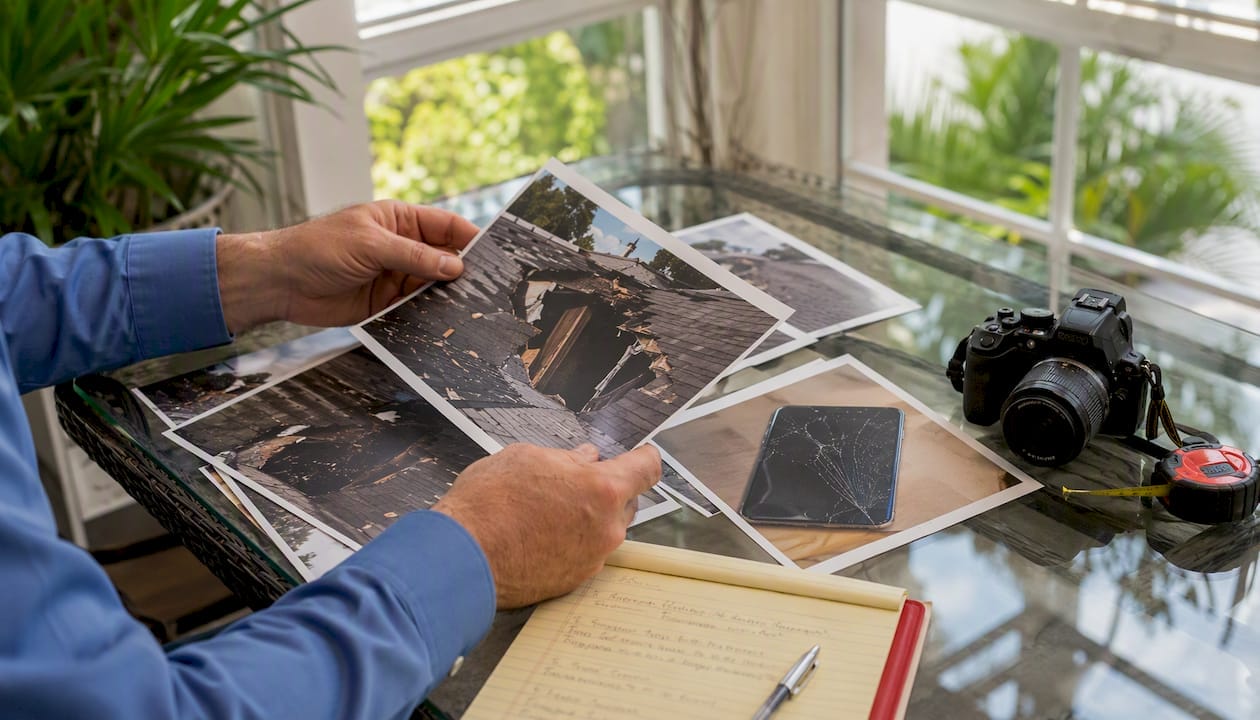
- Evidence that moves claims forward: Date-stamped photos and video, itemized receipts, at least two written estimates from licensed contractors, and any police or fire reports.
- Mitigation matters: Policies typically require you to take reasonable steps to prevent further loss. Tarp a damaged roof. Board broken windows. Keep every receipt.
The property damage claim process is a negotiation, not a one-time transaction. The first check you receive is often an advance, not a final settlement. Knowing this distinction from the start puts you in a much stronger position.
Table of Contents
- What counts as a property damage claim?
- Who pays: your insurer or the at-fault party?
- How does the property damage claim process work?
- ACV vs. RCV: how insurers calculate what they owe you
- What can a property damage claim actually pay for?
- How long does a property damage claim take?
- When should you hire an attorney for a property damage claim?
- What to do if your claim is denied or underpaid
- Documentation checklist: what to collect and keep
- Key Takeaways
- The part most people get wrong about property damage claims
- Jmoorelegal can help when your property damage claim stalls
- Useful sources and regulators to consult
What counts as a property damage claim?
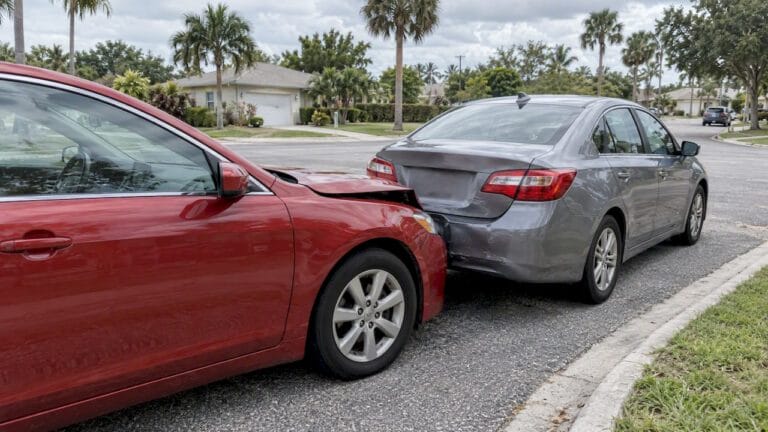
Property damage is the physical harm or destruction of real or tangible personal property caused by negligence, willful acts, or natural forces. It is legally distinct from bodily injury, though both can arise from the same incident. A car that rear-ends yours causes property damage to the vehicle and potentially bodily injury to you — two separate legal claims.
Real property vs. personal property
Real property includes your home, garage, fences, and any permanent structures attached to land. Personal property covers movable items: appliances, furniture, electronics, clothing, and similar contents. Cornell Law’s definition draws this line clearly, and it matters because your policy may value them differently and apply separate deductibles.
Vehicles occupy their own category. Auto policies carry specific property damage liability coverage and, separately, collision or comprehensive coverage for your own car.
Common causes and examples
- Storms: Wind, hail, and lightning are common causes of homeowner claims. Roof damage from a hurricane is a classic example.
- Water damage: Burst pipes, appliance leaks, and sudden water intrusion (not flooding from outside, which usually requires a separate flood policy).
- Fire: Covered under most homeowner and renter policies, including smoke and char damage to contents.
- Vandalism and theft: Broken windows, graffiti, and stolen personal property typically covered under homeowner or renter policies.
- Vehicle collisions: A driver who hits your parked car owes property damage through their liability coverage.
- Contractor damage: A roofer who drops equipment through your ceiling creates a third-party liability claim against their insurance.
Who pays: your insurer or the at-fault party?
The answer depends on who caused the damage and what coverage exists.
First-party vs. third-party claims
A first-party claim goes to your own insurer. You pay your deductible, and your insurer covers the rest up to your policy limit. This is how most homeowner, renter, and collision claims work.
A third-party claim goes to the at-fault party’s liability insurer. You do not pay a deductible in this scenario; the at-fault party’s insurer is responsible up to their policy limits. If those limits fall short, most states allow you to pursue the at-fault party personally through a civil lawsuit.
Most states legally require drivers to carry property damage liability coverage. Florida, for example, requires a minimum amount of property damage liability per accident. When an at-fault driver carries only minimum coverage and your losses exceed it, you may need to look at your own uninsured/underinsured motorist coverage or pursue the driver directly.
How policy terms affect what you recover
| Term | What it means for your payout |
|---|---|
| Deductible | Subtracted from your settlement in first-party claims before you receive payment |
| Policy limit | The maximum your insurer will pay; losses above this come out of pocket or from a lawsuit |
| ACV coverage | Pays depreciated value of damaged property (see valuation section below) |
| RCV coverage | Pays what it actually costs to replace the item new; higher premium, higher recovery |
| Endorsements | Add-ons that expand coverage (e.g., sewer backup, scheduled personal property) |
Checking your policy for ACV versus RCV language and any endorsements before a loss occurs is the only reliable way to avoid a surprise gap after the fact.
How does the property damage claim process work?
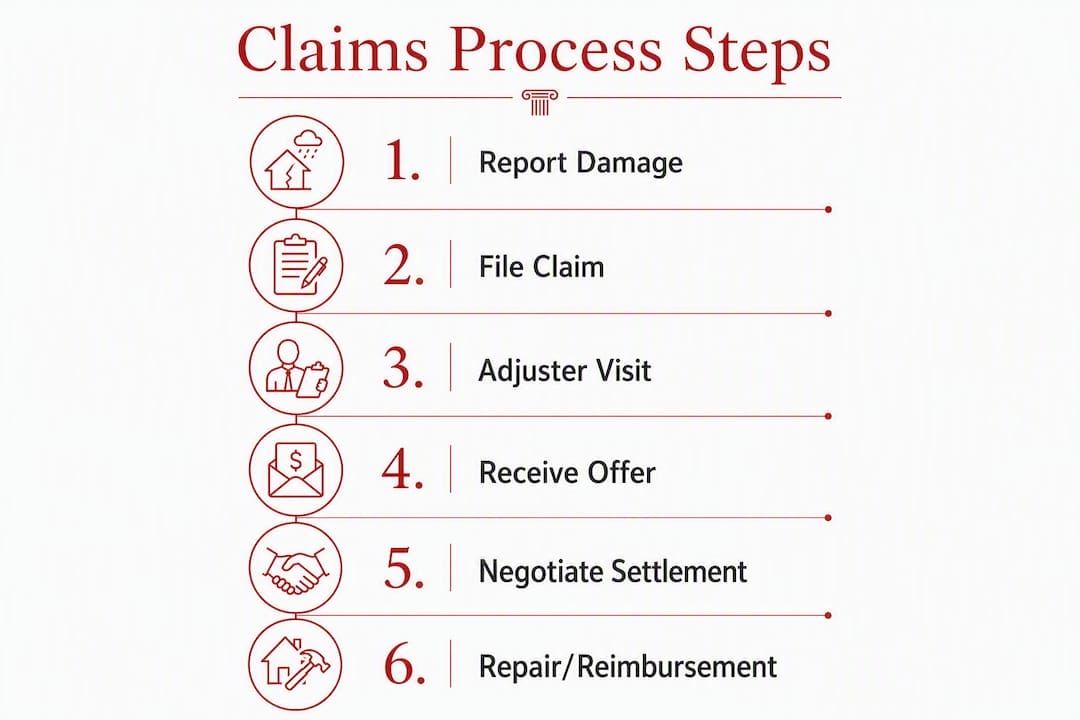
The property damage claim process follows a predictable sequence, though the pace varies by insurer, damage complexity, and how well you document your loss.
- Secure the scene and prevent further damage. Your policy almost certainly requires you to mitigate. Tarp the roof, shut off water, board windows. Keep every receipt for emergency repairs.
- Document everything before cleanup. Photograph and video the damage from multiple angles. Note the date and time on each file. Do not discard damaged items until the adjuster has seen them.
- Notify your insurer or the at-fault party. Most insurers accept claims by phone, app, or website. You will need the incident date and time, the address, a description of what happened, and your supporting documents.
- File the formal claim and submit documentation. Provide photos, an inventory of damaged items, and any police or fire reports. Get at least two written estimates from licensed contractors.
- Cooperate with the adjuster’s inspection. The insurer assigns an adjuster to inspect the damage and estimate repair costs. Be present, point out everything, and ask for the adjuster’s estimate in writing.
- Review the settlement offer. The adjuster’s first number is a starting point. The claims process is a negotiation rooted in your insurance contract — you are not required to accept the first offer. If the estimate does not cover necessary repairs, push back with your contractor estimates.
- Receive payment or escalate. Once you agree on an amount, the insurer issues payment. If you cannot reach agreement, options include the appraisal clause, a state insurance department complaint, or a lawsuit.
Pro Tip: The first check from your insurer is frequently an advance, not a final settlement. Read any release form carefully before signing. Signing a full release bars you from claiming additional damages discovered later, including hidden structural damage that only appears during repairs.
ACV vs. RCV: how insurers calculate what they owe you
How your insurer values the damage is often the single biggest factor in how much you recover. Two policies covering the same house can produce very different checks after the same storm.
Actual Cash Value (ACV)
ACV pays the depreciated value of damaged property. The insurer estimates what the item was worth at the time of loss, accounting for age, condition, and wear. A ten-year-old roof that costs $15,000 to replace might have an ACV of $6,000 after depreciation. You receive $6,000 minus your deductible.
Replacement Cost Value (RCV)
RCV pays what it actually costs to repair or replace the damaged property with new materials of like kind and quality, without subtracting depreciation. The same roof gets the full $15,000 (minus deductible). RCV coverage typically costs more in premiums, but the gap it closes after a major loss is substantial.
| Scenario | ACV payout | RCV payout |
|---|---|---|
| Roof replacement ($15,000 cost) | $6,000 | $15,000 |
Coverage type materially affects how much you recover after depreciation is applied. Many policyholders discover this difference only after a loss. If your policy pays ACV, ask whether you can add an RCV endorsement — for contents, this is often called “replacement cost contents coverage.”
Deductibles are subtracted from the final settlement payment in most first-party insurance claims. A higher deductible lowers your premium but increases your out-of-pocket exposure after a loss.
What can a property damage claim actually pay for?
Typically covered
- Repair or replacement costs for the damaged structure or items, up to policy limits.
- Temporary housing and additional living expenses (ALE) when your home is uninhabitable during repairs. This covers hotel costs, restaurant meals above your normal food budget, and similar expenses.
- Debris removal after a covered event such as a fallen tree or fire.
- Reasonable emergency repairs (tarping, boarding, water extraction) when you keep receipts.
- Diminished value in vehicle claims: the reduction in a car’s market value after a collision repair, even when repairs are done correctly. This is more commonly compensable in auto property damage claims than in homeowner claims.
Common exclusions
- Wear and tear and routine maintenance failures. A roof that fails because it was 30 years old and never maintained is not a covered loss.
- Flood damage from external water sources. Standard homeowner policies exclude flood; you need a separate flood policy, typically through the National Flood Insurance Program.
- Pollution and contamination without a specific endorsement.
- Business losses at a residential property without commercial endorsements.
- Intentional acts by the policyholder.
How long does a property damage claim take?
Timelines vary by insurer, state law, and claim complexity. A straightforward auto property damage claim might resolve in one to two weeks. A major storm claim involving structural damage can take months, particularly when contractor availability is limited or coverage disputes arise.
Most states set statutory deadlines for insurers to acknowledge a claim, begin investigation, and issue a decision. Florida, for instance, has specific timeframes written into its insurance statutes. Missing documentation, disputes over coverage, and disagreements about repair scope are the most common causes of delay.
The statute of limitations for filing a lawsuit over a property damage dispute is a separate and harder deadline. It varies by state and by the type of claim. In New York, for example, the general civil statute of limitations is three years for property damage actions. Florida’s deadline differs. Missing the statute of limitations means losing your right to sue, regardless of how strong your underlying claim is.
Practical steps to protect your timeline:
- Record the date you reported the claim and every subsequent contact with the insurer.
- Follow up in writing (email creates a paper trail).
- If negotiations stall and a significant amount is at stake, consult an attorney before the statutory deadline passes.
When should you hire an attorney for a property damage claim?
Not every property damage claim needs a lawyer. A minor fender-bender with a cooperative insurer usually does not. But certain situations make legal help worth the cost.
Red flags that justify calling an attorney
- The loss is large, near, or above your policy limits.
- The insurer has denied your claim without a clear, written explanation.
- You have received multiple lowball offers that do not cover actual repair costs.
- The at-fault party is uninsured, underinsured, or disputes liability.
- The damage involves complex causation (mold after water damage, structural failure after a contractor error).
- The insurer is delaying unreasonably or requesting documents it has already received.
What an attorney can do
A lawyer can send formal demand letters that carry more weight than policyholder requests, invoke the appraisal clause in your policy (which forces a neutral valuation process), file a bad-faith insurance claim if the insurer is acting improperly, and represent you in litigation if settlement fails. Attorneys also know how to avoid common claim mistakes that can reduce or eliminate recovery.
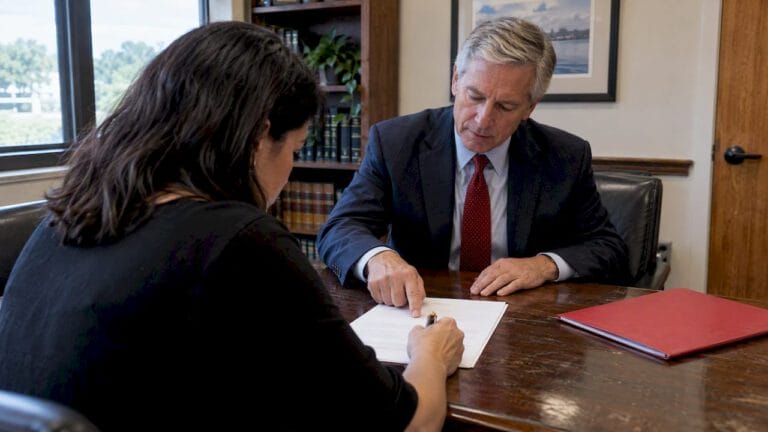
Fee structures vary. Many property damage attorneys work on contingency for third-party claims, meaning they take a percentage of the recovery and you pay nothing upfront. First-party insurance disputes sometimes involve hourly billing. Ask about the fee arrangement at your first consultation.
Pro Tip: Bring your policy declarations page, photos of the damage, the insurer’s written denial or settlement offer, and any contractor estimates to your first attorney meeting. The more organized your file, the faster a lawyer can assess your options. See what your attorney needs to know about your claim before your consultation.
What to do if your claim is denied or underpaid
A denial is not the end of the road. Insurers make mistakes, and adjusters sometimes miss damage or misapply policy language.
Immediate steps after a denial or low offer:
- Request the denial or underpayment explanation in writing. Insurers are generally required to provide one.
- Review the explanation against your actual policy language. The reason given must be supported by a specific policy exclusion or condition.
- Gather any missing documentation: additional photos, a second contractor estimate, or an independent appraisal.
- Re-submit with a formal written appeal, attaching the supporting evidence.
Escalation options if the appeal fails:
- Appraisal clause: Many policies include a provision allowing each side to hire an independent appraiser. If the two appraisers disagree, a neutral umpire decides. This is faster and cheaper than a lawsuit for pure valuation disputes.
- State insurance department complaint: Every state has a department of insurance that regulates insurer conduct. Filing a complaint costs nothing and sometimes prompts an insurer to reconsider. Your state’s department website lists the required documents, which typically include your policy, the denial letter, and your correspondence with the insurer.
- Lawsuit: If the insurer acted in bad faith or the amount in dispute justifies litigation, a lawsuit is the final option. This is where an attorney becomes nearly indispensable.
Treating the process as a negotiation and retaining evidence helps secure a full settlement even after an initial denial.
Documentation checklist: what to collect and keep
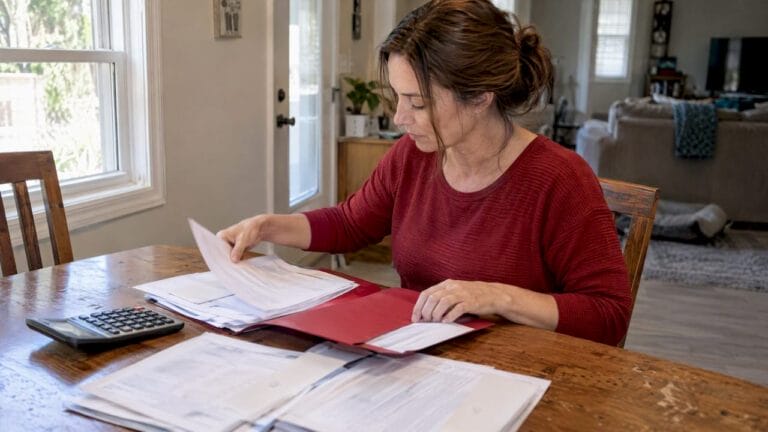
Good records are what separate a claim that settles in two weeks from one that drags on for months. Comprehensive documentation — chronological photos, multiple contractor estimates, and receipts for mitigation — often determines whether a claim settles quickly or stalls.
Collect and organize these items:
- Police or fire report — if law enforcement or the fire department responded.
Keep originals in a safe place and maintain a digital copy in cloud storage. Organize everything chronologically. A well-organized file signals to adjusters that you are prepared, and it makes any attorney you hire far more effective from day one.
Key Takeaways
A property damage claim is a formal request for compensation filed either with your own insurer or against an at-fault party’s insurer, and the outcome depends heavily on documentation, policy type, and how quickly you act.
| Point | Details |
|---|---|
| Two filing paths | File first-party with your own insurer or third-party against the at-fault party’s liability coverage. |
| ACV vs. RCV gap | RCV coverage pays replacement cost without depreciation; ACV pays the depreciated value, often significantly less. |
| First check is often an advance | Do not sign a full release until you are certain no hidden damage remains; claims can sometimes be reopened. |
| Red flags for legal help | Large losses, repeated low offers, unexplained denials, or uninsured at-fault parties all justify consulting an attorney. |
| Jmoorelegal | The Law Office of John Vernon Moore, P.A. in Brevard County, FL offers free initial consultations for property damage and personal injury disputes. |
The part most people get wrong about property damage claims
Most people treat the adjuster’s first visit as a verdict. They get a number, feel relieved the process has started, and sign whatever comes next. That is the single most expensive mistake you can make.
The adjuster works for the insurer. That does not make them dishonest, but their job is to close claims efficiently, not to maximize your recovery. Their first estimate is based on what they observed during a single inspection, often before all damage is visible. Water intrusion hides behind drywall. Structural damage from impact shows up weeks later. The moment you sign a full release, that hidden damage becomes your problem, not theirs.
The second thing people underestimate is the statute of limitations. It feels abstract until it is not. You spend six months going back and forth with an insurer, negotiations stall, and then you discover the window to file a lawsuit closed two months ago. The insurer knows those deadlines better than you do.
The practical priority is this: document aggressively from day one, treat every offer as a starting point, and get a lawyer involved before deadlines become a problem, not after. A free consultation costs you nothing. Waiting too long can cost you everything you are owed.
Jmoorelegal can help when your property damage claim stalls
When an insurer is dragging its feet, a denial letter arrives without a real explanation, or the settlement offer does not come close to covering your actual losses, having an attorney in your corner changes the dynamic.

The Law Office of John Vernon Moore, P.A. assists clients in Brevard County, Florida with personal injury and property damage disputes, including negotiating with insurers, invoking appraisal clauses, and pursuing litigation when necessary. The firm offers free initial consultations, so you can get a straight answer about your options before committing to anything.
To make the most of your consultation, bring your insurance policy and declarations page, photos of the damage, any written denial or settlement offer from the insurer, contractor estimates, and a timeline of events. The more complete your file, the faster the firm can identify where your claim went wrong and what can be done about it.
Call or contact Jmoorelegal today to schedule your free consultation.
Useful sources and regulators to consult
These are authoritative resources for understanding your rights, finding your state regulator, and verifying coverage terms:
- Cornell Law School Legal Information Institute — Property Damage: Clear legal definitions of property damage, real property, and personal property under U.S. law.
- Nolo — What Is Property Damage?: Plain-language explanation of property damage claims, mitigation obligations, and negotiation rights.
- WalletHub — Property Damage Claim Guide: Overview of deductibles, liability coverage requirements, and recovery options when limits are exceeded.
This article is general information, not legal advice. Property damage laws, coverage requirements, and filing deadlines vary by state. Confirm the rules that apply to your specific situation with your state’s insurance department or a qualified attorney.
Recommended
- Important Things Your Personal Injury Lawyer Needs To Know About Your Claim – The Law Office of John Vernon Moore, P.A.
- Common Personal Injury Case Mistakes to Avoid – The Law Office of John Vernon Moore, P.A.
- What Is a Personal Injury Claim? Your Complete Guide – The Law Office of John Vernon Moore, P.A.
- If You Have An Accident In A Public Place, How Do You Claim Compensation? – The Law Office of John Vernon Moore, P.A.