Document injuries immediately: seek medical attention, photograph the injuries and scene, get a police or incident report, and start a dated symptom journal. Timely documentation preserves the medical evidence tying your injuries to the accident and often decides whether an insurance claim or lawsuit succeeds. Every hour that passes without records gives an adjuster or defense attorney room to argue your injuries came from somewhere else, or that they were never that serious.
Before you do anything else after an accident:
- Get evaluated by a doctor or go to the ER, even if you feel fine.
- Photograph your injuries, the scene, and any damaged property or clothing.
- Request a copy of the police or incident report.
- Start a daily journal noting pain levels, symptoms, and missed activities.
The rest of this guide walks through exactly what to collect, how to avoid the mistakes that sink otherwise solid claims, and why the first three days matter more than almost anything that comes after.
Key Takeaways
Documenting injuries within the first 24 to 72 hours preserves the medical evidence and timeline that insurers and courts depend on to link symptoms to the incident.
| Point | Details |
|---|---|
| See a doctor immediately | Report every symptom, even minor ones, to create the timestamped record adjusters rely on. |
| Photograph with scale and repeat | Use a ruler or coin for scale, then rephotograph every few days to show progression. |
| Get the official report | Request a copy of the police or incident report before witnesses and details disappear. |
| Log symptoms daily | Track pain, sleep, and missed activities to capture impact beyond a single clinic visit. |
| Watch for documentation gaps | Explain any unavoidable delay in treatment to prevent adjusters from using it against you. |
Table of Contents
- Why Document Injuries Immediately for Legal Protection
- The Medical Case for Immediate Documentation
- What to Collect After an Injury
- Your First 24 to 72 Hours After an Injury
- Common Injury Documentation Mistakes to Avoid
- How Documentation Shapes Insurance and Court Outcomes
- What Firm Experience and Research Say About Getting This Right
- What the Evidence Actually Tells Us About Timing
- Sources
Why Document Injuries Immediately for Legal Protection
Insurance adjusters and defense attorneys build their entire case around one question: did this injury actually come from this incident? Contemporaneous records answer that question before anyone gets a chance to ask it differently. A medical timestamp from the day of your accident, cross-referenced against a police report filed within hours, creates a chronology that’s hard to argue with. Wait a week to see a doctor, and that same adjuster has an opening to claim you got hurt doing something else entirely.
This is exactly what forensic researchers point to when documenting injuries caused by traffic accidents: gaps in the record make it dramatically harder to prove causation, because contemporaneous medical and photographic evidence is what supports accident reconstruction in the first place. The American Bar Association makes a similar point in its consumer guidance on injury claims, framing documentation and official reports as basic protections every claimant needs, not optional extras.
Judges and adjusters both respond to the same things: a clear timeline, objective test results like X-rays or MRIs, and independent reports that don’t depend on your word alone. A treatment gap, even a short one, becomes the single easiest argument for reducing or denying your claim.
The Medical Case for Immediate Documentation
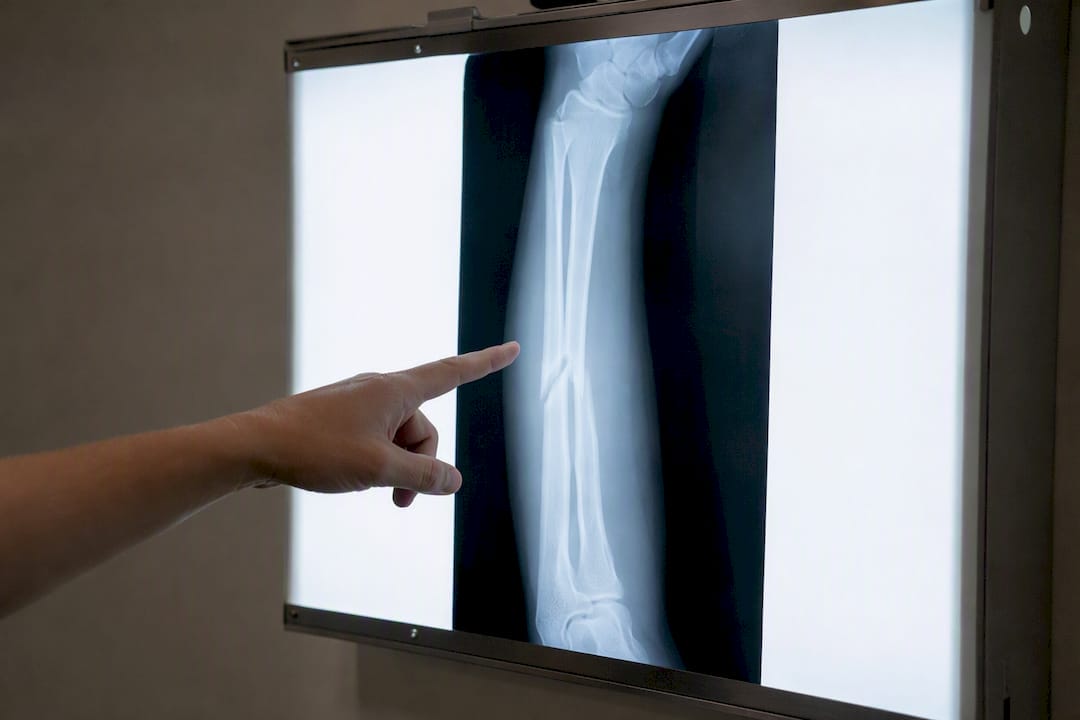
Adrenaline is a terrible diagnostic tool. It masks pain, delays swelling, and convinces plenty of accident victims they’re “fine” right up until the next morning, when a concussion headache or a torn ligament makes itself known. Some of the most serious injuries, including internal bleeding and soft tissue damage, don’t show symptoms for hours or days.
Getting seen quickly does two things at once. It gets you imaging and specialist referrals while treatment can still change the outcome, and it creates the medical record that anchors everything downstream. As one personal injury firm puts it, your first doctor visit becomes the timestamped narrative that insurers and courts rely on to connect your symptoms back to the incident.
- Adrenaline can hide pain from fractures, whiplash, and internal injuries for hours.
- Concussions and soft tissue damage often surface a day or two later.
- A daily symptom journal captures the lived impact a single clinical visit misses.
What to Collect After an Injury
Not all documentation carries equal weight, and knowing what to prioritize saves you from scrambling later. Work through this roughly in order of urgency.
- Medical records. ER notes, imaging results, referral letters, and prescriptions form the backbone of any claim. Johns Hopkins Medicine recommends requesting organized copies from every provider you see, rather than assuming your file exists in one place.
- Photos and video. Shoot the whole injured area first, then close-ups, always with something for scale like a coin or ruler nearby. Repeat the photos every few days to document healing or worsening. This is standard forensic photography practice for a reason: it creates an unbroken visual record an adjuster can’t easily dismiss.
- Police or incident reports. These give you an unbiased third-party account, and their absence often turns into a dispute over whether the accident even happened the way you describe it. Jmoorelegal’s guide on the role of a police report walks through how to request and use one.
- Witness contact information. Names and phone numbers, collected on the spot, before people scatter.
- Receipts and expenses. Every co-pay, prescription, rideshare to a medical appointment, and missed shift.
- A daily symptom journal. Track pain levels, sleep disruption, and anything you couldn’t do that day.
Pro Tip: Use your phone’s camera timestamp and don’t edit the originals. Backed-up, unedited photos with metadata intact carry far more weight than a cropped, filtered version.
Your First 24 to 72 Hours After an Injury
The window right after an accident is when evidence is easiest to gather and hardest to fake. Move through these steps in order.
- Get medical care immediately, and tell the clinician every symptom, even minor ones. What you report becomes part of your permanent record.
- Photograph your injuries, the accident scene, and any damaged clothing or property before it’s repaired, discarded, or cleaned up.
- Request a copy of the police or incident report, and collect witness names and phone numbers while people are still present.
- Start a dated symptom and expense journal the same day, and keep every receipt and message related to the incident.
- Be careful with insurance company calls. A recorded statement given before you’ve spoken to an attorney can lock in details that hurt you later.
A few things worth keeping in mind as you work through that list:
- Adjusters often call within 24 hours, before you’ve had time to see a specialist.
- You are not obligated to give a recorded statement on the spot.
- Consistency between what you tell your doctor, the police, and the insurer matters enormously.
Common Injury Documentation Mistakes to Avoid
Most damaged claims aren’t the result of one dramatic error. They’re the result of small, avoidable gaps that compound.
- Waiting to see a doctor or downplaying symptoms. Be specific and consistent every time you describe your pain.
- Blurry, poorly lit photos with no scale. Use good lighting, multiple angles, and something for size reference.
- Losing receipts or skipping the journal. Keep one folder, physical or digital, and update it the same day expenses happen.
- Posting on social media that contradicts your claim, or giving a recorded statement to an insurer before talking to a lawyer.
Jmoorelegal’s breakdown of common personal injury case mistakes and its guide to medical documentation errors both cover these patterns in more depth.
How Documentation Shapes Insurance and Court Outcomes
Adjusters are trained to look for one specific thing: gaps. A two week delay between the accident and your first doctor visit, or a missing follow up appointment, becomes their strongest argument that your injury either wasn’t caused by the incident or wasn’t serious enough to justify the claim. Research on documenting traffic accident injuries confirms this pattern: contemporaneous records and clear chronologies function as the evidence base for reconstructing what actually happened, which is precisely what closes the door on that argument.
Objective test results, meaning X-rays, MRIs, and dated clinical notes, tend to raise settlement value because they don’t rely on your credibility alone. They’re independent and reproducible.
- Consistent chronology limits an adjuster’s ability to argue alternative causes.
- Objective imaging and dated notes carry more weight than subjective pain descriptions.
- Attorneys build damages arguments around exactly this kind of documented timeline when presenting to judges or juries.
The role of clinical records in this process is spelled out further in Jmoorelegal’s guide to medical records in your injury case.
What Firm Experience and Research Say About Getting This Right
Jmoorelegal has spent decades handling personal injury cases across Brevard County, and the pattern repeats: clients who documented early kept their leverage, and clients who waited spent months clawing it back.
Practitioners increasingly recommend structured symptom logging, tracking onset, location, duration, character, and severity, because it converts vague complaints into entries an adjuster or judge can actually evaluate. Paired with the forensic photography standard of photographing the whole area with a scale marker before moving to close-ups, this turns scattered notes into a credible record.
Pro Tip: If a delay in treatment is unavoidable, write down why, whether it was a transportation problem or a scheduling conflict, and get seen as soon as you can. An explained gap looks very different from a silent one.
If your injuries came from an accident, the firm’s personal injury practice page outlines how a free consultation works and what to bring to it. Readers dealing with a workplace back injury may also find the workers’ compensation settlement estimator useful for understanding the financial stakes before negotiations begin.
What the Evidence Actually Tells Us About Timing
Most advice on this topic treats documentation as a checkbox exercise: take some photos, keep the receipts, done. That undersells what’s actually happening. The real value of acting fast isn’t the paperwork itself. It’s the chronology it creates, and chronology is the one thing an adjuster or opposing attorney cannot fabricate or argue away after the fact.
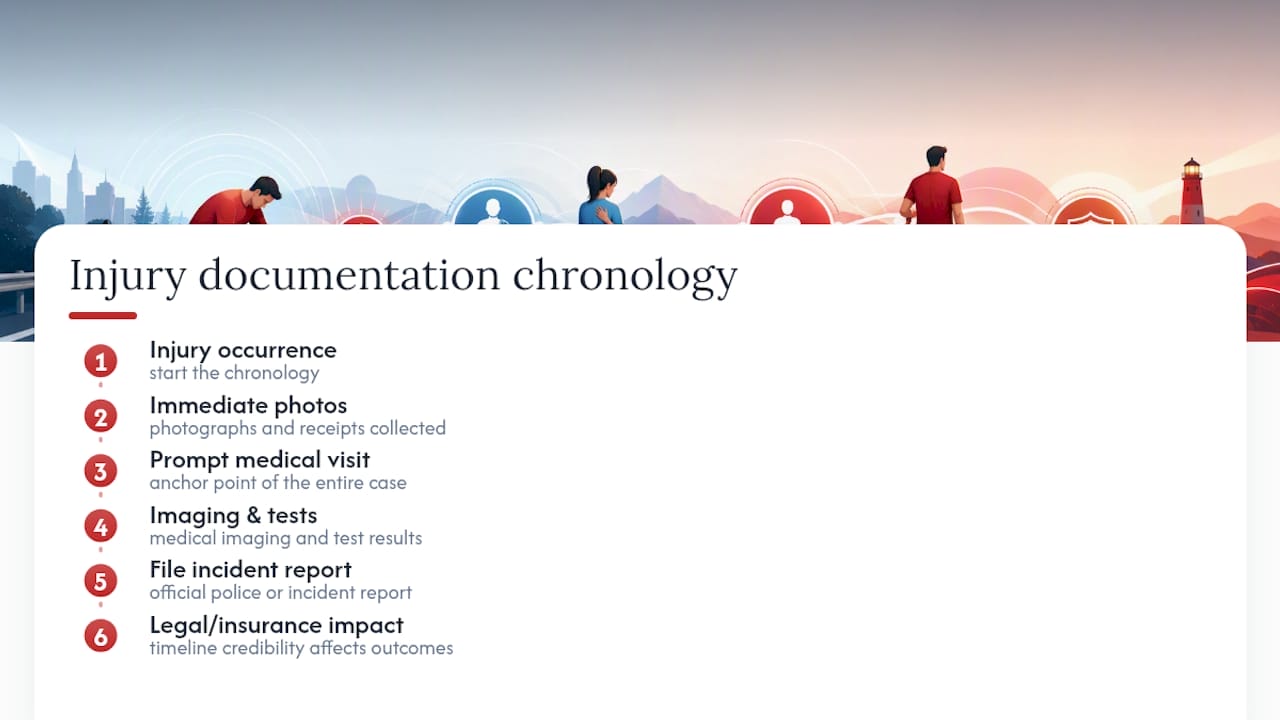
Where conventional advice falls short is in treating the first doctor visit as a formality rather than the anchor point of the entire case. I’d argue it deserves more weight than the photographs, even though photographs get more attention in most guides. A missed or delayed visit creates a gap that no amount of later documentation fully closes.
If you take one thing from this, prioritize the medical visit over everything else in the first few hours, then build the photographic and journal record around it. Everything else, the receipts, the witness list, the journal entries, supports that medical timeline. None of it replaces it.
This article is general information, not a substitute for advice from a qualified lawyer. Consult a qualified legal professional about your own circumstances before acting on anything here.
Sources
- The Documentation of Injuries Caused by Traffic Accidents – PMC
- Medical records: getting organized – Johns Hopkins Medicine
- Injury: Typical issues and consumer resources – American Bar Association
- Why Your First Doctor Visit Matters More Than You Think in a Personal Injury Case – Scaringi Law
Recommended
- Medical Documentation Mistakes That Hurt Your Injury Case – The Law Office of John Vernon Moore, P.A.
- Common Personal Injury Case Mistakes to Avoid – The Law Office of John Vernon Moore, P.A.
- Medical Bills and Injury Claims Explained for Claimants – The Law Office of John Vernon Moore, P.A.
- If You Have An Accident In A Public Place, How Do You Claim Compensation? – The Law Office of John Vernon Moore, P.A.