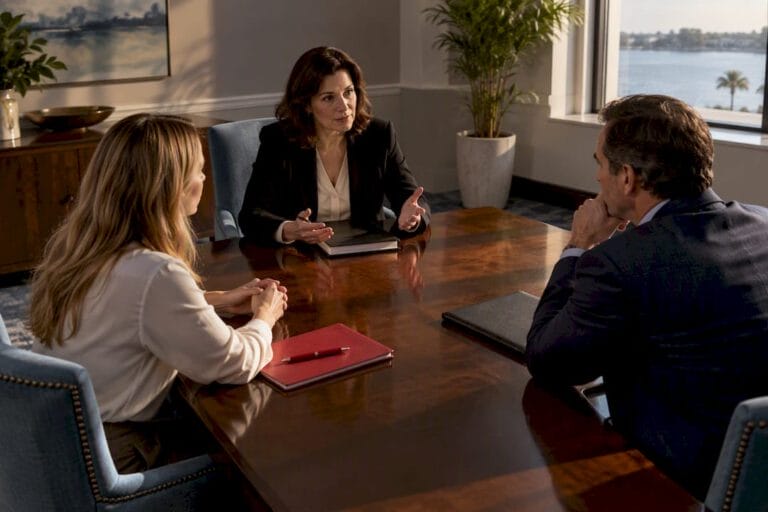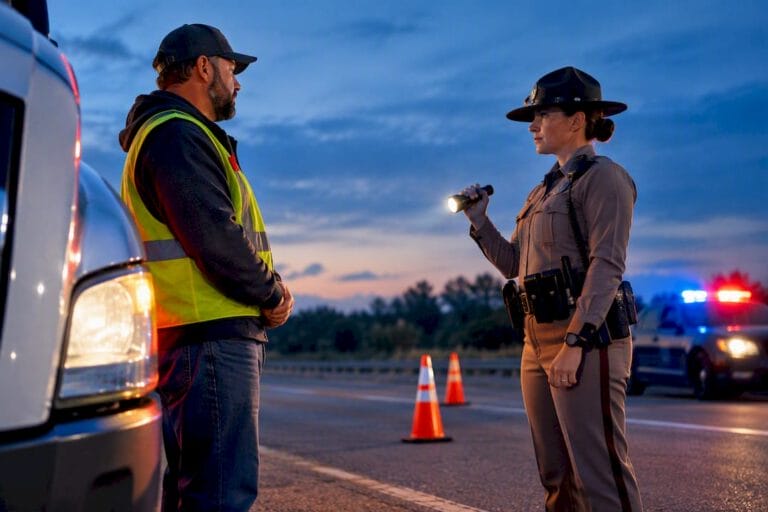
A prosecutor is a government lawyer, usually called a District Attorney at the local level or a U.S. Attorney in federal court, who files and litigates criminal charges on behalf of the public. The primary duty of a prosecutor is to seek justice, not simply to win convictions, according to the American Bar Association’s Prosecution Function Standards. That distinction shapes almost everything else about the job.
Three responsibilities sit at the core of the role:
- Charging decisions: deciding whether to file charges, which charges, and whether probable cause actually supports them.
- Proving guilt in court: carrying the burden of proof beyond a reasonable doubt at trial, or negotiating a resolution that reflects the evidence.
- Ethical disclosure: turning over evidence that could help the defense, a legal duty known as the Brady obligation, even when it weakens the government’s own case.
Everything that follows in a criminal case, from bail to sentencing to appeals, flows from decisions the prosecutor makes at these three pressure points.
Key Takeaways
A prosecutor’s core duty to seek justice, not just convictions, governs every decision from charging through sentencing, and the earliest decisions carry the most weight.
| Point | Details |
|---|---|
| Primary duty is justice, not convictions | ABA standards require prosecutors to decline weak cases and disclose favorable evidence, even when it hurts their own case. |
| Charging stage is the pivot point | The initial charging decision shapes bail exposure, sentencing range, and plea leverage more than any later stage. |
| Brady violations carry real consequences | Withholding exculpatory evidence can overturn convictions and trigger bar discipline against the prosecutor involved. |
| Immunity has limits | Imbler v. Pachtman shields core prosecutorial decisions from lawsuits, but not administrative or investigative misconduct. |
| Accountability runs through multiple channels | Bar complaints, appeals, post-conviction relief, and elections all serve as checks on prosecutorial power. |
Table of Contents
- What Is the Role of a Prosecutor in a Criminal Case, Day to Day?
- What Ethical Duties Must a Prosecutor Follow?
- Where Does Prosecutorial Discretion Matter Most?
- How Do Prosecutors Work With Police and Victims?
- What Powers and Legal Protections Do Prosecutors Have?
- How Do Federal, State, and Local Prosecutors Differ?
- What Should You Expect if You’re Involved in a Criminal Case?
- What Can You Do if You Suspect Prosecutorial Misconduct?
- Which Cases and Standards Should You Know?
- Why This Topic Deserves More Attention Than It Gets
- Where to Read the Primary Sources Yourself
- Frequently Asked Questions
- Sources
What Is the Role of a Prosecutor in a Criminal Case, Day to Day?
The job looks less like courtroom drama and more like a long chain of decisions, most of them made at a desk before a jury ever hears a word. A case typically moves through these stages:
- Intake: the prosecutor’s office receives an arrest report or police referral and screens it for legal sufficiency.
- Charging review: a prosecutor decides whether the evidence supports formal charges, and which ones.
- Discovery: the prosecution turns over evidence, witness lists, and any exculpatory material to the defense.
- Plea negotiation: the two sides discuss whether the case resolves short of trial. Most criminal cases often end in a plea agreement rather than a trial verdict, and prosecutors hold significant discretion here.
- Trial: if no plea is reached, the prosecutor presents evidence, examines witnesses, and argues the case to a judge or jury.
- Sentencing: the prosecutor recommends a sentence, often within statutory guidelines.
- Appeals and post-conviction: prosecutors respond to appeals and, in some cases, revisit convictions when new evidence surfaces.
On any given day, that translates into concrete tasks: reading police reports for gaps or inconsistencies, interviewing witnesses before they testify, drafting charging documents that will hold up to a motion to dismiss, negotiating plea terms with defense counsel, and preparing exhibits and witness outlines for trial. Large offices divide these tasks among intake attorneys, trial attorneys, and appellate specialists. Smaller county offices often have one prosecutor doing all of it.
Pro Tip: The charging stage is the single most consequential moment in a criminal case, more so than trial. If you’re a defendant, getting a defense attorney involved before charges are finalized, not after, gives your lawyer a chance to present mitigating facts the prosecutor might not otherwise see. Waiting until arraignment often means the die is already cast.
If you want the fuller mechanics of what happens between arrest and resolution, the criminal defense process breaks down each stage from the defense side, which is useful context for understanding what the prosecution is doing at the same time.
What Ethical Duties Must a Prosecutor Follow?
A prosecutor’s ethical obligations exist because the job carries enormous one-sided power. The ABA’s Prosecution Function Standards state that a prosecutor’s primary responsibility is to seek justice within the bounds of the law, not merely to secure a conviction. Practically, that means declining to file charges when probable cause is thin, dismissing a weak case rather than pushing it forward for the sake of a win, and treating a not-guilty verdict as an acceptable outcome when the facts warrant it.
The most consequential of these duties is the Brady obligation, named for the Supreme Court’s decision in Brady v. Maryland. It requires prosecutors to disclose evidence that could exonerate the defendant or reduce the offense, even evidence the prosecution never planned to use. Failing to disclose exculpatory evidence is a recurring cause of wrongful convictions, and a proven Brady violation can overturn a conviction years after the fact and trigger bar discipline against the attorney who withheld it.
Beyond Brady, prosecutors operate under a broader duty of candor to the court, meaning they cannot knowingly present false testimony or misstate the law to win an argument. Conflicts of interest, such as a personal relationship with a victim or defendant, require recusal. And when a prosecutor’s conduct falls into a gray area, professional standards direct them to seek supervisory guidance rather than guess.
Several institutions codify these expectations:
- The American Bar Association’s Prosecution Function Standards set the national ethical baseline most state bars reference.
- The National District Attorneys Association’s National Prosecution Standards add operational detail, describing prosecutors as independent administrators of justice responsible for seeking truth and protecting both victims’ and defendants’ rights.
- Individual state bars enforce discipline for violations of these standards through complaint and review processes.
A prosecutor should refrain from prosecuting a charge that the prosecutor knows is not supported by probable cause, and should make timely disclosure to the defense of evidence that tends to negate guilt or mitigate the offense.
That single standard, more than any courtroom skill, defines whether a prosecutor’s office is operating the way the justice system assumes it will.
Where Does Prosecutorial Discretion Matter Most?
A prosecutor makes dozens of individual judgment calls in any case, but a handful of them determine almost everything else that happens. In roughly the order they arise:
- Filing or declining charges: the first gate, and the one with the largest downstream effect.
- Charge selection: choosing between a felony and a misdemeanor, or between overlapping statutes, changes sentencing exposure dramatically.
- Bail recommendations: prosecutors recommend release conditions to the judge, and judges follow those recommendations in many cases, according to the Vera Institute of Justice’s research on prosecutorial decision points.
- Diversion offers: routing eligible defendants into treatment or education programs instead of formal prosecution.
- Plea offers: setting the terms of a negotiated resolution.
- Sentencing recommendations: advising the court on the sentence, often within statutory ranges.
- Enhancements and forfeiture: seeking additional penalties tied to prior convictions, weapon use, or seized assets.
- Nolle prosequi or dismissal: dropping a case entirely when the evidence doesn’t hold up.
The charge-selection decision alone can determine whether someone faces a mandatory minimum, whether they’re eligible for a diversion program, and, for non-citizens, whether a conviction triggers deportation under federal immigration law. Two prosecutors looking at the same police report can charge the same conduct differently, and that difference can mean the gap between probation and a multi-year sentence.
That’s why the Vera Institute’s decision-points framework treats the charging stage as the most determinative moment in the entire process. Everything downstream, bail, plea leverage, sentencing exposure, gets built on top of that first decision.
How Do Prosecutors Work With Police and Victims?
Prosecutors and police work closely, but they are not the same team in a legal sense. A prosecutor typically advises detectives on whether a warrant application will hold up, whether evidence was gathered lawfully, and whether an investigation has enough to support charges.
- Prosecutors give legal guidance on search warrants, evidentiary sufficiency, and investigative strategy before charges are filed.
- They are not private counsel for individual officers, and ethical standards require prosecutors to avoid conflicts of interest that could arise from too close a relationship with a specific investigating officer.
- With victims, prosecutors communicate through the case’s progress, often via a victim-witness coordinator who handles scheduling, safety concerns, and updates.
- Victims can submit impact statements at sentencing, but the prosecutor represents the state’s interest, not the victim personally, a distinction that surprises many people involved in a case for the first time.
A detective might, for example, ask a prosecutor whether probable cause exists to search a suspect’s phone. The prosecutor’s answer shapes the investigation, but the decision to actually file charges later remains the prosecutor’s alone.
What Powers and Legal Protections Do Prosecutors Have?
Prosecutors hold real institutional power: they decide who gets charged, negotiate the terms of nearly every plea, and recommend sentences that judges frequently adopt. That power comes with a significant legal shield. Under Imbler v. Pachtman, the U.S. Supreme Court held that prosecutors have absolute immunity from civil lawsuits for actions taken within their core prosecutorial function, meaning decisions about what to charge and how to try a case.
Absolute immunity protects the prosecutor’s core judicial-related functions, but that protection has real limits. Administrative decisions and investigative conduct performed outside the courtroom role may not receive the same shield, according to commentary in the National Prosecution Standards.
That means a prosecutor who fabricates evidence during an investigation, rather than while arguing a case in court, may lose the immunity defense entirely. Accountability, in other words, doesn’t disappear. It just moves to different channels:
- Internal office discipline: supervisors can reprimand or remove attorneys for misconduct.
- State bar complaints: readers can file a complaint with the attorney licensing body in the relevant state.
- Appellate reversal: a higher court can overturn a conviction tainted by prosecutorial error.
- Post-conviction relief: new evidence or a Brady violation can reopen a closed case years later.
- Public oversight: because most lead prosecutors are elected, voters function as a direct accountability mechanism that doesn’t exist for most government lawyers.
How Do Federal, State, and Local Prosecutors Differ?
Not every prosecutor works the same beat, and the title on the door tells you a lot about the jurisdiction and the kind of case involved.
- Municipal prosecutors handle city ordinance violations and low-level misdemeanors, often in municipal or traffic court.
- County and state prosecutors, commonly called District Attorneys or State’s Attorneys depending on the state, handle the bulk of criminal cases: felonies, most misdemeanors, and everything from drug charges to violent crime.
- U.S. Attorneys prosecute federal offenses, including interstate crimes, federal drug trafficking, and white collar cases that cross state lines.
Most local and state prosecutors are elected, which ties their charging priorities and diversion policies directly to public opinion in their jurisdiction. U.S. Attorneys are appointed, which insulates their office from local politics but ties their priorities to Department of Justice policy instead. Charging rules, diversion eligibility, and plea practices vary meaningfully from one county to the next, so what applies in one jurisdiction may not apply in the one next door.
What Should You Expect if You’re Involved in a Criminal Case?
A criminal case moves through a fairly predictable sequence, even though the timeline varies by jurisdiction and charge severity:
- Arrest and initial appearance: within days, a judge reviews the charges and sets bail conditions.
- Arraignment: the defendant formally hears the charges and enters an initial plea.
- Discovery: both sides exchange evidence, and the prosecution must turn over Brady material at this stage.
- Plea negotiations: most cases resolve here rather than at trial.
- Trial: if no agreement is reached, the case proceeds to a judge or jury.
- Sentencing and appeals: post-conviction, either side may pursue appellate review.
If you’re a defendant, a handful of constitutional protections apply throughout: the right to counsel, Miranda protections against self-incrimination during police questioning, and the right to see the evidence against you through discovery, including anything favorable to your defense under Brady. Understanding how evidence admissibility works can clarify why some evidence never reaches a jury at all.
If you’re a victim or witness, expect updates through a victim-witness coordinator, input opportunities at sentencing through an impact statement, and, in many jurisdictions, notification rights if the defendant is released or the case is resolved.
What Can You Do if You Suspect Prosecutorial Misconduct?
If something about a prosecutor’s conduct in your case seems off, whether that’s withheld evidence, an unexplained charging decision, or pressure tactics during negotiations, a few concrete steps exist:
- Document everything: dates, statements, and any evidence suggesting information wasn’t disclosed.
- Consult defense counsel immediately: an attorney can identify whether the issue rises to a legal violation versus a strategic disagreement.
- Request discovery review: your attorney can formally request evidence that may not have been turned over.
- File a state bar complaint: most state bar associations have a public complaint process for attorney misconduct, including prosecutors.
- Pursue appeal or post-conviction relief: if a conviction already occurred, a Brady violation or similar error can support a motion to reopen the case.
- Contact the elected prosecutor’s office directly: many offices have an internal conviction integrity or complaint unit for exactly this purpose.
Timelines matter here. Appeals and post-conviction motions carry strict filing deadlines that vary by state and charge type, so waiting too long can close off a remedy entirely. This is one area where trying to handle it alone tends to backfire. A defense attorney familiar with local court practice will know which lever to pull first, and which state bar or appellate deadline applies to your specific situation.
Which Cases and Standards Should You Know?
A handful of sources anchor almost every claim made about prosecutorial power and duty:
- Brady v. Maryland: establishes the constitutional duty to disclose exculpatory evidence.
- Imbler v. Pachtman: defines the scope and limits of prosecutorial immunity.
- ABA Prosecution Function Standards: the national ethical baseline most state bars reference.
- National Prosecution Standards (NDAA): operational commentary on office structure, immunity, and daily duties.
- UNODC / IAP guidance: international framework explaining prosecutorial discretion and the gatekeeper function.
- Vera Institute’s decision-points framework: a plain-language breakdown of where prosecutorial choices shape outcomes.
Each one answers a different question: Brady tells you what must be disclosed. Imbler tells you when a prosecutor can and can’t be sued. The ABA and NDAA standards tell you what the job requires day to day.
Why This Topic Deserves More Attention Than It Gets
Most people encounter the criminal justice system for the first time through fear, a phone call about an arrest, a subpoena, a plea deal offer with a deadline attached. Understanding what a prosecutor is actually required to do, and where their discretion ends, changes how you respond to that moment. It’s the difference between accepting the first plea offer out of panic and knowing which questions your attorney should be asking about the charging decision itself.
The public conversation about prosecutors tends to swing between two extremes: they’re portrayed as either relentless conviction machines or as officials who let cases slip through the cracks. Neither picture matches the actual job, which is bound by disclosure rules, probable cause standards, and supervisory review that most headlines skip over. The real leverage point in almost every case isn’t the trial. It’s the charging decision, made early, often before a defendant has even retained a lawyer.
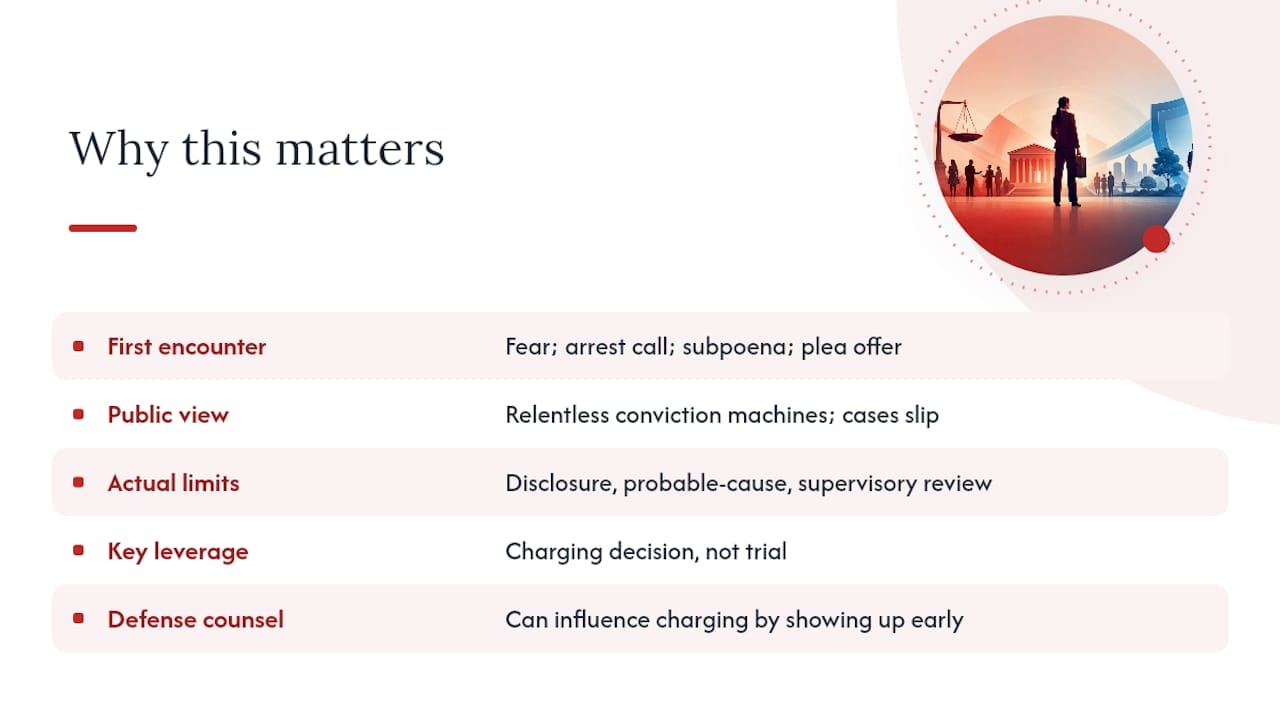
That’s exactly where experienced defense counsel earns its value, showing up early enough to influence the charging conversation rather than reacting to it after the fact. If you’re facing charges in Brevard County, Jmoorelegal’s criminal law team offers a free initial consultation to walk through where your case stands and what a prosecutor’s next move is likely to be.
Where to Read the Primary Sources Yourself
- ABA Prosecution Function Standards: the national ethical baseline for prosecutorial conduct.
- National Prosecution Standards, NDAA: detailed operational commentary on office structure and immunity.
- UNODC guidance on prosecutorial gatekeeping: explains discretion frameworks used internationally.
- Vera Institute’s decision-points primer: a community-facing breakdown of where prosecutorial choices matter most.
- Cornell Law School’s Wex entry on prosecutors: a concise legal definition and accountability overview.
Frequently Asked Questions
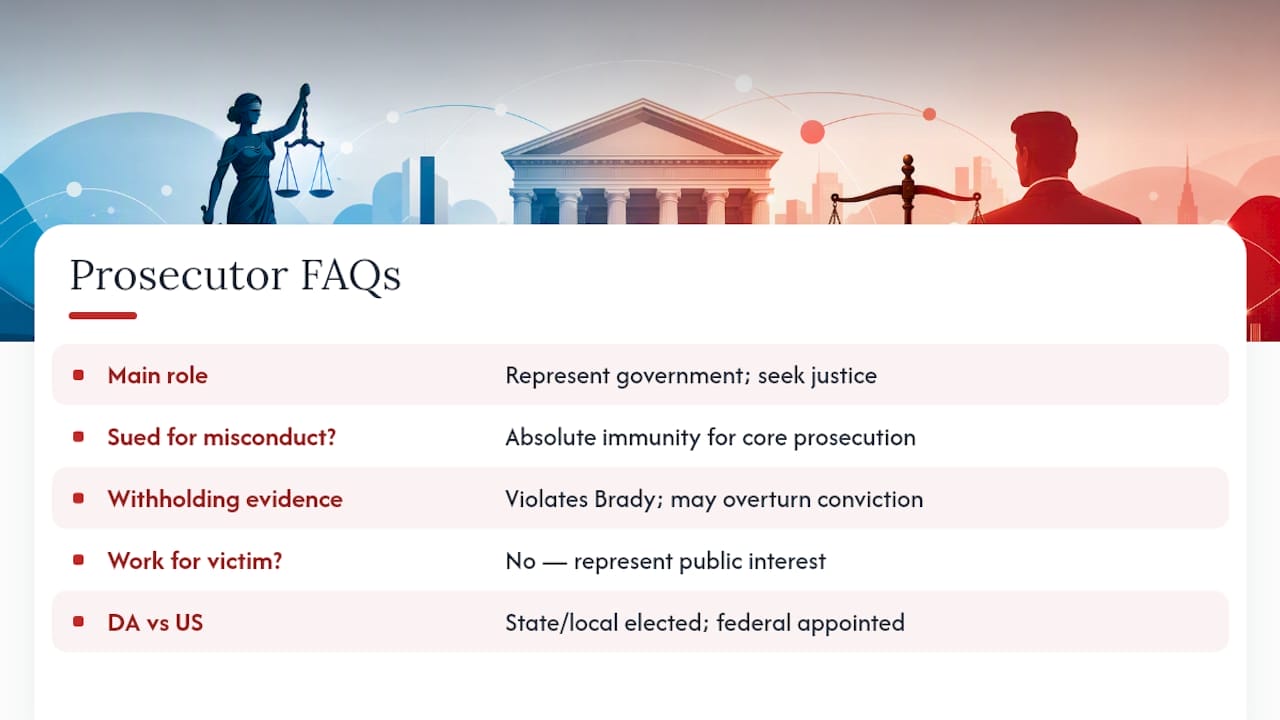
What is the main role of a prosecutor in a criminal case?
A prosecutor represents the government’s interest in a criminal case, deciding whether to file charges and, if the case proceeds, presenting evidence in court. Their central obligation is to seek justice rather than simply pursue a conviction.
Can a prosecutor be sued for misconduct?
Prosecutors have absolute immunity from civil lawsuits for actions taken within their core prosecutorial function, under Imbler v. Pachtman. That immunity doesn’t extend to administrative or investigative conduct outside that role, and misconduct can still trigger bar discipline or appellate reversal.
What happens if a prosecutor withholds evidence?
Withholding evidence that could help the defense violates the Brady disclosure rule and can result in a conviction being overturned, along with professional discipline against the prosecutor involved.
Do prosecutors work for the victim?
No. Prosecutors represent the public’s interest, not the victim personally. Victims typically receive updates through a victim-witness coordinator and can submit an impact statement at sentencing, but they don’t direct the prosecution’s strategy.
What’s the difference between a District Attorney and a U.S. Attorney?
A District Attorney prosecutes state and local crimes and is typically elected. A U.S. Attorney prosecutes federal offenses and is appointed, tying their office to Department of Justice policy rather than local politics.
This article is general information, not a substitute for advice from a qualified lawyer. Consult a qualified legal professional about your own circumstances before acting on anything here.
Sources
- Prosecutor — Cornell Law School Wex
- Prosecution Function — American Bar Association
- Plea bargain — Cornell Law School Wex
- National Prosecution Standards — NDAA (with commentary)
- Public prosecutors as the gate-keepers of criminal justice — UNODC / E4J
Recommended
- How the Criminal Defense Process Works: A Clear Guide – The Law Office of John Vernon Moore, P.A.
- The Role of a Public Defender Explained for U.S. Defendants – The Law Office of John Vernon Moore, P.A.
- Out-of-Town Defendant? Brevard Criminal Defense Lawyer
- Criminal Law – The Law Office of John Vernon Moore, P.A.