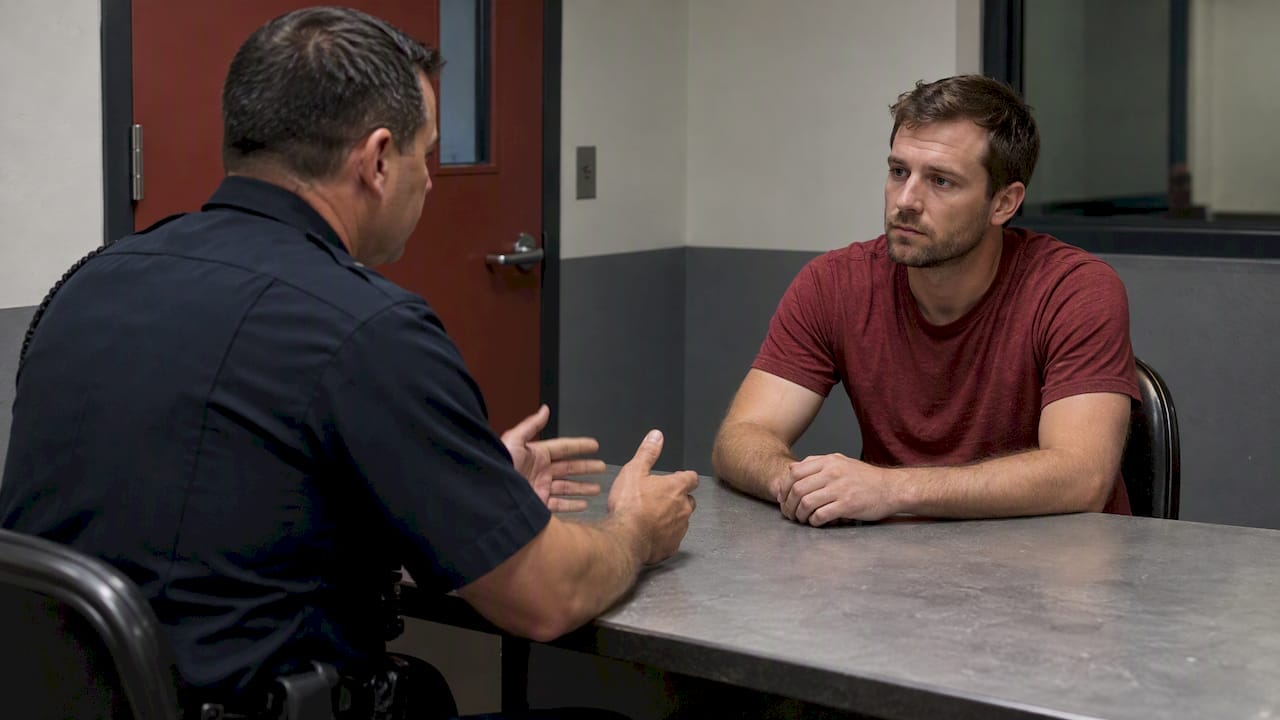
In Florida, police must give Miranda warnings only before custodial interrogation, meaning custody plus questioning. The warning must cover your right to stay silent, that your words can be used in court, your right to an attorney, and your right to appointed counsel. If officers skip a required warning, ask an attorney whether you may be able to challenge statements from that interrogation.
TL;DR:
- Florida courts assess custody through the encounter’s circumstances, including police summons, setting, accusations, and whether officers said you could leave.
- A warning must explain silence, courtroom use of statements, access to counsel before and during questioning, and appointed counsel if you cannot afford a lawyer.
- Say clearly that you want an attorney or will remain silent; vague comments about maybe needing a lawyer may not stop questioning.
- If police question you in custody without required warnings, a judge may suppress your statements, but prosecutors can still use other evidence.
- Ask whether you are free to leave; if officers say no, state that you are remaining silent and want counsel, then stop answering substantive questions.
Table of Contents
- What Miranda is and why it exists under Florida law
- When Miranda warnings are required in Florida
- What the warning must convey in practice
- Invoking and waiving Miranda rights in Florida
- What happens if Miranda is violated in Florida
- If you are arrested or questioned: steps to protect your rights
- Why most Miranda fights are really about the details
- How we help if you suspect a Miranda violation
- FAQ
- Sources
What Miranda is and why it exists under Florida law
Miranda warnings exist to protect the Fifth Amendment right against self-incrimination. The Supreme Court created them as a safeguard, so that any decision to talk to police is made knowingly and voluntarily. The Constitution Annotated explains that the warnings are mandatory only when a suspect is in custody and subjected to interrogation.
Florida courts apply the same federal framework, and the state constitution adds its own parallel protection against compelled self-incrimination. In practice, a Florida judge reviewing your statement asks two things:
- Did the Fifth Amendment and Miranda require a warning in this encounter?
- If they did, did you receive one and then validly waive your rights?
- Was any statement you made voluntary, regardless of Miranda?
That third question matters because a statement can be thrown out as involuntary even when Miranda never applied.
When Miranda warnings are required in Florida
Two things must happen together: you are in custody, and police are interrogating you. Miss either one and the warning is generally not required, which is why a friendly chat on your porch rarely triggers it.
To decide custody, Florida courts use the four-factor Ramirez test and a totality-of-the-circumstances review, as the Florida Supreme Court explained in SC15-1486. The factors are:
- How police summoned you: did you come voluntarily, or were you taken or ordered?
- The purpose, place and manner of the interrogation.
- Whether officers confronted you with evidence of your guilt.
- Whether police told you that you were free to leave.
Interrogation means questioning, or its functional equivalent, that officers should know is likely to draw an incriminating response. When the encounter is predominately accusatorial and confrontational in a police setting, Miranda is more likely required.
Routine traffic stops, brief on-the-street questions and basic booking questions about your name and address are often not custodial. A stop that escalates into handcuffs and accusatory questioning at the station is a different story.
What the warning must convey in practice
The warning has four core parts. A standard version appears in this federal courts Miranda text, which includes the lines “You have the right to remain silent” and “Anything you say can and will be used against you in a court of law.”
- Silence: you may decline to answer questions.
- Use in court: anything you say can be used against you.
- Counsel: you may talk to a lawyer before and during questioning.
- Appointed counsel: if you cannot afford a lawyer, one will be appointed.
The warning should convey each of the required rights. Ask an attorney whether the wording used in your case was sufficient. An officer who reads from a card and one who paraphrases in plain language can both satisfy the rule, but a warning that omits a right, such as appointed counsel, can fail it.
Invoking and waiving Miranda rights in Florida
Florida applies an objective “clear and unequivocal” standard. Under the Third District’s analysis, a request for counsel must be phrased so a reasonable officer would understand you want a lawyer. Ambiguous references do not require officers to stop questioning.
A recent appellate decision involving Raymond Reese shows how courts study recorded interviews and the totality of the circumstances. There, expressions of needing “advice” were treated as ambiguous rather than as a firm request for counsel.
- Clear: “I want a lawyer” or “I’m not answering any questions.”
- Often too vague: “Maybe I should talk to someone” or “I think I might need a lawyer.”
- Reinitiation: if you start the conversation again yourself, police may resume only after reminding you of your rights and obtaining a valid waiver.
Courts apply an objective test: the question is what a reasonable officer would have understood you to be asking for, not what you privately meant.
Whether a waiver is valid depends on the circumstances. If you want to stop answering questions, say so clearly and ask for an attorney.
What happens if Miranda is violated in Florida
The usual remedy is a motion to suppress. If warnings were required and not given, ask an attorney whether you may be able to challenge your statements. Our article on how admissibility of evidence shapes a criminal case explains why that can change the entire trajectory of a prosecution.
Appellate courts review suppression rulings under a mixed standard:
- The trial judge’s findings of fact usually get deference.
- Legal conclusions, such as whether the facts amount to custody, are reviewed de novo.
- Appellate review can depend on the record and the issues raised. An attorney can explain how the standard of review applies to your case.
Outcomes turn on specifics. In the invocation cases above, courts affirmed denial of suppression where the request for counsel was ambiguous. A suppression ruling does not end a case, though: prosecutors may still have other evidence, and a suppressed statement can sometimes be used to challenge your testimony if you take the stand.
If you are arrested or questioned: steps to protect your rights
What you say in the first minutes often matters most. These steps keep your options open:
- Ask, “Am I free to leave?” If the answer is yes, calmly leave.
- If you are not free to go, say clearly: “I am remaining silent. I want an attorney.”
- Stop answering substantive questions, even if officers keep talking.
- Ask to speak with counsel; Florida law allows an arrested person to consult an attorney privately at the place of custody “as often and for such periods as is reasonable,” under section 901.24.
- If you cannot afford a lawyer, request a public defender. Applications run through the Clerk’s Office, and counties such as Pinellas describe the process; see also what a public defender does.
- Afterward, write down names, times and whether anyone read you warnings. Deadlines may apply in some cases, so check the applicable requirements promptly, including those discussed in this breath test refusal guide. Families facing an arrest may find this post-arrest guide useful for release options.
Pro Tip: Do not secretly record officers or others without checking the law. Florida is an all-party consent state under Chapter 934, so recording private conversations without everyone’s consent is generally illegal.
Why most Miranda fights are really about the details
Most people think Miranda is a magic card: if the officer forgets it, the case disappears. It is not. The warning is only required in one narrow situation, and most of the real fighting happens over whether that situation existed and whether you spoke clearly enough to stop it.
That is why the habit of talking your way out of trouble is so costly. People who politely answer “just a few questions” often create the very statements that custody and invocation disputes later turn on. The strongest protection is the plainest one: say you are silent, say you want a lawyer, and then actually stop talking.
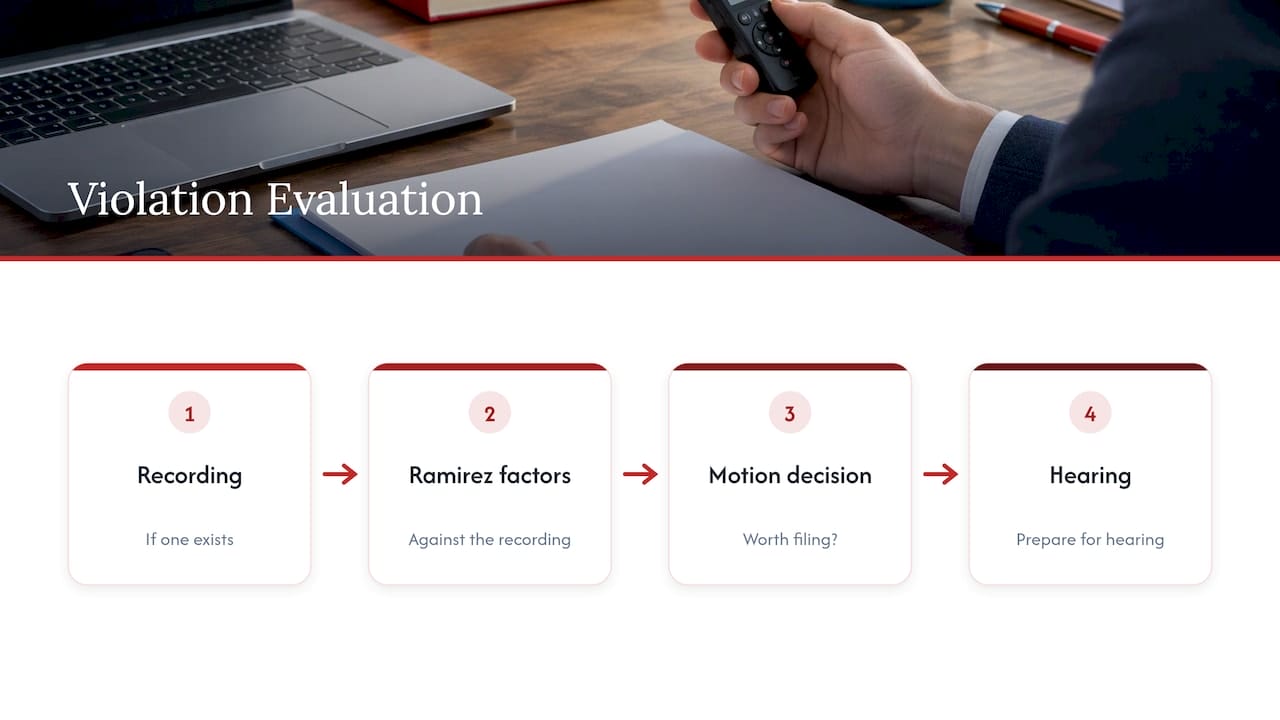
When we evaluate a possible violation, we start with the recording, if one exists, and walk through the Ramirez factors against what it shows. We then decide whether a motion to suppress is worth filing and prepare for the hearing. Every encounter is different, so case-specific advice from a local criminal defense attorney beats any general article, including this one.
— John
How we help if you suspect a Miranda violation
We handle criminal defense matters and offer a free initial consultation. We review how police questioned you, evaluate Miranda issues, file motions to suppress where they fit, and represent you at hearings. Contact our criminal defense team to talk through what happened.

This article is general information, not a substitute for advice from a qualified lawyer. Consult a qualified legal professional about your own circumstances before acting on anything here.
FAQ
Do Miranda rights have to be read in Florida?
Only before custodial interrogation, meaning you are in custody and officers are questioning you. If police never question you, or you are not in custody, a warning is generally not required. Florida’s courts use the Ramirez factors to decide custody.
Can someone record me without my consent in Florida?
Generally no for private conversations. Florida requires consent from all parties to record oral communications, with limited exceptions listed in Chapter 934. Check with an attorney before recording anyone.
What happens if police question me without Miranda warnings?
If warnings were required and not given, your statements may be suppressed from the State’s case-in-chief. A judge decides this at a suppression hearing. Other evidence in the case can still be used.
How do I properly ask for a lawyer in Florida?
Say it directly: “I want an attorney.” Florida applies an objective clear and unequivocal standard, and vague remarks like “maybe I should get a lawyer” may not stop questioning.
Sources
- Miranda Requirements | Constitution Annotated | Congress.gov | Library of Congress
- SC15-1486 Opinion