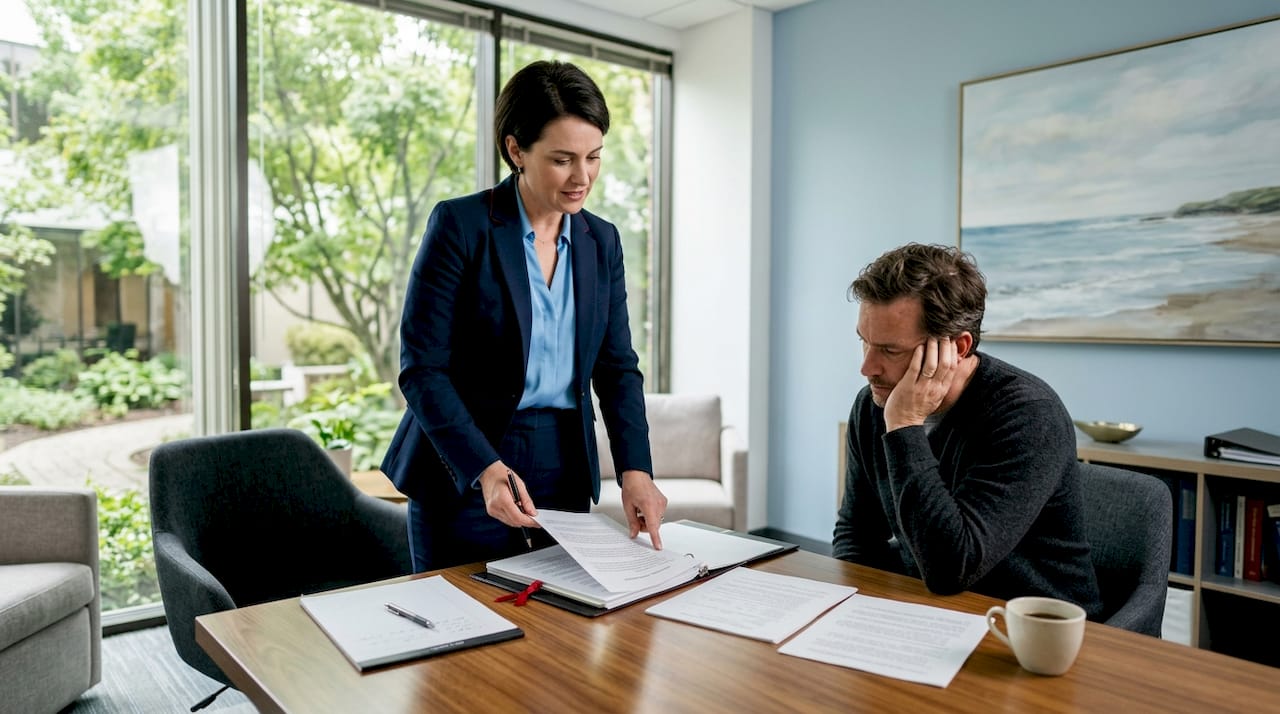
High-conflict divorce is defined as a dissolution proceeding marked by persistent hostility, repeated litigation, and an inability to reach cooperative agreements. The best practices for managing it center on four pillars: structured communication, emotional regulation, thorough legal and financial documentation, and a child-focused co-parenting approach. These strategies are not optional refinements. They directly determine your legal outcomes, your mental health, and your children’s wellbeing. Jmoorelegal has worked with clients in Brevard County, Florida, for decades, including cases involving narcissistic personality disorders and military divorces, and the patterns that lead to better outcomes are consistent and learnable.
1. What are the most effective communication practices in a high-conflict divorce?
Structured communication is the single most powerful tool you have in a high-conflict divorce. Minimal-contact communication rules can prevent approximately 80% of avoidable conflict. That number reflects how much damage is caused not by legal disputes, but by poorly managed messages.
The core rules are simple:
- Write, do not call. Written communication creates a record and removes the emotional charge of a live conversation.
- One topic per message. Multi-topic messages invite argument on every point.
- Keep messages brief, factual, and logistical. No emotional content, no accusations.
- Set time boundaries. Respond only during business hours, not late at night.
- Use court-approved co-parenting apps or email. Avoid text threads that are easy to screenshot out of context.
The BIFF response method, which stands for Brief, Informative, Friendly, and Firm, is the gold standard for replying to hostile or provoking messages. It keeps your response legally credible and emotionally neutral. Family law experts also recommend a 24-hour waiting period before responding to any non-emergency communication. That pause forces the other party to abandon urgency tactics designed to provoke a reaction.
Pro Tip: Treat every email and text as if a judge will read it tomorrow. Because in a high-conflict case, they very well might.

Every text, email, and social media post should be assumed to be read in court. Correspondence must be brief, factual, and logistical to protect your legal position. The benefits of a collaborative divorce approach, including structured communication protocols, can reduce costs and court time significantly even in contested situations.
2. How to manage emotional stress and protect your legal position
Excessive emotional reactivity undermines both your wellbeing and your legal outcomes. It gives the opposing party ammunition for custody and financial arguments. Legal strategy and emotional regulation are deeply interconnected. Controlling your emotions directly improves your legal position.
The most effective practices include:
- Work with a licensed therapist or divorce coach, not just friends and family. Professional support gives you tools, not just sympathy.
- Practice mindfulness or structured stress management to reduce impulsive reactions.
- Recognize manipulation tactics like manufactured urgency, guilt-tripping, and baiting. Name them internally so you do not react to them.
- Set firm personal boundaries on when and how you engage with your spouse.
- Let your attorney handle escalations. That is what they are there for.
Separating your emotions from your legal strategy is not about suppressing feelings. It is about choosing the right arena for them. A therapist’s office is the right place. A text message to your spouse is not.
Pro Tip: When you feel the urge to “correct” a false narrative your spouse is spreading, pause. Reacting to distortions often amplifies them. Document the claim and let your attorney respond.
3. What legal and financial preparation protects your interests?
High-conflict divorces require a fundamental shift in mindset: from negotiation toward documentation and protection. Proactively securing five years of financial documents while you still have voluntary access is a critical early defensive strategy. Waiting until the process is underway often means restricted access or missing records.
Documents to gather immediately
- Five years of tax returns, both joint and individual
- Bank and investment account statements
- Retirement account records, including 401(k) and pension documents
- Mortgage statements and property deeds
- Business ownership documents, if applicable
- Records of any unusual transfers, large withdrawals, or sudden income changes
High-conflict litigation is best won by providing objective, verifiable facts rather than emotional claims. Pattern documentation of the other party’s financial instability is crucial. Keep logs and screenshots of communications related to finances. Date every entry.
| Financial Document | Why It Matters |
|---|---|
| Five years of tax returns | Establishes income history and identifies hidden earnings |
| Bank statements | Reveals unusual transfers or asset concealment |
| Retirement accounts | Protects against undisclosed withdrawals before settlement |
| Business records | Uncovers underreported income or asset transfers |
| Property documents | Confirms ownership and prevents unauthorized sales |
Hidden asset investigation may later require forensic accountants. Effective financial defense means securing records before access is restricted. Apply the 24-hour rule to financial decisions as well. Never sign, transfer, or agree to anything under pressure.
4. How should parents handle co-parenting in a high-conflict situation?
Child-focused co-parenting is the area where your behavior matters most and where the stakes are highest. Creating a neutral environment for children and keeping them strictly out of legal and adult conflicts mitigates harm and supports better child wellbeing. Courts watch how each parent behaves toward the other, and they reward consistency and restraint.
The core principles are:
- Never discuss legal proceedings, finances, or the other parent’s behavior in front of your children.
- Maintain stable, predictable routines. Children regulate their anxiety through structure.
- Avoid negative comments about the other parent. Parental alienation damages your custody case and your child.
- Arrange a therapist or counselor for your children. Professional support helps them process the transition.
- Use a highly structured parenting plan that leaves little room for interpretation or dispute.
Courts consistently favor parents who demonstrate they can prioritize their children’s wellbeing over their own grievances. Showing up as the calm, consistent parent is not just good parenting. It is your strongest legal argument.
The modification of child custody process in Florida also considers each parent’s demonstrated behavior over time. Every interaction, every exchange, and every message creates a record. Make yours reflect the parent you want the court to see.
5. Why letting the other party self-destruct is a legitimate legal strategy
One of the most counterintuitive high-conflict divorce strategies is strategic restraint. Allowing a high-conflict spouse to self-destruct through their own volatile behavior is often more effective than fighting every point. Judges notice patterns. A calm, consistent party next to an erratic one tells a clear story without a single argument.
This does not mean being passive. It means being selective. Fight the battles that matter legally and financially. Let the emotional provocations pass without response. Every time you decline to engage with a manufactured crisis, you strengthen your credibility with the court.
A structured communication approach with clear cutoff times and no reactive responses also reduces court costs and emotional exhaustion. Less conflict means fewer billable hours and faster resolution. That is a financial strategy as much as an emotional one.
6. How to build a strong support team for a high-conflict divorce
No one wins a high-conflict divorce alone. The most effective approach combines legal, financial, and emotional professionals working in parallel. Your attorney handles litigation strategy. A financial advisor or forensic accountant handles asset verification and scenario modeling. A therapist handles your emotional regulation so it does not spill into your legal case.
The divorce procedure in Florida involves specific legal timelines, mandatory disclosures, and court appearances. Understanding that process reduces anxiety and prevents costly procedural mistakes. Ask your attorney to walk you through each phase before it arrives.
Mediation is also a tool worth considering, even in high-conflict cases. A certified mediator can resolve specific disputes without full litigation, saving time and money. Jmoorelegal is mediation certified and has used structured mediation to resolve financial and custody disputes that appeared headed for trial.
Key Takeaways
The most effective approach to high-conflict divorce combines structured communication, early financial documentation, emotional discipline, and consistent child-focused behavior to protect both your legal position and your family’s wellbeing.
| Point | Details |
|---|---|
| Use written communication only | Written records reduce conflict and create a legal trail for court. |
| Apply the BIFF method | Keep responses Brief, Informative, Friendly, and Firm to neutralize hostility. |
| Secure financial documents early | Gather five years of records before access becomes restricted or contested. |
| Keep children out of adult conflict | Stable routines and neutral environments protect kids and strengthen custody cases. |
| Let volatility work against your spouse | Strategic restraint builds judicial credibility more effectively than constant argument. |
What I’ve learned after years in high-conflict cases
After handling contested divorces in Brevard County for many years, including cases involving narcissistic personality disorders and military service members, one truth stands out above all others: the client who stays calm wins more often than the client who is right.
That sounds unfair. It is not. Judges are trained to read behavior patterns, not just legal arguments. A client who documents everything, responds without emotion, and keeps their children out of the conflict presents as credible, stable, and reasonable. That perception shapes outcomes at every stage, from temporary orders to final judgment.
The hardest thing I ask clients to do is stop trying to “win” emotionally. Correcting every false narrative, responding to every provocation, and fighting every small battle drains resources and damages credibility. The goal is not to prove your spouse wrong. The goal is to demonstrate that you are the more reliable, stable, and child-focused parent and financial partner.
High-conflict divorces are exhausting by design. The other party often uses that exhaustion as a tactic. Structure, patience, and a good team are your best defenses. These cases can be managed successfully. I have seen it happen consistently when clients commit to the process rather than the emotion.
— John
Jmoorelegal’s approach to high-conflict divorce cases
High-conflict divorces demand a legal team that understands both the courtroom and the psychology behind the conflict. Jmoorelegal provides direct attorney access, free initial consultations, and tailored legal strategies built around your specific situation.

Whether you are dealing with a spouse who hides assets, refuses to co-parent, or uses litigation as a control tactic, Jmoorelegal has the experience to build a case that holds up. The firm’s contested divorce practice covers the full range of high-conflict scenarios, from financial disputes to custody battles. Jmoorelegal is also mediation certified, meaning the firm can pursue resolution at every stage. Contact Jmoorelegal today to discuss your case and build a strategy that protects what matters most.
FAQ
What is a high-conflict divorce?
A high-conflict divorce is a dissolution proceeding defined by persistent hostility, repeated court filings, and an inability to reach cooperative agreements between spouses. These cases often involve manipulation, financial disputes, and contested custody.
What is the BIFF method and how does it help?
The BIFF method stands for Brief, Informative, Friendly, and Firm. It is a structured response technique that keeps your communication legally credible and emotionally neutral when dealing with hostile messages.
How do I protect my finances in a high-conflict divorce?
Secure five years of financial records, including tax returns, bank statements, and retirement accounts, as early as possible. Document any unusual transfers or withdrawals and consult a financial expert or forensic accountant if you suspect hidden assets.
How should I talk to my children during a high-conflict divorce?
Keep children completely out of adult conflicts and legal details. Maintain stable routines, avoid negative comments about the other parent, and arrange professional counseling to help them process the transition.
Does staying calm really affect my legal outcome?
Yes. Excessive emotional reactivity gives the opposing party material for custody and financial arguments. Judges recognize behavioral patterns, and consistent, calm conduct builds credibility that directly influences court decisions.
Recommended
- Benefits of a Collaborative Divorce – The Law Office of John Vernon Moore, P.A.
- Contested Divorce – The Law Office of John Vernon Moore, P.A.
- Navigating the Complexities of Narcissism in Divorce – The Law Office of John Vernon Moore, P.A.
- How Domestic Violence Affects Custody: 2026 Guide – The Law Office of John Vernon Moore, P.A.