Divorce attorney consultation prep is defined as the process of gathering documents, writing down key facts, and preparing questions before your first meeting with a family law attorney. A well-prepared client gives the attorney exactly what is needed to assess the case quickly and offer specific guidance. Attorney-client privilege applies from the first consultation, which means everything you share is confidential whether you hire the attorney or not. Jmoorelegal offers free initial consultations, so your preparation directly determines how much useful legal guidance you walk away with.
What documents do you need for divorce attorney consultation prep?
The documents you bring to your first meeting determine how much ground your attorney can cover. A disorganized stack of papers forces the attorney to spend time sorting rather than advising. Organized, categorized documents let the conversation move straight to strategy.
Personal and legal records
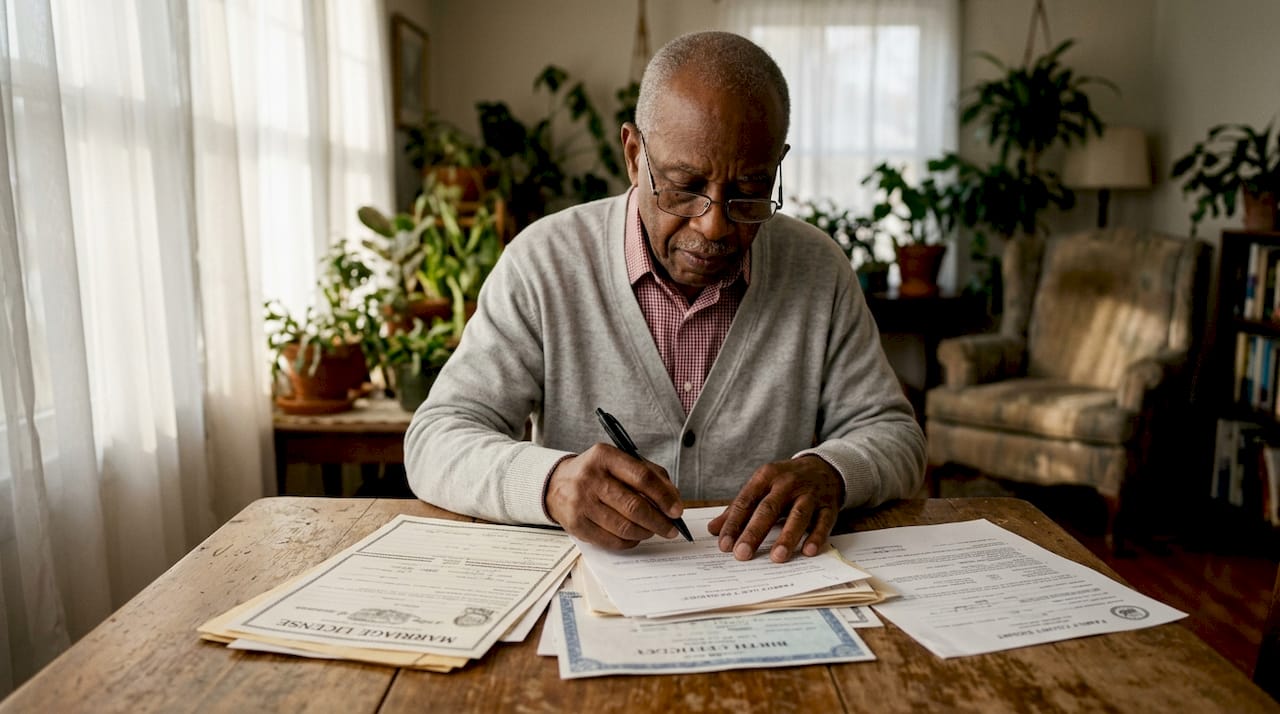
Start with the basics: your marriage certificate, birth certificates for any children, and copies of any existing court orders, such as prior custody agreements or protective orders. If you have a prenuptial or postnuptial agreement, bring that too. These documents establish the legal foundation of your marriage and any prior obligations the court must consider.
Financial records
Financial documents are the most critical category in most divorces. Bringing 3–5 years of financial records, including tax returns, bank statements, investment accounts, and retirement plans, gives your attorney a complete picture of marital assets and income. That range matters because courts often look at income patterns over time, not just the most recent year.
Gather pay stubs for both spouses if accessible, recent mortgage statements, property deeds, vehicle titles, and a list of all debts including credit cards and loans. Do not worry if you cannot access accounts your spouse controls. Note what is missing and tell your attorney. Attorneys use the formal discovery process to obtain records you cannot reach on your own.
| Document Category | Examples |
|---|---|
| Personal and legal | Marriage certificate, birth certificates, prenuptial agreement, prior court orders |
| Income records | Pay stubs, W-2s, 1099s, tax returns (3–5 years) |
| Assets | Bank statements, investment accounts, retirement plans, property deeds |
| Debts | Credit card statements, mortgage statements, auto loans, personal loans |
| Child-related | School records, medical records, existing custody orders |
Pro Tip: If your spouse controls key financial accounts, write a brief list of what you know exists but cannot access. Your attorney will use discovery to obtain those records formally, and your notes help them know exactly what to request.
What questions should you ask at your first divorce consultation?
Preparing questions before your first meeting is as important as gathering documents. The right questions reveal whether the attorney is the right fit and whether you understand what lies ahead.
- What is your experience with cases like mine? Ask specifically about jurisdiction, contested versus uncontested divorces, and any special circumstances such as military service or high-conflict personalities. Jmoorelegal, for example, has specific expertise in military divorces and cases involving narcissistic personality disorders, which requires a different legal approach than a standard dissolution.
- Who handles my case day to day? Ask who manages daily case work because the senior attorney you meet may delegate routine tasks to a paralegal or associate. Knowing this upfront sets realistic expectations for communication and access.
- How do you bill, and what is the retainer? Understand whether the attorney charges hourly or offers flat fees for certain phases. Ask what the retainer covers and how you will be notified when it runs low.
- What is the likely timeline for my case? No attorney can guarantee an outcome, but an experienced one can give you a realistic range based on your county’s court schedule and case complexity.
- What are my options for resolving this without going to trial? Ask about mediation and collaborative divorce as alternatives to litigation. These paths often cost less and resolve faster.
- How do you prefer to communicate? Some attorneys respond by email within 24 hours; others prefer phone calls. Mismatched communication styles cause frustration, so clarify this early.
- What information do you still need from me? This question shows you are organized and opens the door for the attorney to guide your next steps immediately.
Pro Tip: Write your top five questions on a single index card and bring it to the meeting. You will not forget them under pressure, and the attorney will see you came prepared, which signals you are a serious client.
How should you organize your information before the meeting?
Organization is the difference between a productive consultation and one that runs out of time before reaching your most pressing concerns. A structured approach saves both you and the attorney valuable minutes.
A 1–2 page written summary covering your marriage history, key dates, and goals helps attorneys focus on strategy instead of basic facts. Think of it as a briefing document. Include the date of marriage, date of separation, names and ages of children, a one-sentence description of the main disputes, and your primary goals for the outcome.
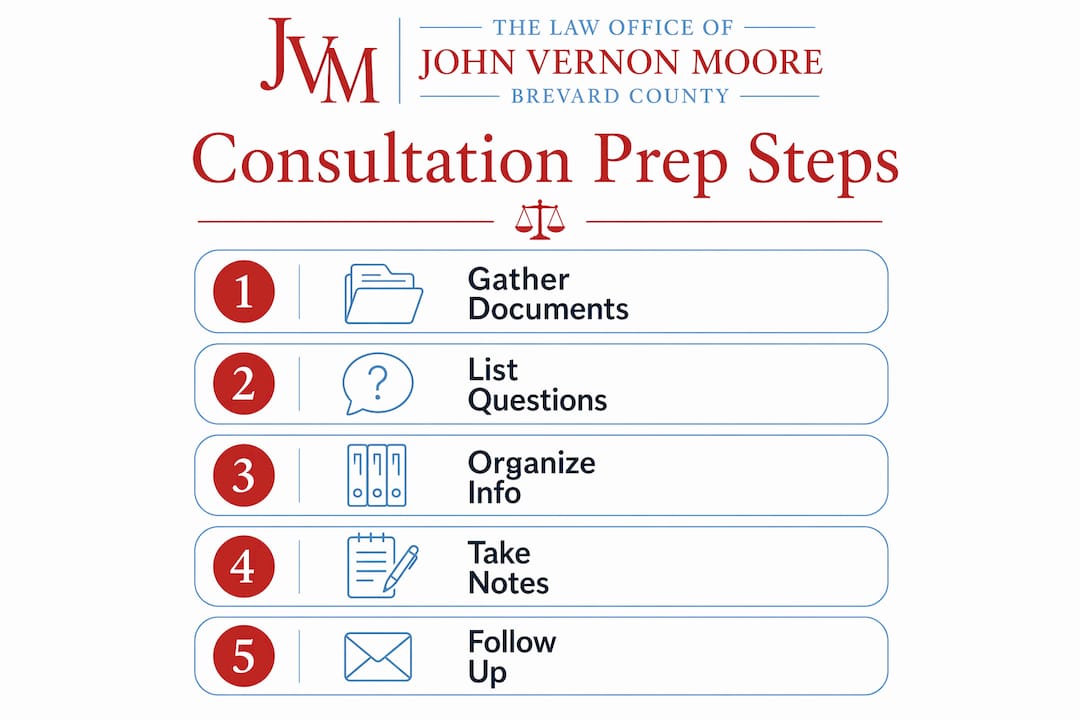
Here is a practical preparation sequence to follow:
- Write your timeline first. List key dates: marriage, separation, any significant events such as job changes, relocations, or incidents relevant to the case. A rough timeline of events is often more useful to an attorney than a pile of unsorted paperwork.
- Sort documents by category. Use the table above as your guide. Place each category in a labeled folder or envelope.
- Write your goals. Identify your top three priorities: custody arrangement, specific assets, financial support. Be honest with yourself about what matters most.
- List unknowns. Note any documents you do not have and any facts you are uncertain about. Attorneys work with incomplete information regularly.
- Prepare your questions. Use the list from the previous section as a starting point and add anything specific to your situation.
Emotional preparation matters too. The consultation is a business meeting, not a therapy session. Save emotional processing for a counselor or trusted friend. Attorneys work most efficiently when you present facts clearly and concisely.
Pro Tip: Bring two copies of your written summary: one for the attorney and one for yourself to reference during the meeting. This keeps both of you on the same page and prevents miscommunication.
What mistakes should you avoid before and during your consultation?
Several common mistakes reduce the value of a consultation or create legal risk before your case even begins.
- Delaying because documents are incomplete. Bring what you have. Attorneys work with partial information and will tell you what else is needed.
- Attempting to access spouse-controlled accounts without permission. Attorneys obtain records through formal discovery, which protects your legal standing. Unauthorized access can damage your credibility in court.
- Spending the consultation on emotional detail instead of facts. Attorneys need dates, assets, and disputes, not a full narrative of the relationship’s history.
- Posting about your case on social media. Anything you share publicly can be used against you. This applies to posts, stories, and even private messages that could be subpoenaed.
- Emptying joint accounts before consulting an attorney. Courts view this negatively and it can result in sanctions or unfavorable rulings.
- Signing any agreement your spouse presents without attorney review. Even informal written agreements can carry legal weight in Florida courts.
Critical warning: Never attempt to retrieve financial documents from your spouse’s private accounts, email, or devices without explicit legal authorization. Doing so may constitute unauthorized access under Florida law and federal statutes, which could result in criminal charges and seriously harm your divorce case. Your attorney can obtain every necessary record through the formal discovery process.
What should you expect during and after your first consultation?
The first consultation follows a predictable structure once you know what to expect. Initial divorce consultations generally last 45–90 minutes and may be offered free or at a flat fee. Jmoorelegal offers free initial consultations, so confirm billing before you arrive at any office.
The attorney will spend the first portion gathering facts from you. They will ask about your marriage, children, finances, and what outcome you are seeking. This is not an interrogation. It is the attorney building a mental map of your case. The first consultation is for fact-gathering and mutual evaluation, not immediate filing, so do not expect to leave with a court date.
A typical consultation covers filing procedures, mediation options, timelines, costs, and likely outcomes. Pay attention to how the attorney explains these topics. Clarity and directness in that explanation reflect how they will handle your case. If you leave more confused than when you arrived, that is useful information about fit.
After the meeting, review your notes within 24 hours while details are fresh. Identify any documents you still need to gather. If you are evaluating multiple attorneys, compare how each one explained your options and how comfortable you felt asking questions. Then review the divorce procedure steps so you understand what comes next regardless of which attorney you choose.
Pro Tip: Take handwritten notes during the consultation, not just mental ones. Attorneys cover a lot of ground quickly, and you will not remember every detail. A notebook also signals to the attorney that you are engaged and serious.
Key Takeaways
Thorough divorce attorney consultation prep requires organized documents, prepared questions, and a written case summary to give your attorney everything needed to advise you effectively from the first meeting.
| Point | Details |
|---|---|
| Gather 3–5 years of financial records | Tax returns, bank statements, and retirement accounts give attorneys a complete asset picture. |
| Write a 1–2 page case summary | A brief timeline and goals let the attorney focus on strategy, not basic facts. |
| Prepare specific questions | Ask about billing, case management, timeline, and mediation options before committing. |
| Avoid unauthorized document access | Note missing records and let your attorney use formal discovery to obtain them. |
| Treat the meeting as a business conversation | Facts and goals move the consultation forward; emotional detail slows it down. |
What I have learned after years of divorce consultations
The clients who get the most out of a first consultation are never the ones with the most documents. They are the ones who walk in knowing what they want and can state it clearly in two sentences. I have sat across from people carrying three grocery bags of paperwork who could not tell me their top priority, and I have worked with clients who brought a single typed page and gave me everything I needed in fifteen minutes.
Honest communication during that first meeting is non-negotiable. Attorneys cannot build a strategy around a version of events that leaves out uncomfortable facts. The other side will surface those facts eventually, and surprises mid-case cost time and money. Tell your attorney everything, even the parts that reflect poorly on you. That is what the privilege is for.
The consultation also works in both directions. You are evaluating the attorney just as much as they are evaluating your case. Pay attention to whether they listen, whether they explain things clearly, and whether they seem genuinely interested in your situation. A technically skilled attorney who does not communicate well will frustrate you throughout the process. Fit matters as much as credentials.
Approach the meeting the way you would approach a business negotiation: calm, prepared, and focused on outcomes. That mindset produces better results than any amount of paperwork.
— John
Jmoorelegal is ready to help you prepare
Knowing what to bring and what to ask is only half the equation. The other half is finding an attorney who listens, explains your options clearly, and builds a strategy around your specific situation.

Jmoorelegal’s family law team serves clients throughout Brevard County, Florida, with free initial consultations and direct attorney access from day one. With deep experience in contested and uncontested divorces, military divorce cases, and mediation, the firm is built for clients who want a clear path forward. Whether your case is straightforward or involves complex assets and high-conflict dynamics, Jmoorelegal provides the personalized attention your situation requires. Schedule your free consultation today and come prepared to get real answers.
FAQ
Does attorney-client privilege apply at the first consultation?
Attorney-client privilege applies from the first consultation regardless of whether you hire the attorney. Everything you share in that meeting is confidential.
What if I cannot access my spouse’s financial records?
Note the accounts you know exist but cannot access and bring that list to the consultation. Your attorney will obtain those records through formal discovery, which is the legally protected method for gathering financial evidence.
How long does a first divorce consultation typically last?
Most initial consultations run 45–90 minutes. Confirm whether the meeting is free or billed at a flat fee before you schedule.
Should I bring my children to the consultation?
No. The consultation covers sensitive financial and personal details that children should not hear. Arrange childcare so you can speak freely and focus entirely on your case.
What is the difference between a contested and uncontested divorce?
An uncontested divorce means both spouses agree on all major terms, including property and custody. A contested divorce involves disputes that require negotiation or a court ruling to resolve.