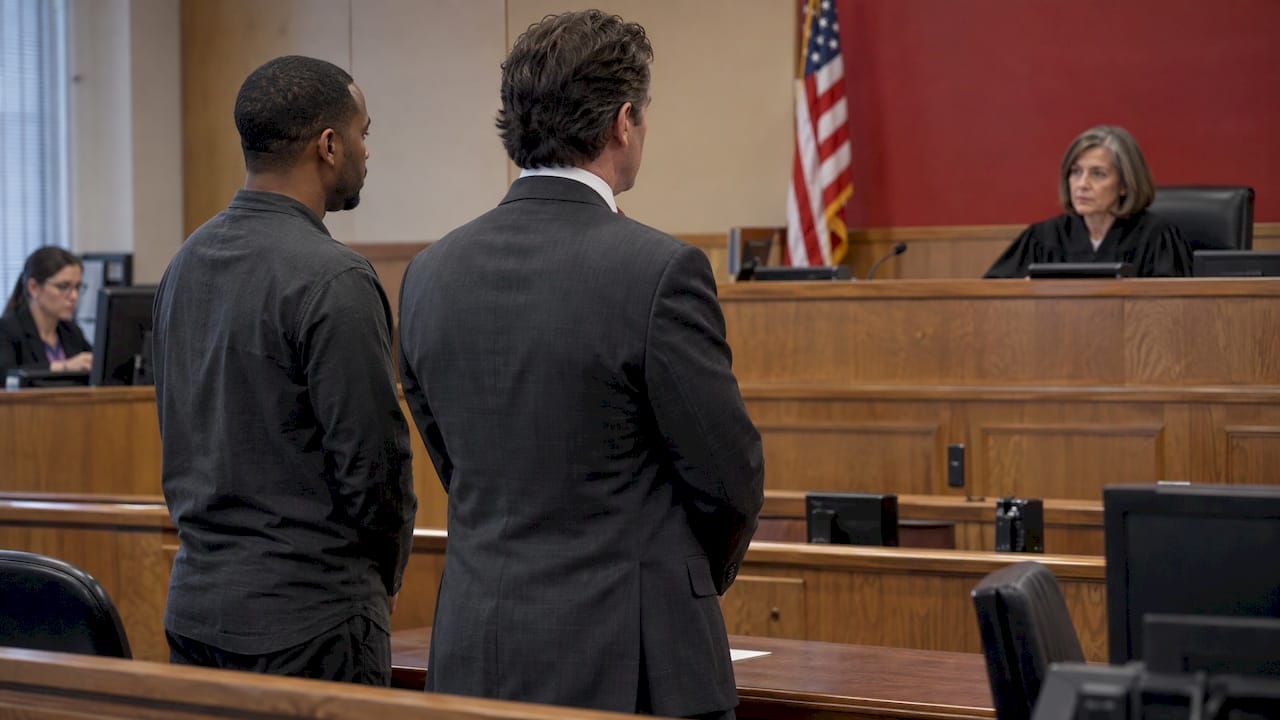
A first appearance is the first hearing after an arrest in Florida. Under Florida Rule of Criminal Procedure 3.130, a person who has been arrested and not lawfully released must be brought before a judge within 24 hours, in person or by audio-video link. The hearing is short, but it sets the terms of your release, and what you say in it is recorded. If you or someone you love is facing it, the most useful step is to talk to a criminal defense attorney right away. We offer free 30-minute consultations from our Brevard County office.
TL;DR
- Florida requires a first appearance within 24 hours of arrest, with limited exceptions, such as a person who already had a first appearance on the same charges.
- The judge covers your rights, the charges, probable cause, counsel, release conditions and the next court date. It is not a trial and not the place to argue the facts.
- Bond is not automatic. Statewide and county bond schedules are a starting point, and the judge is not bound by them.
- You may hire your own lawyer, and the judge must give you reasonable time to send for one. Missing later court dates can cost you your bond and lead to an arrest warrant.
- Say little at the hearing. Anything said in court can be used later.
Table of Contents
- What a first appearance is
- What the judge does, step by step
- Your rights at a first appearance
- How bond is decided
- What to bring and what to keep
- After the hearing: what comes next
- Our perspective
- Talk to a Brevard County defense attorney
- FAQ
- Sources
What a first appearance is
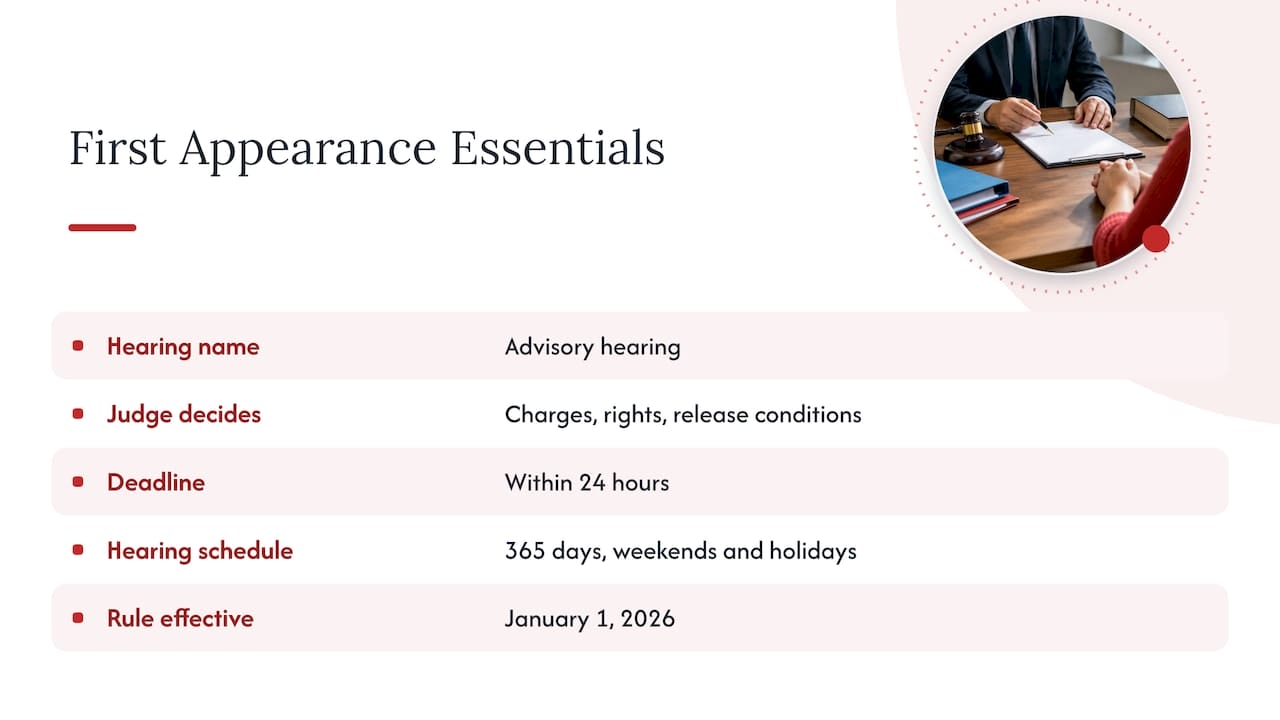
A first appearance is sometimes called an advisory hearing. The Gulf County Clerk of Courts describes it as the hearing where the arrested person is brought before a judicial officer within 24 hours. The judge tells the defendant what they are charged with and what their rights are, and decides the conditions of pretrial release.
Florida is among the states with the shortest deadline. The National Conference of State Legislatures compares state timelines and lists Florida, with five other jurisdictions, at 24 hours. Many courts hold these hearings every day of the year. The Twelfth Judicial Circuit says its first appearances take place 365 days a year, weekends and holidays included.
Two exceptions are worth knowing. The Seminole County First Appearance Manual, published in February 2026, says a defendant transported from another facility who already had a first appearance on the pending charges is not entitled to another. The same goes for a defendant turned in by their surety, the bonding company that guaranteed their release.
The rule text on the Florida Judges site is effective January 1, 2026. That is the version the courts follow today.
What the judge does, step by step
The Seminole County manual lists six tasks the judge completes for each defendant, in this order:
- Confirm the defendant understands their rights.
- Advise of the charges and confirm the defendant received the complaint.
- Determine whether the defendant needs appointed counsel, and appoint it.
- Address probable cause.
- Set conditions of release.
- Set an arraignment date.
Probable cause means the judge checks that the arrest rested on enough facts to justify holding you. The State Attorney’s office for the Twelfth Circuit explains that the judge reviews law enforcement reports and may raise or lower the bond or release the defendant on their own recognizance. That means a promise to return to court, with no money posted.
The arraignment, the next hearing, is where the defendant is formally asked to respond to the charge. The first appearance comes before it and does less.
What the hearing is not
The Seventh Judicial Circuit states that the hearing is limited to probable cause, bond and release conditions. It is not the place to present evidence, call witnesses or argue the facts. It also warns that anything said in court is recorded and can be used later.
That is the practical lesson for the person in custody. Answer the judge’s questions about identity and ties to the community. Do not explain what happened or tell your side of the story.
Your rights at a first appearance
Rule 3.130(b) requires the judge to advise you of these rights:
- The right to remain silent.
- The right to counsel, with appointed counsel if you cannot afford one.
- The right to communicate with counsel, family or friends, with reasonable means provided.
You also receive a copy of the complaint. The Seminole manual notes that the Sixth Amendment right to counsel attaches at the earliest of formal charges, first appearance, preliminary hearing, indictment or information, or arraignment. In practice, you are entitled to a lawyer’s help from this hearing on.
The silence you are told about at first appearance is the same silence you should have used with the officer at arrest. We explain how the warnings work, and how a flawed warning can affect a case, in our guide to Florida Miranda rights.
Hiring your own lawyer
Rule 3.130© requires the judge to decide, before or at the hearing, whether you can afford counsel. If you qualify and want a court-appointed lawyer, one is appointed immediately, before any other proceedings. If you have hired a lawyer or want to, the rule requires the judge to give you reasonable time to send for counsel, and the hearing may be postponed for that purpose.
This matters because the first appearance is when bond is set. A defense attorney who is involved from the start can speak to the people who will vouch for you, gather proof of your job and residence, and plan the next steps before the case moves on. Our Florida criminal defense practice in Melbourne handles cases like this, and you deal directly with the attorney.
How bond is decided
Bond is money or conditions that secure your return to court. Florida law presumes release on non-monetary conditions where a defendant is entitled to pretrial release. The Seminole manual lists the options in order:
- Personal recognizance.
- Unsecured appearance bond.
- Restrictions on travel, association or where you live.
- Release to the custody of a designated supervisor.
- A bail bond or cash deposit, with a specific amount for each offense.
- GPS tracking or electronic monitoring.
The Manatee Public Defender’s Office says the judge decides whether to raise, lower or keep the bond the same, based on the nature of the accusations and the defendant’s ties to the community. Ties to the community include how long you have lived here, your job, your family and your record of showing up in court.
The bond schedule before you see a judge
Some people can leave jail before the hearing. The Florida Supreme Court created a uniform statewide bond schedule in AOSC25-69. According to the Twelfth Circuit’s summary of the order, it runs from $150 for a non-violent second-degree misdemeanor up to $5,000 for a third-degree felony with a scintilla of violence. More serious crimes require a judge’s hearing.
Counties also keep their own schedules. The Third Judicial Circuit’s Administrative Order 2025-002, dated April 3, 2025, says its schedule applies only to release by police, jail or pretrial release staff before the next first appearance. It does not bind a judge, and each crime of arrest needs its own bond. It also lists who cannot be released before seeing a judge, including:
- People arrested for a felony while on pretrial release, probation or community control.
- People designated sexual offenders or predators.
- People arrested for violating a protective injunction.
- People arrested three or more times in the preceding six months.
- People arrested for capital, life, first- or second-degree felonies, drug trafficking or other dangerous crimes under section 907.041, Florida Statutes.
The Ninth Judicial Circuit’s order for Orange and Osceola Counties adds that double the stated bail is required of persons who do not reside in Florida. That is a point for military families and visitors who are arrested away from their home state. Release conditions there include obeying all court orders, appearing at every hearing, avoiding criminal activity and having no contact with the alleged victim.
Brevard County sits in the Eighteenth Judicial Circuit, which also covers Seminole County. Local procedures and schedules can differ from the examples above, so ask the jail or clerk which schedule applies to the arrest.
When bond can be denied
The Seventh Circuit explains that under the Florida Constitution a judge can deny bond only in limited situations. One is a capital offense, or an offense punishable by life imprisonment, where proof of guilt is evident or the presumption is great. The other is where no conditions of release can reasonably protect the community, ensure your appearance or protect the integrity of the judicial process. Section 907.041, Florida Statutes, governs pretrial detention and calls for a prompt detention hearing.
For a plain-language look at the grounds on which release is refused, see this overview of the common reasons bail gets denied. Florida’s own rules, above, control in a Florida case.
The difference between bail and a bond, and what each costs, is covered in our article on bail vs. bond in Florida.
What to bring and what to keep
Family members often ask how they can help. These are the useful things:
- The full name, date of birth, booking number and the jail or agency holding the person. Those details let a lawyer find the right hearing.
- Proof of local ties: a lease or mortgage statement, an employer’s name and phone number, and family who can confirm the person will attend court.
- Any paperwork handed over at release, kept exactly as printed. That includes the bond paperwork, the case number and the next court date.
If someone is released, write down the arraignment date right away and give it to your lawyer.
After the hearing: what comes next
The first appearance ends with an arraignment date and release conditions. Following those conditions is the single most important thing you can do for the case.
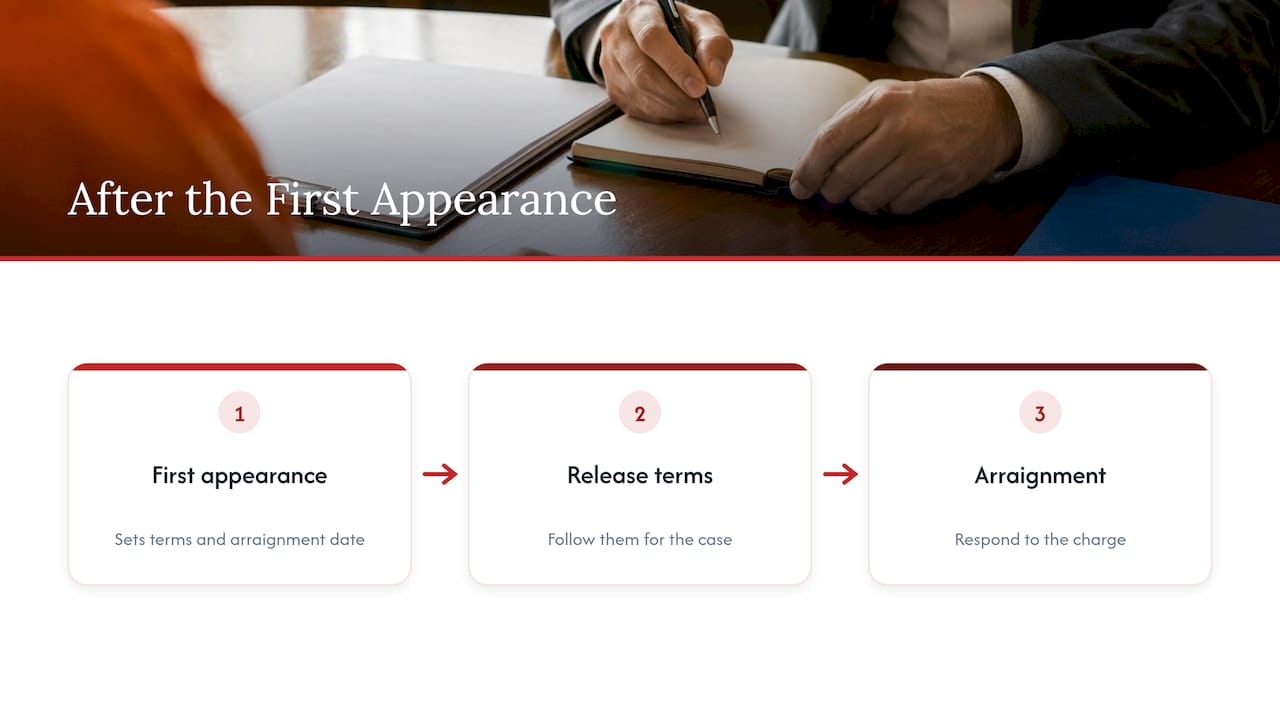
Missing a court date has real costs. The Collier County Clerk of Courts explains that if a defendant fails to appear, the court retains the bond and a warrant is issued for arrest. The court may enter an Order of Bond Estreature, which forfeits the money or collateral posted. Further penalties can follow, including loss of a driver’s license.
Time limits also begin to run. Florida’s speedy trial rule sets deadlines for the state to bring a case. Our guide to how Florida’s speedy trial rule works explains them, and the decision whether to waive them belongs with your attorney.
Our perspective
We tell families the same thing every time: the first 24 hours matter more than people expect. The hearing is brief, the judge has a crowded docket, and the bond decision can shape months of a person’s life, including their job, their home and their ability to help prepare a defense.
Our practice is built on direct attorney interaction. When someone calls us about an arrest, they speak with the lawyer who will be handling the case. We offer a free 30-minute consultation so a family can understand the charge, the process and the options before the next hearing.
For military families in Brevard County, an arrest brings added questions about command, orders and out-of-state residence. We encourage those families to call early as well.
Nothing here replaces advice on your specific facts. Bring the paperwork, and we will go through it with you.
John
Talk to a Brevard County defense attorney
If you or a family member has been arrested, or a first appearance is coming up, our criminal law team can explain the charge, the bond options and what to expect at each hearing. Our work covers Florida criminal defense, including DUI.

The consultation is free and lasts 30 minutes. Call The Law Office of John Vernon Moore, P.A. or reach us through jmoorelegal.com.
FAQ
What is the first appearance before a judge called in Florida?
It is called a first appearance, and some courts call it an advisory hearing. It is governed by Florida Rule of Criminal Procedure 3.130. The judge advises you of the charges and your rights, and sets the conditions of release.
How soon after arrest is the first appearance?
Within 24 hours of arrest, unless you were previously released in a lawful manner. It may happen in person or by audio-video link. Some court materials describe a longer window, but the rule text says 24 hours.
Do I need a lawyer at a first appearance?
You have the right to counsel, and the judge appoints one if you qualify and cannot afford one. You may also hire your own, and the judge must allow reasonable time to send for that lawyer. Early involvement helps with bond, because a lawyer can present your ties to the community.
Can I explain my side to the judge?
No, that is not the purpose of the hearing. It covers probable cause, bond and release conditions, and statements are recorded and can be used later. Keep answers to the judge’s questions brief and leave the facts for your lawyer.
What happens if I miss a court date after release?
The court can keep your bond and issue an arrest warrant. It may also order the posted money or collateral forfeited, and other penalties can follow, including loss of your driver’s license. Always confirm your next date with your lawyer.
Sources
- Florida Rule of Criminal Procedure 3.130, First Appearance
- Seminole County First Appearance Manual
- Gulf County Clerk of Courts, Definition of Terms
- NCSL, When Does a First Appearance Take Place in Your State
- Twelfth Judicial Circuit, First appearance hearings take place 365 days a year
- Office of the State Attorney, Twelfth Circuit, Stages in the Justice System
- Seventh Judicial Circuit, First Appearance
- Third Judicial Circuit, Administrative Order 2025-002
- Ninth Judicial Circuit, Administrative Order 2022-03-04
- Collier County Clerk of Courts, Criminal Court