If you are divorcing or sorting out a paternity case with a child in Brevard County, the parenting class is not optional. Florida requires a four-hour, state-approved course before a judge will sign your final judgment, and you have a short window to finish it. The right class is one on the state-approved list, taken on time, with proof filed in your case. We handle the rest of the case alongside it: our family law attorneys work with Brevard parents every day, and our divorce with children guide shows where the class fits in the larger process.
TL;DR
- Both parents in a Florida divorce with minor children, or in a paternity action involving parental responsibility, must complete the Parent Education and Family Stabilization Course before final judgment.
- The course lasts at least four hours. The petitioner has 45 days from filing; the other parent has 45 days from being served.
- The provider must be approved by the Florida Department of Children and Families (DCF). Online and correspondence options exist, but confirm the provider is accepted by the Brevard courts.
- Skipping it can lead to contempt, loss of shared parental responsibility or time-sharing, or other sanctions.
- Parents of children with special needs or emotional concerns must take a course tailored to the child’s condition.
Table of Contents
- Who has to take the class in Brevard County
- What the course covers
- The deadlines
- How to choose a provider
- What happens if you do not complete it
- Where the class fits in a Brevard divorce or custody case
- Questions to have ready before you register
- Our perspective
- Talk to a Brevard family law attorney
- FAQ
- Sources
Who has to take the class in Brevard County
The rule comes from section 61.21 of the Florida Statutes. All parties to a dissolution of marriage with minor children must complete the course before final judgment. The same goes for parties to a paternity action that involves parental responsibility. Brevard sits in the Eighteenth Judicial Circuit, and its Family Courts page points to an administrative order requiring the course in these cases.
Two details trip people up.
Modifications. If you are later asking the court to change a parenting plan or time-sharing schedule, you may be ordered to take a course again. The statute allows it, and the Brevard standing order says parties to a modification involving shared parental responsibility, custody or visitation may be required to complete a court-approved course before the new order is entered.
Cases filed elsewhere. A Florida resident whose divorce involves minor children still has to complete the course even if the case was filed in another county. The Eleventh Circuit’s divorce education FAQ explains that parents then use DCF’s list of approved statewide, online or correspondence programs.
This article is about the class that courts require in divorce and paternity cases. Voluntary parenting programs, such as early learning or school family programs, are separate things and do not satisfy a court order.
What the course covers
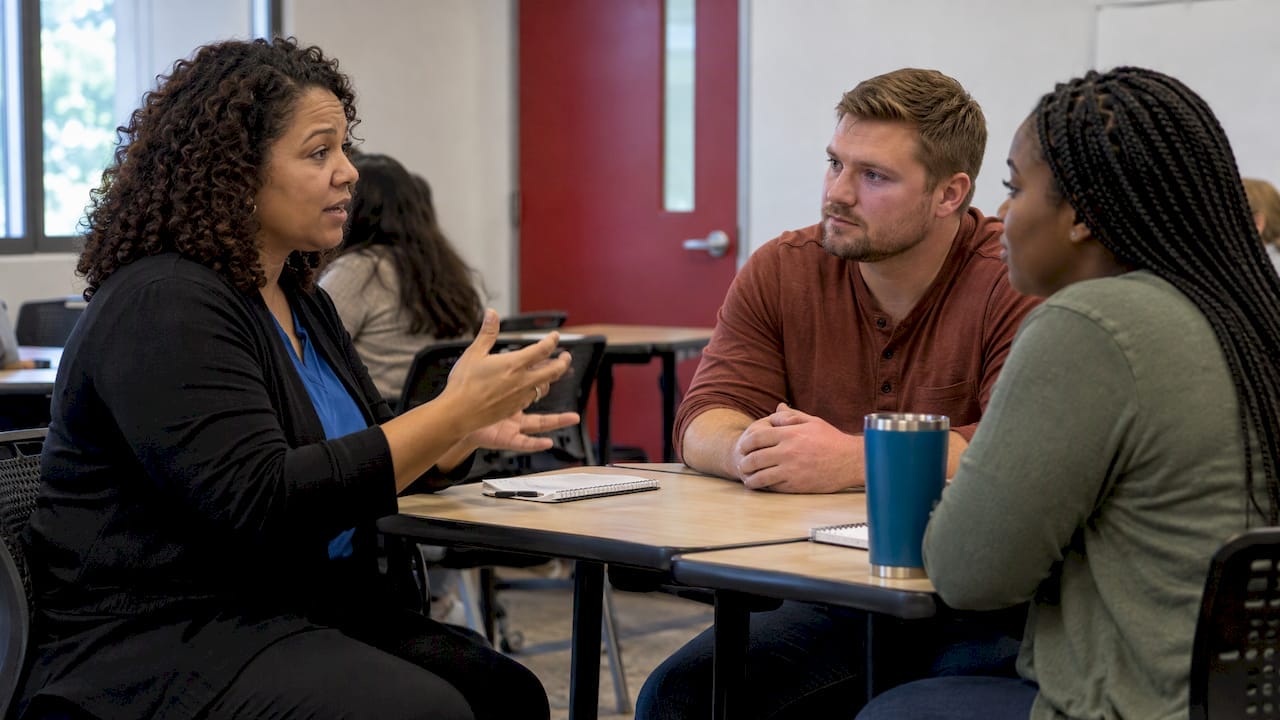
The course is not a lecture on how to raise a child. The statute describes its content: the legal aspects of child-related decisions, the emotional effects of divorce on adults and children, family dynamics, financial responsibilities, and spousal and child abuse and neglect. It also includes skill-based relationship education and information on children with special needs. According to section 61.21(2), the abuse and neglect segment is mandatory and comes with local agency referrals.
The practical aim is for each parent to understand how the split affects the children, how to help them adjust, and what their responsibilities are going forward. Parents often find the co-parenting communication material more useful than they expected, especially when the other parent is hard to deal with.
Children with special needs or emotional concerns
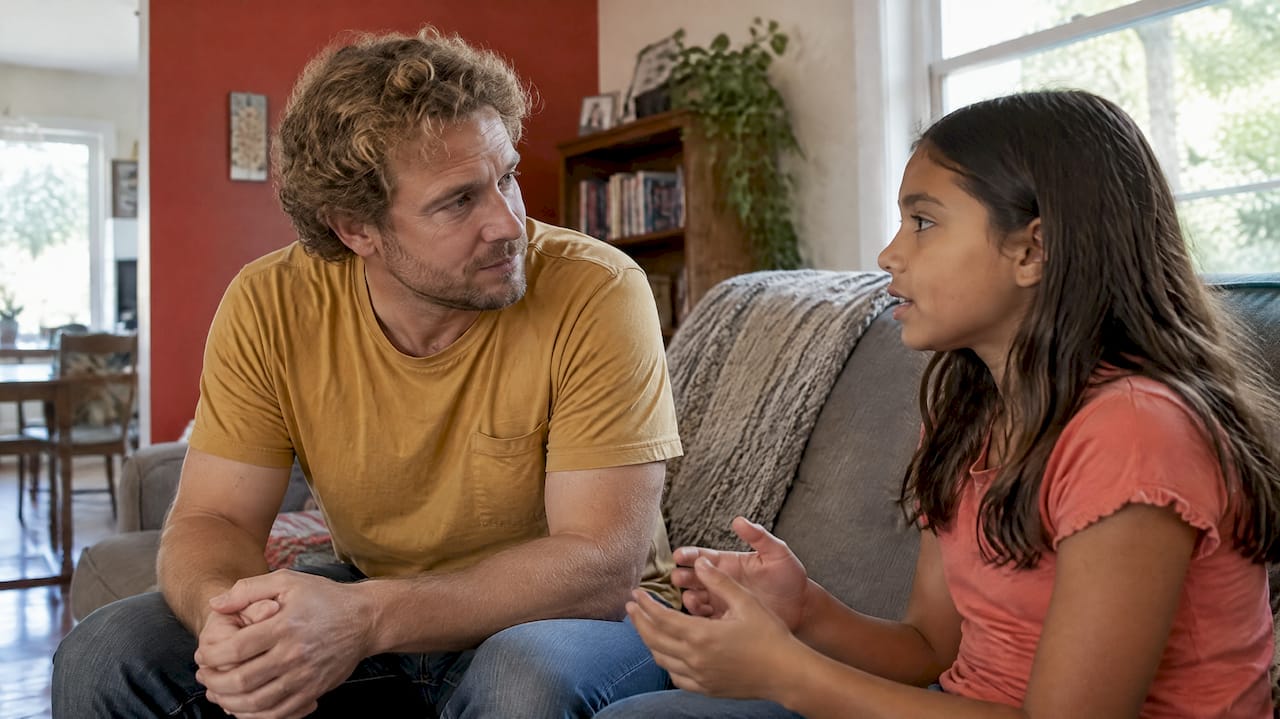
Since the 2021 amendments to section 61.21, parents whose children have special needs or emotional problems must take a course that includes information relevant to the child’s condition, as confirmed in the LexisNexis Florida Family Law release. If this applies to your family, ask the provider before you register whether its course is built for it. A generic course may not count.
The deadlines
The clock starts early. Under section 61.21(5):
| Who | Deadline |
|---|---|
| Petitioner (the parent who files) | Within 45 days after filing the petition |
| Respondent and other parties | Within 45 days after being served |
| Paternity actions | Within 45 days of the acknowledgment or adjudication of paternity, or of a time-sharing or support order |
Each party must file proof of completion with the court, and the final judgment cannot be entered until both have. A late certificate is one of the most common reasons an otherwise finished divorce sits waiting. The court can excuse attendance or timing for good cause, but that is a request you make to the judge, not something to assume.
A worked example: you file your petition on March 1. You should finish the course by mid-April, and your spouse, served on March 10, has until late April. If you settle in May but your spouse has not filed a certificate, the judge cannot sign the final judgment until it arrives. Nudging your co-parent to finish early can save weeks.
How to choose a provider
Florida law sets the baseline, and the Brevard courts add a practical filter.
- DCF approval. The Brevard standing order requires every provider to be DCF-approved and says the approved list must be available so you can choose the class you prefer. The full list is at MyFLFamilies.com, and the Brevard court’s self-improvement programs list names local providers and directs parents to that state list.
- Brevard court acceptance. The same court list cautions parents to check with the provider that it is certified in Brevard’s courts. Ask this before paying.
- Format. DCF must list at least one statewide internet course and one correspondence course. Local in-person classes in the Cocoa and Melbourne area are on the approved list too. Choose in-person if you want a live group and online if your work schedule, a military assignment or childcare makes evenings difficult.
- Cost. The statute allows a reasonable fee per parent, and DCF is to list at least one sliding-fee site per circuit where available. Fees vary by provider, so compare the current price on each provider’s own page.
- Special circumstances. If your child has special needs, pick a tailored course. If there is a history of domestic violence, the Brevard standing order lets the court prohibit the parents from taking the course together. Tell your attorney early so this can be addressed in your case.
You do not have to attend with your spouse. The Eleventh Circuit FAQ confirms parents can take the course separately, and most people do.
The Brevard Family Courts page says to register by contacting the listed provider directly and to use DCF’s circuit map to see courses in your area. A class labeled “parenting” on a general search site, a school program or a community workshop is not necessarily DCF-approved, so check the list before you pay.
What happens if you do not complete it
The consequences are written into section 61.21(9). The court may hold a parent who does not attend in contempt, deny that parent shared parental responsibility or time-sharing, or impose other sanctions it considers appropriate. The Brevard standing order likewise provides for contempt.
In practice, the larger cost is usually delay and credibility. A judge deciding time-sharing is looking at which parent follows the process and puts the children first. A missed course in a contested case hands the other side an easy point. Finishing early removes the issue.
Where the class fits in a Brevard divorce or custody case
The parenting class is one required step among several. Alongside it you will typically deal with financial disclosures, a parenting plan, possibly temporary orders and mediation. Our guide to the Brevard County divorce process walks through the steps from filing to final judgment. If you need support or use of the home while the case is pending, see our page on temporary relief in a Florida divorce. For the time-sharing decisions the class prepares you to discuss, our Florida child custody and time-sharing guide explains how parenting plans are built.
Unmarried parents have a parallel track. When paternity is not yet established, the course requirement can attach to the paternity action, and our page on establishing paternity in Florida covers that process.
Military families
If you or your spouse is on active duty, deployment, relocation and Patrick Space Force Base schedules can make a fixed class date impractical. A self-paced approved online or correspondence course can solve the timing, but the deadline still runs. Our military family law FAQs answer the questions we hear most from Brevard service families.
High-conflict co-parenting
The course teaches communication skills, but it cannot change the other parent. When one parent is controlling, manipulative or will not cooperate, you need a plan for documenting events, structuring communication and presenting a stable parenting plan to the judge. Our firm focuses on high-conflict divorces, including those involving a spouse with narcissistic personality traits. Taking the class early shows the court you are the parent focused on the children’s stability.
Questions to have ready before you register
- Is this provider on the current DCF-approved list, and is it accepted by the Brevard courts?
- Does the course run at least four hours, and will I receive a certificate I can file?
- Is there a tailored version for my child’s special needs or emotional concerns?
- What is the fee per parent, and is a sliding scale offered?
- Can I complete it online or by correspondence, and how fast will the certificate arrive?
Save the completion certificate and give a copy to your attorney so the proof is filed well before the final hearing.
Our perspective
We tell every parent the same thing at the first meeting: treat the parenting class as the first piece of evidence about the parent you intend to be. It is only four hours, yet judges notice who finishes it early and who has to be reminded.
In 85 years of combined experience, we have watched how much calmer a case runs when parents arrive at mediation already thinking in terms of the children’s schedule rather than the fight. As a certified mediator and as attorneys, we have seen agreements reached at the table that serve children far better than a ruling from the bench would.
Our approach is direct attorney contact. You talk to the lawyer handling your case, not only to staff. For military families and for parents dealing with a high-conflict or narcissistic spouse, that means a plan built around your facts, including how the class, the parenting plan and any deployment or communication issues fit together.
Start with the class, keep the certificate, and let us handle the paperwork and strategy around it.
John
Talk to a Brevard family law attorney
The parenting class is the easy part of a Florida family case. The harder parts are the parenting plan, time-sharing, support and negotiating with someone you no longer trust. The Law Office of John Vernon Moore, P.A. represents parents across Brevard County in divorce, custody, child support, paternity and military divorce, and offers free 30-minute consultations. If you want mediation rather than a trial, our family mediation page explains how it works with our certified mediator.

To discuss your case, visit our family law practice page and request your free consultation.
FAQ
How long do parenting classes take to complete?
Florida requires a minimum of four hours under section 61.21. Some providers split the time over more than one session, and online courses may be self-paced. Whatever the format, finish within 45 days of filing or service.
What happens if you do not take the parenting class for divorce?
The court can hold you in contempt, deny you shared parental responsibility or time-sharing, or impose other sanctions. The judge also cannot enter the final judgment until both parents have filed proof of completion, so your case stalls.
Can I take the Brevard County parenting class online?
Often yes. DCF lists at least one statewide internet course and one correspondence course. Choose a provider on the DCF-approved list and confirm it is accepted by the Brevard courts before you pay.
Do both parents have to attend together?
No. Each parent completes the course on their own and files a certificate. If there is a history of domestic violence, the Brevard standing order lets the court prohibit the parents from taking the course together.
Sources
- Chapter 61, Section 21, 2025 Florida Statutes
- Family Courts, Eighteenth Judicial Circuit
- Brevard County Self-Improvement Programs, Eighteenth Judicial Circuit
- Brevard County standing order, Eighteenth Judicial Circuit
- Divorce Education Programs FAQ, Eleventh Judicial Circuit
- Florida Family Law, LexisNexis, Release 68, December 2021