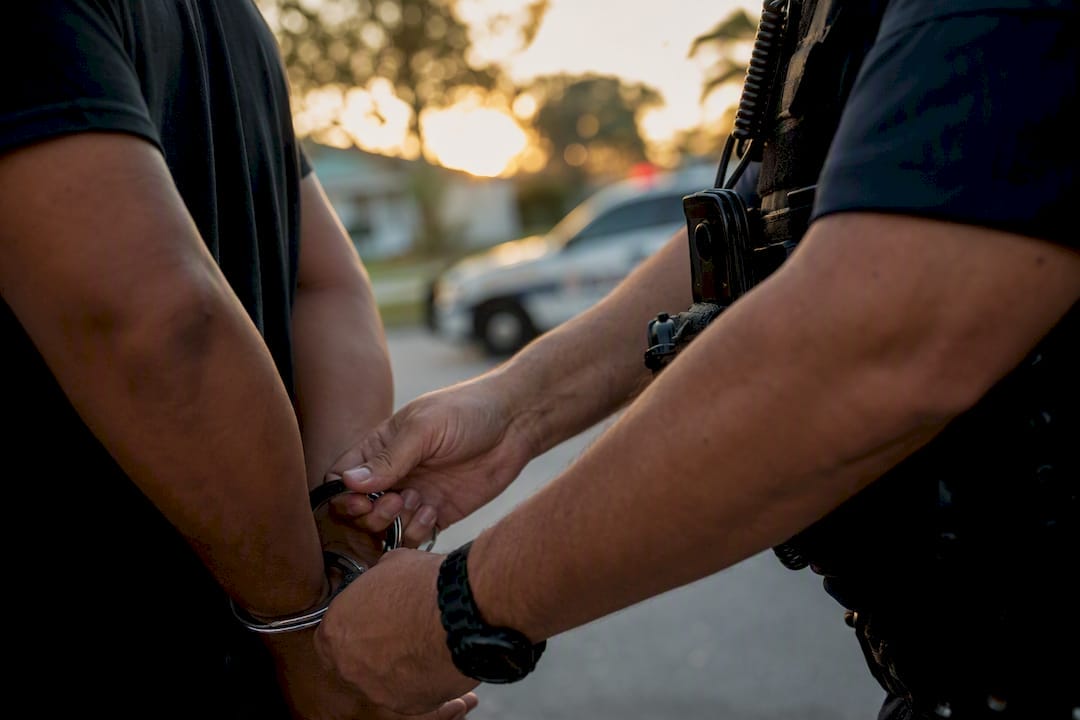
Under Florida law, resisting an officer without violence is a crime, specifically a first-degree misdemeanor under F.S. §843.02. If you’re facing this charge, your immediate priorities are simple: preserve any video or witness information, ask for an attorney before answering more questions, and avoid volunteering extra statements.
TL;DR:
- Resisting without violence requires proof that the officer was performing a lawful duty at the time, which can be challenged if the stop was baseless or unlawful.
- The charge applies to words or actions that resist, obstruct, or oppose officers, even without physical violence, often stemming from minor noncompliance like hesitating or giving false information.
- Convictions can lead to jail time, fines, and a permanent record, but many cases are dismissed, diverted, or negotiated to less severe charges.
- Defenses often rely on proving the officer’s misconduct or lack of lawful authority, with video footage and early discovery playing crucial roles.
- It is critical to act quickly after arrest by securing legal representation to request evidence, challenge legality, and improve the chances of case dismissal or resolution.
Table of Contents
- What Does Florida Statute §843.02 Actually Say?
- What Happens If You’re Convicted?
- What Actions Commonly Trigger This Charge?
- What Defenses Work Against a Resisting Charge?
- What Happens After You’re Arrested for Resisting?
- When Does Resisting Become a Felony Charge?
- How Should You Approach a Resisting Charge in Brevard County?
- Talk to a Brevard County Criminal Defense Attorney
- Where to Verify the Law and Read Further
- Sources
What Does Florida Statute §843.02 Actually Say?
The statute’s language is broader than most people expect. It states that whoever “shall resist, obstruct, or oppose” a law enforcement officer, correctional officer, or other listed official who is engaged in “the lawful execution of any legal duty,” without offering or doing violence to that officer, is guilty of a first-degree misdemeanor, punishable under Florida’s statutory sentencing provisions. The statute covers officers and select classes of public officials carrying out official duties.
To convict, a prosecutor has to prove three things:
- The person resisted, obstructed, or opposed an officer through words or actions.
- The officer was performing a lawful duty at the time, such as a legal stop, an arrest, or executing a court order.
- The officer had actual legal authority to be doing what they were doing in that moment.
That third element is where a lot of cases fall apart. If the officer’s own conduct wasn’t lawful, meaning the stop was baseless or the order given had no legal footing, the charge can collapse regardless of what the defendant did. FindLaw’s breakdown of the statute makes this same point: the “without violence” language matters because it separates this charge from its much more serious cousin, and it’s often the first thing a defense attorney checks.
What Happens If You’re Convicted?
A first-degree misdemeanor under §843.02 carries real consequences including jail time, fines, and probation
One in every several arrests for this charge stems from encounters that started as something else entirely, like a traffic stop or a welfare check, according to practical accounts from Galanter Law’s overview of resisting arrest charges. The charge often gets added when an officer feels a stop escalated, even without violence.
Beyond the courtroom, a conviction leaves a permanent record that shows up on background checks. That can complicate job applications, certain professional licenses, and, for non-citizens, immigration proceedings. Not every case ends in conviction, though. Many resolve through dismissal, a pretrial diversion program, or a negotiated plea to a lesser charge, and each path leaves a very different mark on your record.
What Actions Commonly Trigger This Charge?
Resisting without violence rarely looks like a fight. Most charges stem from ordinary, nonviolent moments that officers interpret as noncompliance:
- Walking away or refusing to stop when told to do so.
- Refusing to exit a vehicle during a lawful stop.
- Pulling your arm or hand away during an attempted handcuffing.
- Tensing up or going stiff instead of complying with a physical direction.
- Delayed compliance, hesitating for a few extra seconds under stress.
- Giving a false name or false identifying information to an officer.
Confusion, panic, or a medical condition can look like defiance to an officer in the moment, and courts don’t always sort that out cleanly at the scene. Verbal disagreement alone, arguing with an officer without physically interfering, is usually protected speech, though officers sometimes charge it anyway.
Pro Tip: If you’re stopped and things start to feel tense, calmly note the officer’s badge number, patrol car number, and any bystanders nearby. That information is far harder to recover after the fact than in the moment.
What Defenses Work Against a Resisting Charge?
Because this charge hinges so heavily on the officer’s own conduct, several defenses come up again and again in Brevard County courtrooms:
- Unlawful stop or arrest. If the officer lacked reasonable suspicion or probable cause, the resisting charge can unravel with it.
- No lawful duty being performed. An officer acting outside their authority, off-duty and out of jurisdiction, for example, undercuts the second statutory element.
- Absence of intent. Confusion or an involuntary reaction isn’t the same as knowingly opposing an officer.
- Mistaken identity or conflicting commands. Multiple officers giving contradictory instructions can create a genuine, defensible misunderstanding.
- Necessity or duress. Rare, but relevant when compliance itself would have caused immediate harm.
What you do in the first days after arrest shapes which of these defenses actually have room to work. Politely assert your right to remain silent, request counsel before answering further questions, and write down your own account of what happened while it’s still fresh, details fade fast under stress.
Attorney analysis of resisting-without-violence cases consistently points to one pattern: cases decided largely on whether the officer’s underlying conduct was lawful, and how much of that conduct got captured on video. Bodycam footage, dashcam recordings, and early discovery requests can shift a case dramatically, sometimes turning a likely conviction into a dismissal before it ever reaches trial.
Pro Tip: Ask your attorney early whether a motion to suppress is realistic in your case. Filed at the right time, it can knock out the evidence the entire charge depends on.
What Happens After You’re Arrested for Resisting?
The path from arrest to resolution follows a fairly predictable sequence in Florida, though timing varies by county:
- Arrest and booking. You’re taken into custody, processed, and given a court date.
- First appearance or arraignment. A judge reviews the charge, sets or reviews bail, and you enter an initial plea.
- Pretrial phase. Your attorney requests discovery, reviews bodycam and dispatch records, and files any relevant motions.
- Resolution. The case ends in dismissal, a diversion program, a negotiated plea, or trial.
Discovery requests and speedy-trial deadlines run on strict clocks, so retaining counsel quickly matters more than people expect. Diversion programs, when available, often let first-time offenders avoid a conviction entirely, and a case that ends in dismissal or successful diversion may later qualify for record sealing.
When Does Resisting Become a Felony Charge?
The line between this misdemeanor and a felony comes down to one added element: violence, or the threat of it. F.S. §843.01 covers resisting with violence, and it applies when a person resists an officer by offering or doing actual violence, or threatening violence, to that officer.
- Misdemeanor (§843.02): up to 364 days in jail, $1,000 fine, no violence involved.
- Felony (§843.01): a third-degree felony, punishable by up to five years in prison and a $5,000 fine.
Grabbing at an officer’s weapon, striking an officer, or making a credible threat during an arrest typically pushes a case from the misdemeanor track into felony territory. The gap in consequences between the two charges is enormous, which is exactly why the specific facts of the encounter matter so much.
How Should You Approach a Resisting Charge in Brevard County?
The biggest mistake I see people make with this charge is assuming it’s minor because no violence occurred. It isn’t. A conviction still leaves a criminal record, and that record follows you into job applications and background checks for years. The people who come out of these cases best are the ones who treated the first week like it mattered, because it does.
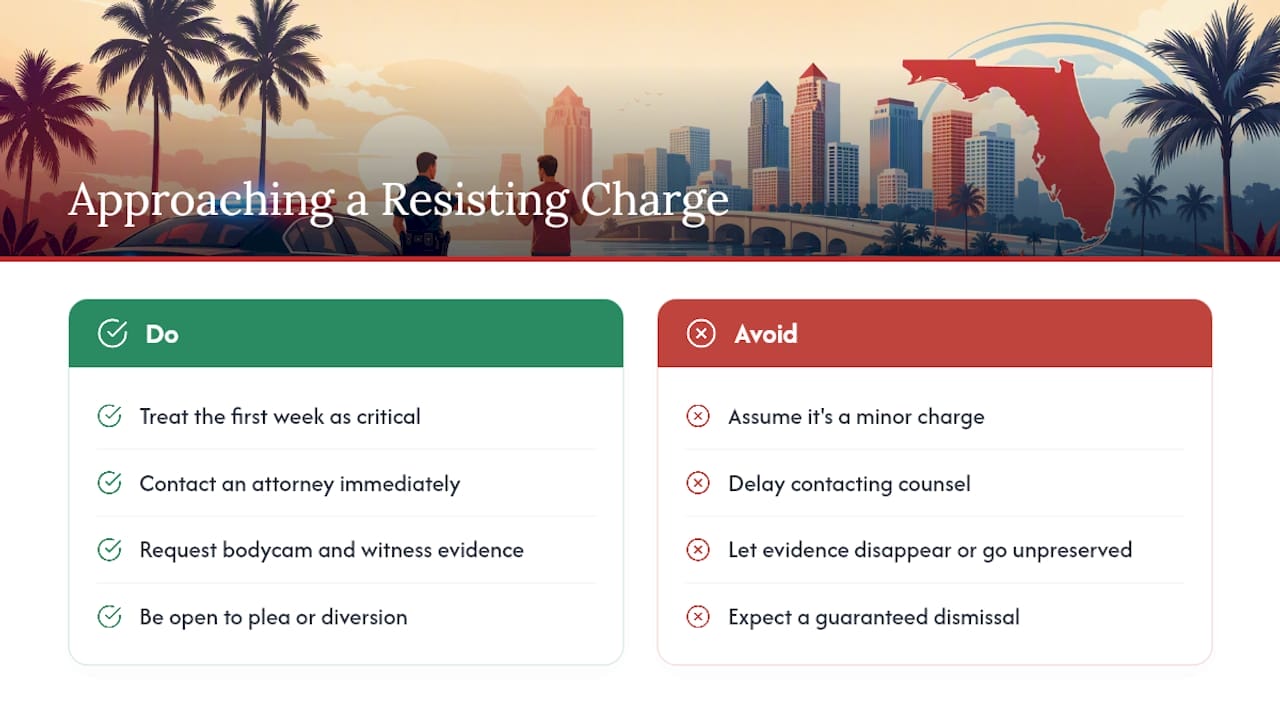
Early intervention changes outcomes. Getting an attorney involved before the state locks in its narrative means there’s still time to request bodycam footage, interview witnesses, and file suppression motions if the stop itself was questionable. Wait too long, and some of that evidence disappears or gets harder to access.
Realistic expectations matter too. Plenty of these cases resolve through negotiated pleas to lesser charges or diversion rather than a clean dismissal, and that’s not a failure, it’s often the smartest outcome available given the facts. With 85 years of combined experience in Brevard County courts and a free initial consultation, our team has seen enough of these cases to know which defenses tend to hold up and which ones waste a client’s time and money.
— John
Talk to a Brevard County Criminal Defense Attorney
If you’re facing a resisting-without-violence charge in Brevard County, the Law Office of John Vernon Moore is the direct option for local representation, and the first consultation costs nothing.

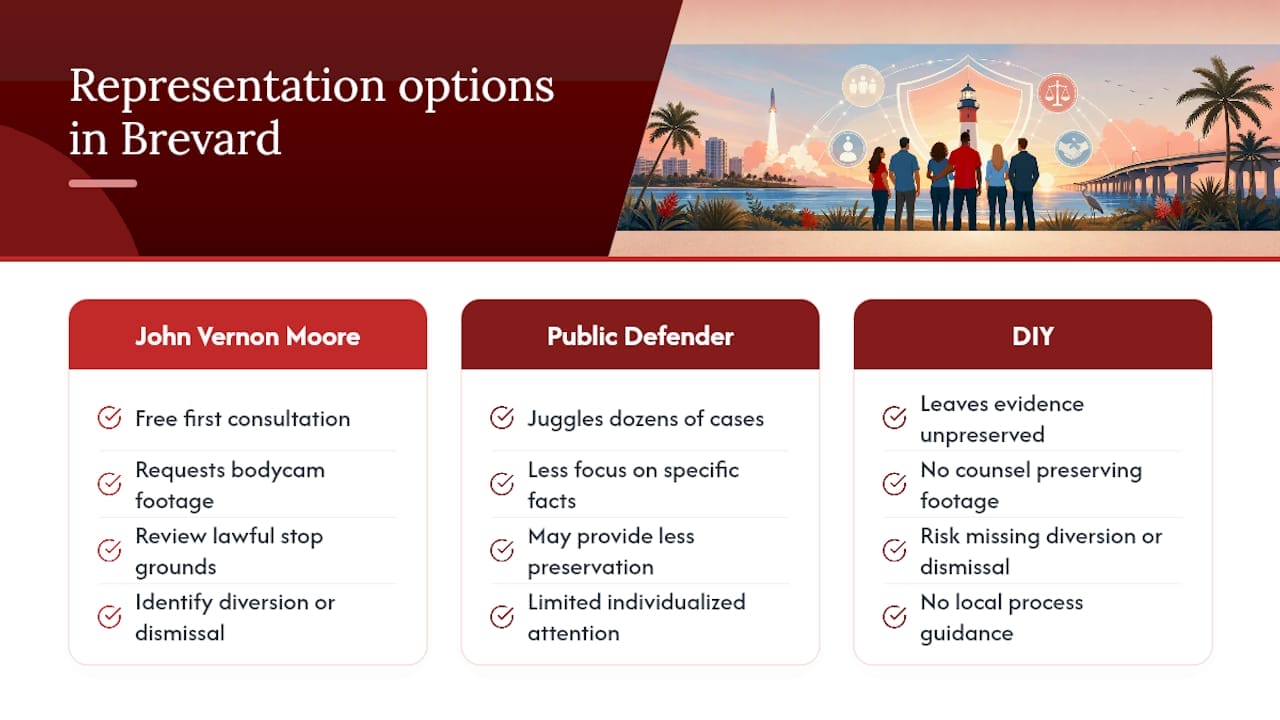
Unlike a public defender juggling dozens of cases or a DIY approach that leaves evidence unpreserved, we focus on the specific facts of your stop, your arrest, and your record from day one. That means requesting bodycam footage before it’s overwritten, reviewing whether the officer had lawful grounds to stop you in the first place, and identifying whether diversion or dismissal is realistically on the table. Our criminal law practice has handled resisting charges alongside related matters throughout Brevard County, and we walk every client through what the process for their charge in the county actually looks like before you decide anything.
If you were arrested outside your home county, our guide for out-of-town defendants covers what changes and what doesn’t. Call today to schedule your free consultation and find out where your case actually stands.
Where to Verify the Law and Read Further
For the statute itself, read the official text at flsenate.gov or the Online Sunshine statutes browser. For plain-language explanations, Justia’s statutory copy and FindLaw’s breakdown offer reliable secondary reading, while our criminal defense process guide covers what happens after arrest in more detail.
This article is general information, not a substitute for advice from a qualified lawyer. Consult a qualified legal professional about your own circumstances before acting on anything here.
Sources
- Chapter 843 Section 02 – 2025 Florida Statutes – The Florida Senate
- Florida Statutes Title XLVI. Crimes § 843.02 — FindLaw
- Resisting Arrest in Florida: Penalties & Defenses — Galanter Law
- Resisting Without Violence in Florida: What Counts & How to Fight It — Michael White, Esq.