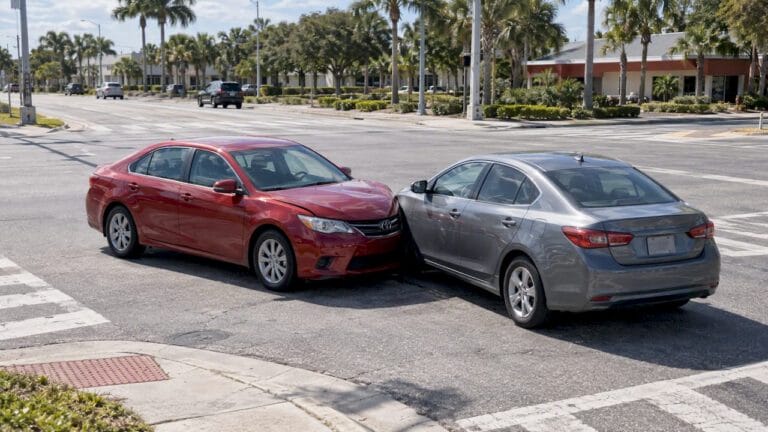
If an officer wrote “reckless driving” instead of “careless driving” on your citation, the state believes your driving showed willful or wanton disregard for other people’s safety, not just simple negligence. That distinction is criminal, not civil, and it carries jail exposure, a fine, and 4 points on your license. If a crash, injury, or drugs or alcohol factored in, the exposure jumps further, and you should talk to a defense attorney before your court date, not after.
TL;DR:
- A reckless driving charge in Florida indicates willful or wanton disregard for safety, not just negligence, and can result in jail, fines, and license points.
- Penalties escalate with repeat offenses and can involve first-degree misdemeanors or even felonies if injuries or property damage occur, especially with alcohol or drugs involved.
- Evidence against defendants includes officer reports, dashcam footage, witness statements, skid marks, and damage, while defenses often challenge intent or mitigate recklessness.
- Reducing a reckless driving charge to careless driving or obtaining a withhold of adjudication can eliminate criminal records but depends on prior points and case specifics.
- An attorney can assess collateral risks like insurance hikes and employment impacts, offering strategic defense tailored to each case rather than just paying a fine.
Table of Contents
- What Does Florida’s Reckless Driving Law Actually Say?
- What Are the Penalties for Reckless Driving in Florida?
- When Does Reckless Driving Become a Felony in Florida?
- What Evidence Do Prosecutors Use, and How Do Defenses Work?
- What Should You Do Immediately After a Reckless Driving Charge?
- How Much Will a Reckless Driving Conviction Raise Your Insurance Rates?
- Can You Reduce Reckless Driving Penalties Through a Plea or Diversion?
- Will a Reckless Driving Conviction Affect Your Job or Professional License?
- Author Perspective: How a Brevard County Attorney Evaluates These Cases
- How Jmoorelegal Defends Reckless Driving Charges in Brevard County
- Sources
- FAQ
What Does Florida’s Reckless Driving Law Actually Say?
Florida Statute §316.192 doesn’t punish bad driving. It punishes a specific state of mind: operating a vehicle in “willful or wanton disregard for the safety of persons or property.” That phrase does most of the legal work in every reckless driving case filed in the state, and it’s worth reading exactly as the Florida Senate’s statute text puts it.
“Any person who drives any vehicle in willful or wanton disregard for the safety of persons or property is guilty of reckless driving.” The same statute adds that fleeing a law enforcement officer in a vehicle counts as reckless driving per se, meaning prosecutors don’t need to prove anything else about your state of mind.
Speeding alone rarely satisfies that standard. A driver going 15 miles over the limit on an empty highway looks very different, legally, from one weaving through occupied lanes at that same speed, blowing through a red light, or ignoring a police signal. Prosecutors and judges look at the whole picture: how fast, where, what else was happening on the road, whether the driver reacted to warnings, and whether the conduct created real danger to someone besides the driver. That’s why two people cited for the same radar reading can face very different charges, one careless, one reckless, depending on everything else the officer documented.
What Are the Penalties for Reckless Driving in Florida?
A conviction under §316.192 is a criminal matter, and the penalty structure scales with prior history.
First conviction: up to 90 days in jail, a fine between $25 and $500, or both.
Second or subsequent conviction: up to 6 months in jail, a fine between $50 and $1,000, or both.
Every fine in a reckless driving case also includes an additional statutory surcharge for the Emergency Medical Services Trust Fund, a small add on paper that still shows up on the final court paperwork.
The criminal side is only half the exposure. A conviction also adds 4 points to your Florida driving record, and points stack against suspension thresholds that run on rolling windows:
- 12 points in 12 months triggers a suspension of up to 30 days.
- 18 points in 18 months triggers a suspension of up to 3 months.
- 24 points in 36 months triggers a suspension of up to 1 year.
A single 4 point hit might not push you over any threshold today. But if you already picked up points from an earlier ticket this year, reckless driving could be the conviction that suspends your license, and that’s a conversation worth having with an attorney before you decide how to plead.
When Does Reckless Driving Become a Felony in Florida?
The base charge is a second-degree misdemeanor, but the classification climbs fast once someone or something gets hurt. Florida’s statute, echoed in FindLaw’s summary of §316.192, lays out clear tiers:
- Property damage or bodily injury to another person elevates the offense to a first-degree misdemeanor, carrying up to a year in jail and a fine up to $1,000.
- Serious bodily injury elevates it further, to a third-degree felony, punishable by up to 5 years in prison. The statute defines serious bodily injury as an injury creating a substantial risk of death, serious permanent disfigurement, or protracted loss or impairment of a body part or organ function.
- Alcohol or drug involvement opens the door for the court to order a DUI-program substance abuse evaluation and education, even without a separate DUI charge, whenever there’s reasonable cause to believe a substance contributed to the incident.
That last point catches people off guard. You can be charged with reckless driving, not DUI, and still end up in a court-ordered treatment program if the officer’s report mentions the smell of alcohol or slurred speech, even absent a breath test.
What Evidence Do Prosecutors Use, and How Do Defenses Work?
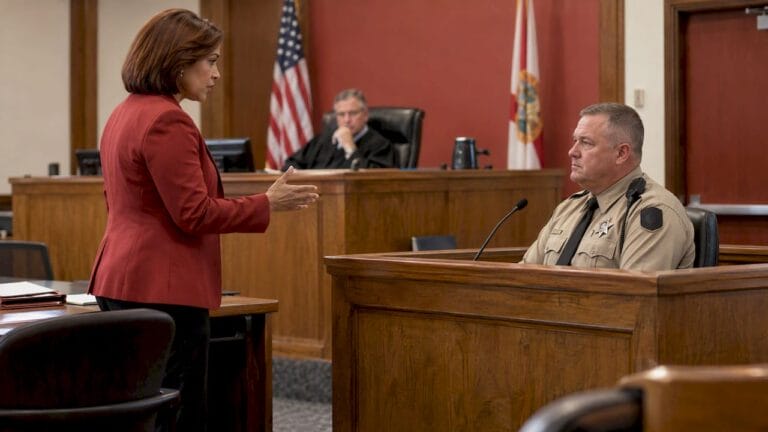
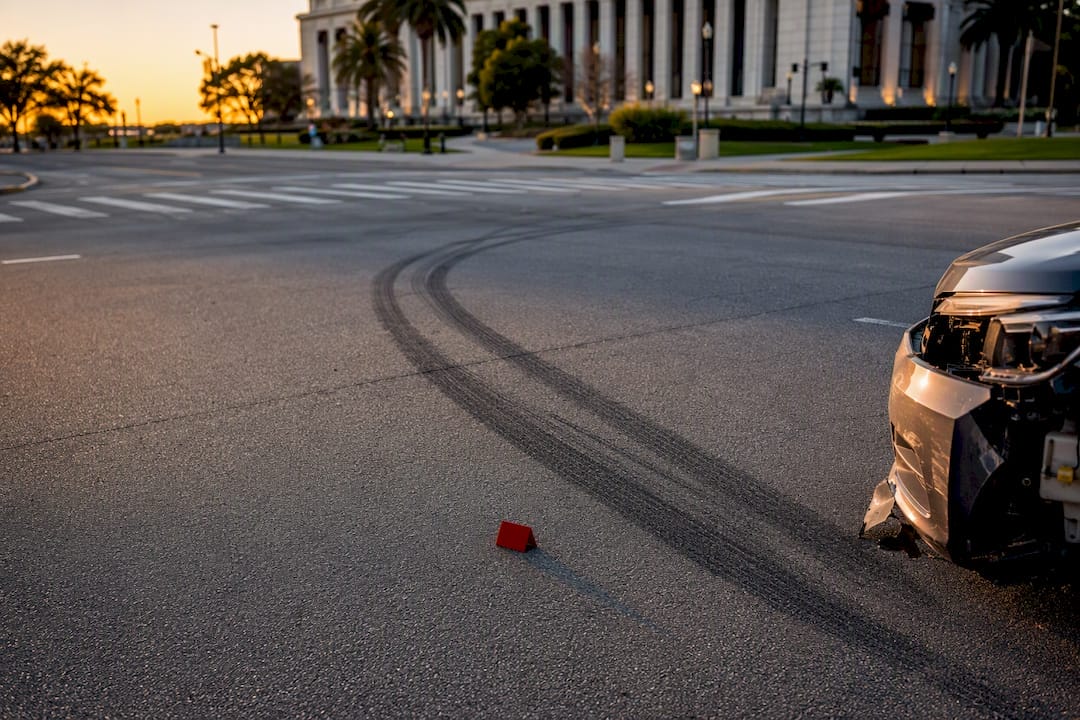
Prosecutors build reckless driving cases around a handful of evidence types: the citing officer’s testimony and report, dashcam or bodycam footage, statements from other drivers or pedestrians who witnessed the incident, skid marks and vehicle damage documented at the scene, and, when there’s a crash, medical and repair records. Each piece is meant to answer one question: did this driver’s conduct rise above ordinary carelessness into willful or wanton territory?
That’s exactly where a defense finds its footing. Because speed alone often isn’t enough to prove recklessness, a strong defense frequently attacks the state’s evidence of intent or awareness rather than disputing the raw facts of what happened. Weather, mechanical failure, a sudden road hazard, or a momentary lapse can all support an argument that the conduct was careless, not reckless, even when the outcome looks serious.
Common resolutions in these cases include:
- Reduction of the charge from reckless to careless driving, which shifts the case from criminal to a traffic infraction.
- A withhold of adjudication, which can keep a formal conviction off your record even after a plea.
- Negotiated plea agreements that trade a guilty plea for a lighter sentence or reduced points exposure.
- Trial, when the evidence or the law genuinely favors the defense and no acceptable plea is on the table.
Pro Tip: Don’t assume the officer’s narrative in the report is the whole story. Officers write reports quickly, often from memory, and small factual gaps, like an intersection’s actual sightlines or a vehicle’s true speed at impact, can matter more than they seem to at first glance.
What Should You Do Immediately After a Reckless Driving Charge?
What you do in the days right after the citation can shape how the whole case plays out, especially if your bond is revoked; understanding what happens if your bond is revoked in California can offer useful general insight into bail and bond issues. Handle it in this order:
- Collect every document tied to the incident. That means the citation itself, any arrest paperwork, the crash report if one was filed, and copies of your insurance policy.
- Save all photos and original video files, including dashcam footage and anything captured on a phone, before storage limits or automatic deletion wipe them out.
- Write down witness names and contact information while memories, including yours, are still fresh.
- Confirm your actual court date and any filing deadlines with the clerk’s office. Paying the fine amount on a citation can sometimes count as a plea, so don’t assume paying makes the charge go away.
- Bring everything to an attorney consultation, not just the citation. Reports, photos, video, insurance details, and witness contacts all help an attorney evaluate the case accurately on the first meeting.
Resist the urge to post about the incident anywhere online, and never delete a recording even if it seems to hurt your case. Preserve the original file and keep a backup copy.
Pro Tip: If your case involves a crash with injuries, start tracking every medical visit and repair estimate right away. That paper trail matters just as much for a related personal injury claim as it does for your criminal defense.
How Much Will a Reckless Driving Conviction Raise Your Insurance Rates?
The court fine is often the smallest number in the whole ordeal. Insurance carriers treat a reckless driving conviction as a major violation, well above a routine speeding ticket, and premium increases from a major moving violation commonly last for three to five years on a policy, depending on the carrier’s own lookback period.
The total cost of a conviction usually runs well past the $500 or $1,000 statutory fine ceiling once you count court costs, program fees, and rate hikes together. If the court orders a DUI-program substance abuse evaluation, that adds its own fee on top of everything else, and skipping it can put your driving privileges at risk separately from the criminal case.
For drivers who rely on a vehicle for work, gig driving, or a daily commute across Brevard County, the compounding cost of a higher premium often outweighs the original fine within the first year alone. That’s the real reason so many drivers fight a reckless driving charge rather than just paying it and moving on: the fine is fixed, but the insurance consequence isn’t, and it follows you for years.
Can You Reduce Reckless Driving Penalties Through a Plea or Diversion?
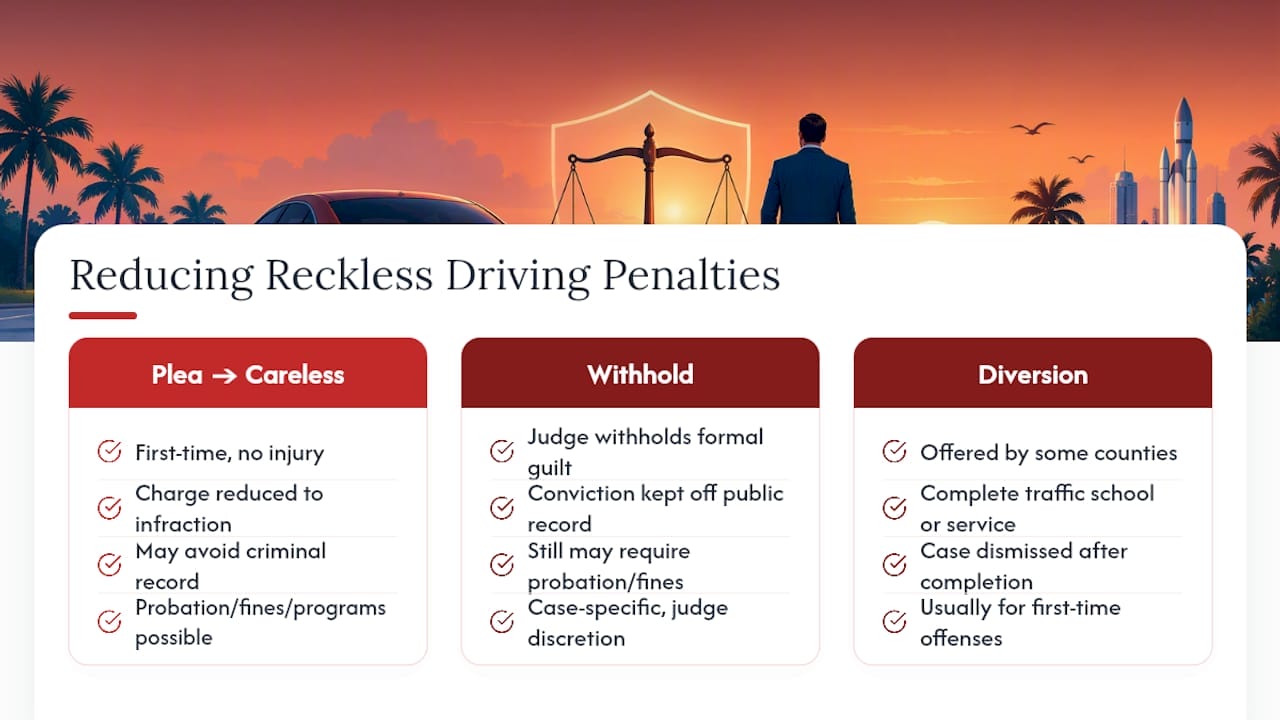
Yes, and it’s one of the most common outcomes in these cases. Plea negotiations that reduce the charge to careless driving are especially common for first time offenders where nobody was hurt, and that reduction alone can mean the difference between a criminal record and a traffic infraction.
A withhold of adjudication is another path worth understanding. Even when you enter a plea, the judge can withhold formally adjudicating you guilty, which in many circumstances keeps the conviction off your public record while you still complete probation terms, fines, or a program. Some counties and prosecutors also offer diversion programs for eligible first-time traffic offenses, letting a driver complete requirements like traffic school or community service in exchange for a dismissal.
Because points accumulate over rolling multi-year windows, an attorney should review your recent driving history before recommending any specific plea. A reduction that looks fine on paper can still push a driver with recent points over a suspension threshold, so the right strategy depends on your actual record, not just the charge in front of you.
None of these options are automatic. They depend on your prior record, whether anyone was injured, the strength of the evidence, and how the specific prosecutor’s office in your county typically handles these cases.
Will a Reckless Driving Conviction Affect Your Job or Professional License?
For most people, the criminal record matters as much as the driving record. A reckless driving conviction is a criminal offense, and it will show up on standard background checks that employers run, including for jobs that have nothing to do with driving.
The stakes climb higher for anyone whose job depends on a clean license or a professional credential. Commercial drivers, delivery and rideshare drivers, and anyone operating a company vehicle can face internal policy consequences on top of the court’s penalties, up to and including termination depending on the employer’s own driving policy. Certain licensed professions, teaching, nursing, and other state-regulated fields, ask about criminal convictions directly on renewal applications, and a reckless driving conviction can trigger a review even when the license itself has nothing to do with vehicles.
This is where a withhold of adjudication or a reduction to careless driving carries weight beyond the courtroom. Keeping a criminal conviction off your record can matter more to your career than the $500 fine ever did, which is exactly why it’s worth discussing employment and licensing exposure with your attorney at the first consultation, not after a plea is already signed.
Author Perspective: How a Brevard County Attorney Evaluates These Cases
Every reckless driving file crosses my desk the same way: I read the charging document first, then the evidence behind it, then the client’s driving history. Points and prior convictions change the calculus entirely, so that record review happens before we talk strategy, not after.
As an attorney representing clients, I look past the citation to the collateral exposure, insurance, employment, any parallel injury claim, because that’s usually where the real cost lives. Realistic outcomes vary case by case, but a reduction to careless driving or a withhold of adjudication is on the table more often than most drivers expect, especially for first offenses with no injury involved.
— John
How Jmoorelegal Defends Reckless Driving Charges in Brevard County
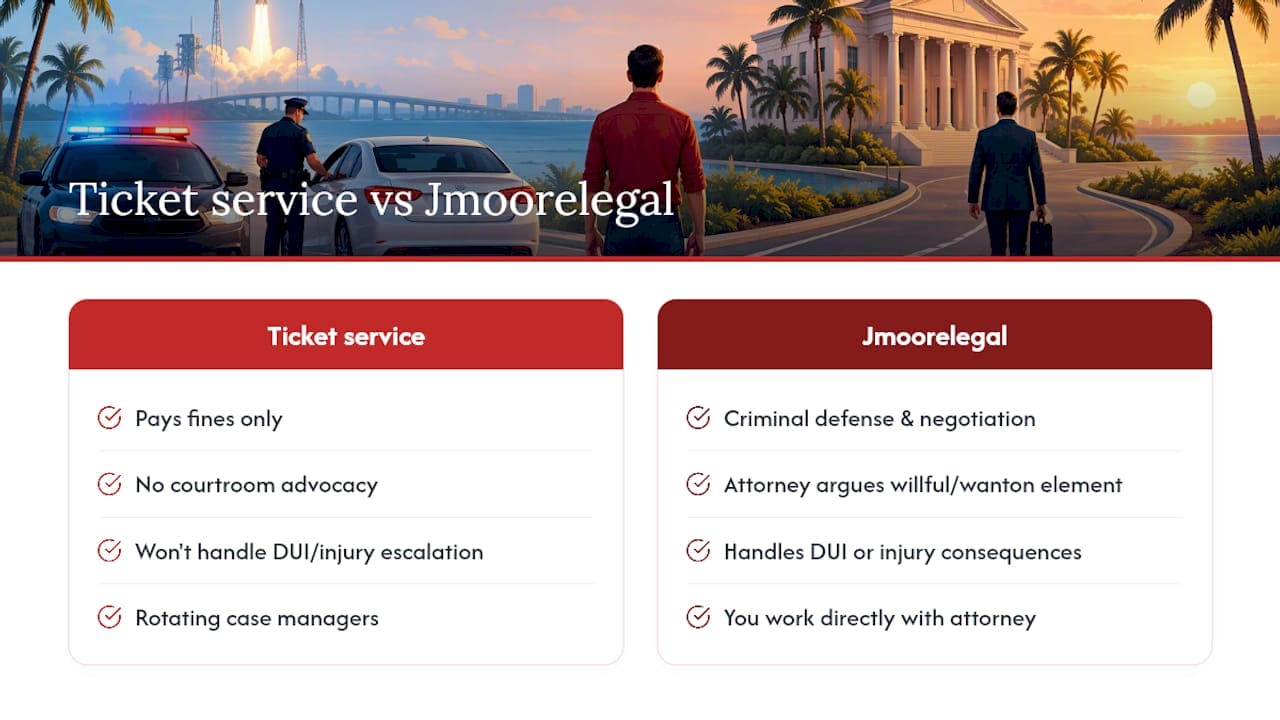
A generic traffic ticket service can help you pay a fine. It can’t sit across from a prosecutor and argue that your conduct never met the willful or wanton standard the state has to prove, and it won’t be there if your case escalates toward a misdemeanor or felony because of injury or a DUI evaluation. That’s the gap a specialized legal firm can fill for drivers facing a reckless driving charge locally.

The firm handles the full range of what a reckless driving case can turn into, criminal defense on the underlying charge, negotiation directly with the prosecutor’s office, and representation if a related DUI charge or injury claim enters the picture. You work directly with your attorney rather than a rotating case manager, and the firm builds its strategy around your specific facts, not a template plea. A free initial consultation gets your case reviewed before you commit to anything.
Bring your citation, any crash report, photos or video, insurance information, and witness contacts to that first meeting. From there, expect a case review, a records request if anything’s missing, and a straightforward conversation about your realistic options. Contact Jmoorelegal to schedule that consultation before your court date arrives.
Sources
Readers who want the statutory language directly can review Florida Statute §316.192 through the Florida Senate’s site, along with FLHSMV’s points and suspension rules. The Online Sunshine statute portal offers the legislature’s official codified version for cross-reference.
This article is general information, not a substitute for advice from a qualified lawyer. Consult a qualified legal professional about your own circumstances before acting on anything here.
- Chapter 316 Section 192 – 2026 Florida Statutes – The Florida Senate
- Points and point suspensions – Florida Highway Safety and Motor Vehicles (FLHSMV)
- Florida Statutes Title XXIII. Motor Vehicles § 316.192 | FindLaw
FAQ
Is Reckless Driving a Criminal Offense in Florida?
Yes. Reckless driving under §316.192 is a criminal charge, not a simple traffic infraction, and it carries jail exposure and a fine on top of license points.
What’s the Difference Between Careless and Reckless Driving in Florida?
Careless driving is a civil traffic infraction involving ordinary negligence, while reckless driving is a criminal charge requiring proof of willful or wanton disregard for safety. The distinction often comes down to whether the driver’s conduct showed conscious disregard for danger, not just a lapse in attention.
How Many Points Does Reckless Driving Add to a Florida License?
A reckless driving conviction adds 4 points to your driving record. Combined with other recent points, that can trigger a suspension under Florida’s 12/18/24 point thresholds.
Can a Reckless Driving Charge Be Reduced to Careless Driving?
Often, yes, especially for first-time offenders in cases without injuries. A reduction moves the case from a criminal charge to a traffic infraction, which changes both the penalty and the long-term record impact.
Should I Hire an Attorney for a Reckless Driving Charge in Florida?
Given the criminal exposure, license points, and potential insurance and employment fallout, most drivers benefit from a consultation before deciding how to plead. Jmoorelegal offers a free initial consultation to review the specific facts of a reckless driving case in Brevard County.