
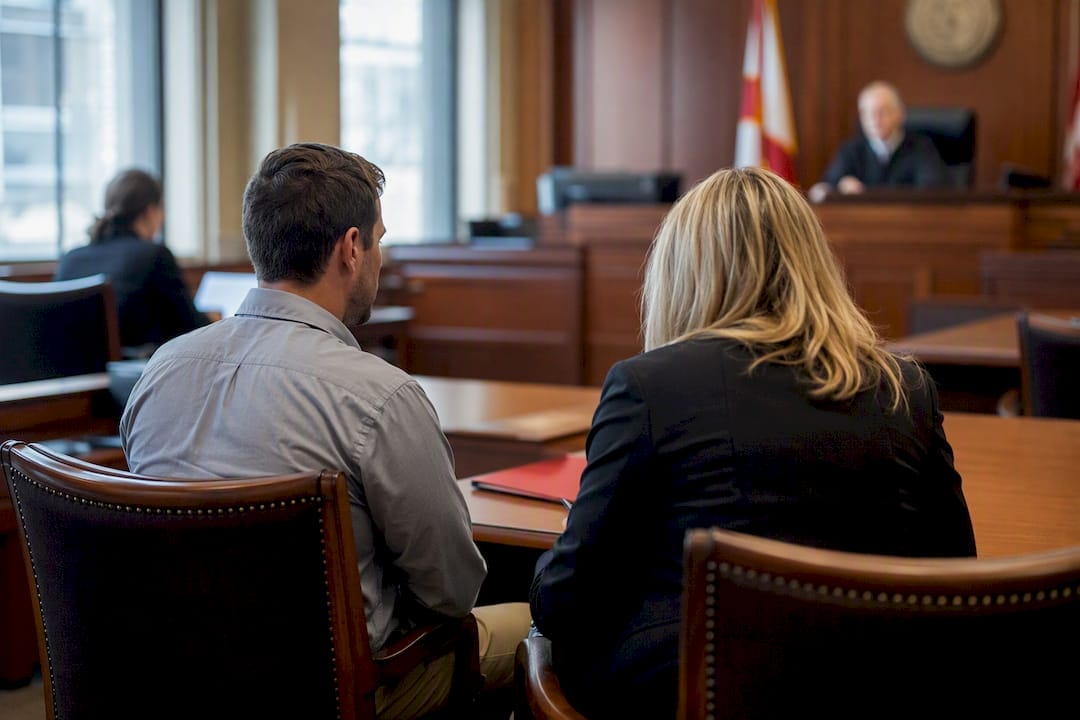
Brevard County operates both an adult Pre-Trial Intervention (PTI) Drug Court and a Juvenile Drug Treatment Court, and both exist to treat substance use rather than simply punishing it. Adults who complete the roughly 12 to 18 month program can get their felony charges dismissed. Juveniles who finish their track can avoid formal adjudication. Neither path is easy, and strict conditions apply from day one.
TL;DR:
- The adult drug court program typically lasts 12 to 18 months, but non-compliance can extend the timeline, while consistent adherence may lead to early graduation.
- Juvenile cases focus on preventing formal adjudication and are often provided at no cost, unlike adult treatment fees which usually fall on participants.
- Eligibility for both tracks depends on factors like non-violent charges, no violent felony involvement, documented substance use, and team approval, with strict statutory guidelines.
- Frequent court hearings involve monitoring test results and case progress, with incentives for compliance and sanctions for violations that can escalate to warrants or revocation.
- An attorney’s early help can improve application success, assist with case review, and provide guidance on the court’s requirements and potential violations.
Table of Contents
- What Are Brevard County’s Drug Court Programs?
- Who Qualifies for Brevard County Drug Court?
- How Long Does Brevard County Drug Court Take?
- What Rules Must Drug Court Participants Follow?
- How Does Juvenile Drug Treatment Court Work?
- What Happens at Drug Court Hearings?
- How Can a Local Attorney Help With Drug Court?
- Where Can You Find Brevard County Drug Court Resources?
- A Straight Answer About What Drug Court Actually Demands
- How Jmoorelegal Helps With Brevard County Drug Court Cases
- Sources
- FAQ
What Are Brevard County’s Drug Court Programs?
Brevard County’s drug courts exist because locking someone up for a substance use disorder rarely fixes the underlying problem. The Eighteenth Judicial Circuit describes its drug court as non-adversarial by design. Instead of prosecutors and defense attorneys fighting over guilt, a team works together to address what is actually driving the criminal behavior.
Two distinct tracks operate under this model:
- Adult PTI Drug Court — a felony diversion program for adults facing non-violent drug charges, built around treatment, testing, and judicial supervision.
- Juvenile Drug Treatment Court (JDTC) — a youth-focused track, running since 2004, aimed at rehabilitation and keeping kids out of the formal delinquency system.
Both rely on a multidisciplinary team: a judge, prosecutors, defense counsel, case managers, treatment providers, and Department of Corrections (DOC) probation staff who coordinate screening and supervision. Brevard County Court Alternatives helps manage intake and case tracking so the team has a consistent picture of each participant’s progress, not just a file that gets reviewed once a month.
Who Qualifies for Brevard County Drug Court?
Eligibility is not a formality. The adult program operates under Administrative Order 95-25-B, which adopts Florida Statute 948.08(6) as the legal foundation for the county’s pretrial intervention drug court. That statute lays out who the legislature intended this program to serve, and the local court applies it strictly.
Typical adult eligibility factors include:
- Charged with a non-violent felony connected to substance use
- No disqualifying prior felony record
- A documented substance use or co-occurring mental health need
- Meets the statutory age and residency screening requirements
Juvenile eligibility runs on a parallel but separate track:
- Meets the applicable age range for the juvenile system
- No violent felony charge involved
- A documented substance use issue identified through screening
- Team approval after case review
Referrals typically start with the State Attorney’s Office or a defense motion, followed by DOC screening and a proposed order submitted to the court. Cases involving identifiable victims or co-defendants facing separate charges sometimes complicate acceptance, which is one reason early legal guidance matters before you apply.
How Long Does Brevard County Drug Court Take?
The program moves through four general phases, and how fast someone moves through them depends almost entirely on compliance.
- Stabilization — intensive treatment engagement, frequent testing, and close monitoring while the participant adjusts to sobriety.
- Intensive treatment — continued clinical work paired with regular court check-ins and case management.
- Transition — reduced supervision intensity as the participant demonstrates sustained progress.
- Aftercare and graduation prep — final compliance checks before the court considers termination of the case.
For adults, the baseline timeframe runs about 12 to 18 months. Juvenile phases vary more, since case plans are built around each teenager’s school schedule, family situation, and treatment needs. Neither number is fixed. Non-compliance, missed tests, or relapse can add months to either track, while a participant who stays consistently compliant across every phase can sometimes graduate early. Successful adult graduation typically results in dismissal of the underlying felony charge; successful juvenile completion is designed to prevent formal adjudication from ever attaching to the case.
What Rules Must Drug Court Participants Follow?
Participation is not passive. The program’s participant handbook and the court’s updated drug conditions form lay out obligations that touch nearly every part of daily life.
- Total abstinence from alcohol and illegal drugs, with no exceptions for social drinking.
- Regular drug testing, usually random urinalysis, at a frequency the court sets.
- Court and treatment attendance, including status hearings that participants must appear at in person.
- Venue restrictions, barring participants from bars or any establishment where alcohol sales are the primary business.
- Consent to searches, since court conditions typically include a warrantless search clause tied to program compliance.
Costs usually fall on the participant. Treatment sessions, urinalysis fees, and program administration costs are generally billed directly unless the court grants a waiver based on documented financial hardship. That is a real burden for someone already juggling work, family, and recovery, and it is worth raising directly with the court or your attorney if payment becomes unmanageable.
Pro Tip: Travel restrictions attached to your conditions can conflict with job requirements, especially for anyone who drives for a living or travels out of county for work. Raise this at your first hearing, not after you have already missed a curfew or travel limit.

How Does Juvenile Drug Treatment Court Work?
JDTC is built around a different goal than the adult track: keeping a teenager’s record clean while addressing the substance use before it becomes a lifelong pattern. The Eighteenth Judicial Circuit’s juvenile program leans heavily on family involvement and school coordination, not just individual treatment sessions.
- The team includes school liaisons alongside the judge, case managers, and treatment providers.
- Specialized providers such as IMPOWER deliver clinical services tailored to adolescents.
- Family case management addresses household factors that often contribute to a teen’s substance use.
- Successful completion is designed to prevent formal adjudication or, in some cases, end an existing juvenile probation term early.
One detail families often miss: many JDTC services are provided at no cost to participating youth and their households. That is a meaningful difference from the adult program, where treatment and testing fees typically fall on the participant. If cost has been the reason a family hesitated to pursue this option, it is worth a direct conversation with the JDTC team before assuming the price tag matches the adult program.
What Happens at Drug Court Hearings?
Status hearings are frequent, especially early in the program, and participants appear before the judge directly rather than through counsel alone; understanding how court dates affect your bail bond can help you navigate these obligations more effectively. The judge reviews test results, treatment attendance, and case manager reports, then decides whether to issue an incentive or a sanction.
- Incentives can include reduced court appearances, phase advancement, or public recognition in open court.
- Sanctions escalate based on severity, ranging from increased testing frequency to community service hours.
- Repeated or serious violations can lead to work-farm hours or, in the handbook’s own language, an arrest warrant.
DOC and treatment providers report noncompliance directly to the court, and the prosecuting attorney typically recommends revocation when violations pile up. On the other side of that ledger, judicial oversight through recurring hearings is one of the reasons the court cites for treating drug court as a recidivism reduction tool rather than a paperwork exercise. Successful adult completion ends with dismissal of the felony charge; successful juvenile completion avoids the adjudication that would otherwise follow a teen for years.
How Can a Local Attorney Help With Drug Court?
The best time to call an attorney is before you apply, not after you have already missed a hearing. A lawyer familiar with pretrial diversion in Florida can help assess whether your charge and history actually meet the statutory criteria before you invest months in an application that gets rejected.
- Preparing and submitting the application with complete, accurate documentation
- Representing you at staffing meetings and status hearings
- Advising on collateral issues, like how a pending drug court case affects employment or licensing
- Responding quickly if DOC or a treatment provider reports a violation
Pro Tip: Bring your charging document, any prior record summary, and a list of current medications or treatment history to your first consultation. It speeds up the eligibility conversation considerably.
Before you sit down with counsel, review the criminal defense process so you understand where diversion fits relative to trial or a plea.
Where Can You Find Brevard County Drug Court Resources?
Official forms and contacts sit with the Eighteenth Judicial Circuit’s Problem-Solving Courts Manager, based at the Moore Justice Center in Viera.
- Download the PTI Drug Court participant handbook and the updated drug conditions form directly from flcourts18.org.
- Review Administrative Order 95-25-B for the program’s statutory basis.
- DOC handles screening coordination; IMPOWER handles much of the juvenile treatment referral network.
- Next step: call the Problem-Solving Courts Manager’s office or consult an attorney before submitting any application.
A Straight Answer About What Drug Court Actually Demands
Drug court works for people who are genuinely ready to commit to months of testing, treatment, and court oversight, not for people looking for an easy way to make a charge disappear. If your case involves a violent offense or you fall outside the statutory categories under Florida Statute 948.08(6), diversion likely is not on the table, and pretending otherwise wastes time. Get legal advice early, and use the community treatment resources the court points you toward. Consistency, not good intentions, is what gets people to graduation.
— John
How Jmoorelegal Helps With Brevard County Drug Court Cases
Deciding whether to pursue drug court, negotiate a different resolution, or fight the charge outright is a decision with long-term consequences, and it is not one to make alone or under pressure from a court deadline. Experienced criminal defense attorneys can assist with Brevard County cases, including those that may qualify for pretrial diversion; local familiarity often matters when eligibility screening depends on how charges are framed.

Whether you are weighing an application to PTI Drug Court, responding to an alleged violation, or trying to understand whether your case even qualifies, direct attorney access from the start changes how those conversations go with the State Attorney’s Office. Some legal firms offer an initial consultation to review your charge, your record, and your realistic options before you commit to any program. Visit the criminal law practice page to see the full range of defense services, or reach out through Jmoorelegal to schedule a consultation this week.
This article is general information, not a substitute for advice from a qualified lawyer. Consult a qualified legal professional about your own circumstances before acting on anything here.
Sources
- Drug Court – Eighteenth Judicial Circuit Courts
- Updated Drug Conditions Form — Eighteenth Judicial Circuit
FAQ
Does Florida Have Drug Court Programs?
Yes. Florida operates drug court programs statewide under Section 948.08(6) of the Florida Statutes, and Brevard County runs both an adult PTI Drug Court and a Juvenile Drug Treatment Court under the Eighteenth Judicial Circuit.
What Cases Does the Brevard County Court System Handle?
The Eighteenth Judicial Circuit, which covers Brevard and Seminole Counties, handles the full range of criminal, civil, family, and juvenile matters, including the specialized drug court dockets described on this page. Current daily case listings are published through the circuit’s own court records system rather than through third-party sites.
How Much Does Drug Court Cost in Florida?
Costs vary by county and case, but participants in Brevard County’s adult program generally pay for their own treatment sessions and drug testing unless the court grants a waiver for financial hardship. Juvenile Drug Treatment Court services are frequently provided at no cost to families, which is a significant difference from the adult track.
How Long Does Brevard County Drug Court Last?
The adult PTI Drug Court program generally runs 12 to 18 months, though noncompliance can extend that timeline and consistent compliance can shorten it. Juvenile program length varies by case plan and phase progress.
Can an Attorney Help Me Apply for Drug Court?
Yes. An attorney can review your charge against the eligibility criteria under Florida Statute 948.08(6), prepare your application, and represent you at staffing meetings and hearings. Jmoorelegal offers a free consultation to review whether your case qualifies before you apply.


