
Medical bills in a personal injury claim are the documented healthcare costs that establish your economic damages and directly determine your compensation base. Getting the medical bills injury claim explained correctly from the start is the difference between a fair settlement and leaving money on the table. Every emergency room charge, physical therapy session, and prescription receipt is evidence. Insurers and courts treat these records as the financial foundation of your case. Understanding how to read, request, audit, and calculate these bills gives you real leverage in the injury claim process explained below.
What do medical bills in an injury claim actually include?
Medical bills in a personal injury claim cover every healthcare expense that resulted from your accident. That includes emergency care, surgery, diagnostic imaging, physical therapy, prescription medications, and follow-up appointments. The term “economic damages” is the recognized legal standard for these costs, and medical bills are the primary proof of that category.
Insurers do not simply take your word for what treatment cost. They require documentation that links each charge to the accident, confirms the date of service, and identifies the provider. Without that paper trail, adjusters have grounds to dispute or reduce your claim. Detailed, itemized medical documentation can increase final settlement values by over 30%. That figure reflects how much weight documentation carries in negotiations.

The injury claim process recognized by courts and insurers alike requires claimants to present bills that are specific, organized, and verifiable. A stack of summary statements is not enough. You need line-by-line records that connect each treatment to the accident date and your diagnosis.
How to read a medical bill: key terms and columns
Reading a medical bill requires knowing what each column actually means. Most bills include four core figures: Amount Billed, Amount Allowed, Amount Paid, and Patient Responsibility. Each number tells a different part of the story.
- Amount Billed: The provider’s full charge before any insurance adjustment. This is the “chargemaster rate” and is almost always higher than what gets paid.
- Amount Allowed: The negotiated rate your insurer has agreed to pay for that service. The difference between billed and allowed reflects contractual discounts, not a debt you owe.
- Amount Paid: What the insurer has already sent to the provider.
- Patient Responsibility: What you actually owe after insurance applies.
| Column | What It Means | Why It Matters for Your Claim |
|---|---|---|
| Amount Billed | Full chargemaster rate | Establishes the gross value of your medical care |
| Amount Allowed | Insurer’s negotiated rate | Shows contractual reduction, not your liability |
| Amount Paid | Insurer’s payment to provider | Confirms coverage applied |
| Patient Responsibility | Your out-of-pocket balance | Directly recoverable in your claim |
Every bill also carries procedure codes. CPT (Current Procedural Terminology) codes identify the specific treatment performed. HCPCS (Healthcare Common Procedure Coding System) codes cover equipment and supplies. Diagnosis codes, known as ICD codes, link your treatment to a specific medical condition. These codes are not administrative details. They are the verification layer that connects your care to your accident.
One of the most common points of confusion is the Explanation of Benefits, or EOB. An EOB is a statement from your insurer summarizing how it processed a claim. It is not a bill. Paying based on an EOB risks double payment because the actual provider bill may arrive separately with a different balance. Wait for the itemized provider bill before paying anything.
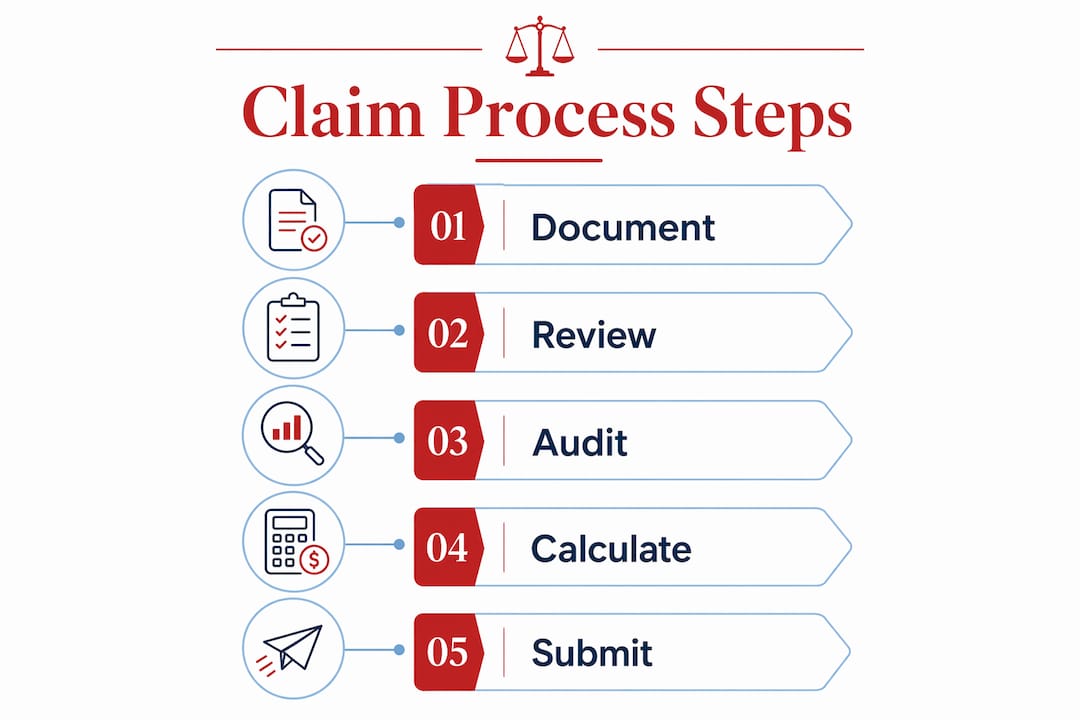
Why itemized bills are critical and how to request them
Summary bills group charges by department and give you a single total. They are nearly useless for injury claims. Summary bills are insufficient evidence for personal injury cases because they cannot verify what specific treatments were performed, when, or at what individual cost.
You have a legal right to request an itemized bill from any healthcare provider. The request process is straightforward:
- Contact the provider’s billing department in writing or by phone.
- Ask specifically for an “itemized statement” or “itemized bill,” not a summary.
- Request that the bill include CPT codes, dates of service, provider name, and individual charge amounts.
- Follow up in writing if the first request is not fulfilled within two weeks.
Medical bills with CPT codes, dates of service, and line-item prices create a credible paper trail that links each treatment directly to your accident. Insurance adjusters use the multiplier method to calculate settlement offers. They take your total documented economic damages and multiply by a factor based on injury severity. A higher, well-documented medical bill total raises that base number and increases the settlement offer.
Pro Tip: Request itemized bills from every provider, including labs, imaging centers, and ambulance services. These are separate billing entities and often get overlooked, leaving recoverable costs off your claim.
How to audit medical bills and dispute common errors
Approximately 80% of medical bills contain at least one error. That statistic means the odds favor finding a mistake on your bill, not the other way around. Errors range from minor data issues to charges for services never rendered.
The most common billing errors include:
- Duplicate charges: The same service billed twice, often from different departments.
- Upcoding: A provider bills for a more expensive procedure than what was actually performed.
- Unbundling: Separate charges for procedures that should be billed as a single package.
- Wrong patient information: Incorrect insurance ID or date of birth that causes claim misapplication.
- Charges for unrendered services: Items listed on the bill that you never received.
To audit your bills, compare each line item against your own treatment notes and the EOB from your insurer. If a charge appears on the bill but not in your records, flag it immediately. Contact the provider’s billing department first. Request a correction in writing and keep a copy of every communication. If the provider does not resolve the dispute, escalate to your insurer’s member services department.
Pro Tip: Keep a personal treatment log from day one. Write down every appointment, procedure, and medication. This log becomes your audit baseline when reviewing bills months later.
Insurance adjusters scrutinize medical records closely, and gaps or inconsistencies in your treatment history weaken your claim. Correcting billing errors before submitting your claim removes ammunition from the adjuster’s side.
How to calculate total recoverable medical expenses
Calculating your full recoverable medical costs goes well beyond adding up past bills. The complete figure includes past treatment costs, projected future care, and a category of expenses most claimants never think to include.
Past medical expenses are the simplest to document. Collect every itemized bill, payment receipt, and insurance statement from the date of the accident forward.
Future medical expenses require a different approach. Future care costs often outweigh immediate billing and require substantiation through medical expert opinions. A physician or life care planner can project the cost of ongoing treatment, surgeries, or long-term therapy. Without that professional projection, insurers will dispute or deny future cost claims entirely.
Ancillary expenses are legitimate and frequently overlooked. Hidden medical-related expenses such as transportation to appointments, over-the-counter supplies, home accessibility modifications, and caregiver wages are all valid components of a comprehensive claim.
| Expense Category | Examples | Documentation Needed |
|---|---|---|
| Past medical bills | ER, surgery, therapy, prescriptions | Itemized bills, receipts |
| Future medical care | Ongoing therapy, future surgeries | Medical expert projections |
| Transportation | Mileage, rideshare to appointments | Mileage log, receipts |
| Home modifications | Wheelchair ramps, grab bars | Contractor invoices |
| Caregiver wages | Home health aide, family caregiver costs | Pay records, written agreements |
Regional cost variations also affect claim value. Medical costs in Brevard County, Florida differ from national averages, and a local attorney familiar with those benchmarks can build a more defensible claim summary. Reviewing auto accident injury law in Florida gives you a clearer picture of how state-specific rules affect your recoverable costs.
What are the deadlines and insurer rules you must know?
Filing deadlines are fixed and unforgiving. In Florida, the personal injury statute of limitations is generally two years from the date of the accident. Miss that deadline and your claim is barred entirely. In jurisdictions like California, administrative claims against government entities carry a six-month deadline, far shorter than the standard two-year limit. The type of defendant and the jurisdiction both affect your timeline.
Insurers use the multiplier method to calculate settlement offers. They take your total documented economic damages, including all medical bills, and multiply by a factor tied to injury severity. A well-documented, high-value medical bill total raises the base number and produces a larger offer. This is why detailed documentation raises settlement value so consistently.
Key practices to protect your claim:
- Submit all medical records and bills in a single, organized package when possible.
- Never give a recorded statement to an adjuster before consulting an attorney. Recorded statements can be used to minimize your payout.
- Track every communication with insurers in writing.
- Know that settlement proceeds do not automatically clear medical bills. Medicare, Medicaid, and private insurers hold subrogation rights and may require reimbursement from your settlement.
Pro Tip: Consult a personal injury attorney before you respond to any insurer request. Even a single offhand comment in a recorded call can be used to dispute the severity of your injuries.
Avoiding common personal injury mistakes at this stage protects the full value of your claim.
Key Takeaways
Thorough, itemized medical documentation is the single most powerful tool for maximizing compensation in a personal injury claim.
| Point | Details |
|---|---|
| Itemized bills over summaries | Request line-by-line bills with CPT codes to create a verifiable paper trail for your claim. |
| Audit every bill | Around 80% of medical bills contain errors; compare each charge against your EOB and personal records. |
| Include all expense types | Past bills, future care projections, transportation, and caregiver costs are all recoverable. |
| Know your deadlines | Florida’s statute of limitations is generally two years; missing it ends your claim entirely. |
| Avoid recorded statements | Never speak to an adjuster on record before consulting an attorney, as statements can reduce your payout. |
What I’ve learned about medical bills and injury claims after years in practice
After years of handling personal injury cases in Brevard County, the pattern I see most often is not fraud or bad faith. It is claimants who simply did not know what to keep. They toss the EOB thinking it is junk mail. They pay a summary bill without requesting the itemized version. They forget to log the Uber rides to physical therapy. By the time they come to me, weeks or months of recoverable costs have vanished.
The 80% error rate on medical bills is not a statistic I cite to alarm people. I cite it because it is the most practical reason to slow down and read every line. I have seen cases where a single duplicate charge, left unchallenged, created a discrepancy that an adjuster used to question the entire bill. One error becomes a credibility problem if you are not careful.
What actually moves settlements is organized, consistent documentation. Clients who bring me a binder with every itemized bill, every EOB, a mileage log, and a personal treatment diary give me real tools to work with. Clients who bring a folder of summary statements and a vague recollection of their treatment give me a much harder case to build.
My strongest advice is to start your records the day of the accident. Do not wait until you retain an attorney. Do not wait until the insurer contacts you. The medical documentation mistakes that hurt claims most are the ones made in the first two weeks, before anyone thinks the case will be complicated. Treat every receipt, every appointment note, and every bill as evidence from day one.
— John
Jmoorelegal’s personal injury team can help you manage your claim
Personal injury claims involving medical bills require precise documentation, firm deadlines, and skilled negotiation. Jmoorelegal has served Brevard County clients for over 85 years, providing direct attorney access and tailored legal strategies for every case.

The team at Jmoorelegal reviews your medical bills, identifies recoverable costs, audits for errors, and builds the documentation package that supports the strongest possible settlement. From the first itemized bill to final negotiations, you get experienced guidance at every step. Schedule a free initial consultation through the personal injury practice page and find out exactly what your medical expenses are worth.
FAQ
What is the difference between a medical bill and an EOB?
A medical bill is the provider’s direct charge to you for services rendered. An Explanation of Benefits is a summary from your insurer showing how it processed the claim, not a payment demand.
Can I claim medical expenses I paid out of pocket?
Yes. Out-of-pocket medical expenses are fully recoverable in a personal injury claim. Keep every receipt, payment confirmation, and itemized bill as proof.
How do future medical costs get included in an injury claim?
Future medical costs require a written projection from a qualified medical expert or life care planner. Without that professional opinion, insurers will dispute the amount.
What happens to my medical bills after a settlement?
Settlement proceeds do not automatically clear your medical bills. Medicare, Medicaid, and private insurers hold subrogation rights and can require reimbursement from your settlement funds.
When should I hire a personal injury attorney for my medical bills?
Consult an attorney before giving any recorded statement to an insurer. Early legal guidance protects your documentation, preserves your claim value, and prevents costly mistakes.
Recommended
- Common Personal Injury Case Mistakes to Avoid – The Law Office of John Vernon Moore, P.A.
- What Is a Personal Injury Claim? Your Complete Guide – The Law Office of John Vernon Moore, P.A.
- The Role of Surveillance in Injury Claims Explained – The Law Office of John Vernon Moore, P.A.
- If You Have An Accident In A Public Place, How Do You Claim Compensation? – The Law Office of John Vernon Moore, P.A.