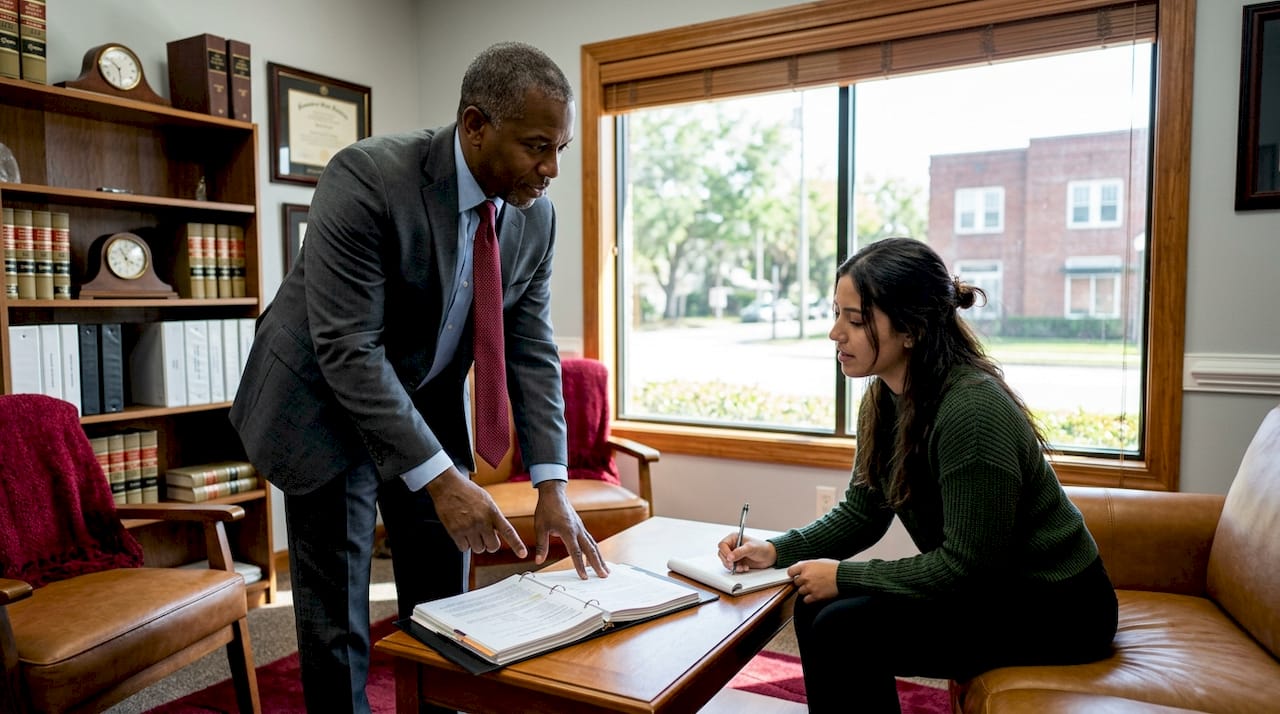
Hiring a personal injury attorney is the single most effective step you can take after suffering an injury caused by someone else’s negligence. The benefits of hiring an injury attorney are concrete and measurable. Represented claimants receive compensation 91% of the time, compared to just 51% for those without legal help. Attorneys bring case valuation expertise, negotiation leverage, and procedural knowledge that unrepresented claimants simply cannot replicate. Most personal injury attorneys work on contingency, meaning you pay nothing upfront and only owe a fee if you win.
1. Benefits of hiring an injury attorney: higher settlements
The most documented advantage of legal representation is the size of your payout. Settlements with attorneys run 3 to 4.4 times higher than those without. That gap is not a coincidence. It reflects the difference between a claimant guessing at their claim’s worth and an attorney calculating it with precision.
Attorneys account for damages that injured people routinely overlook. Future medical expenses and lost earning capacity are two of the most commonly missed categories. A back injury that requires surgery today may require physical therapy for years. An attorney builds that full picture into your demand.

| Scenario | Average outcome |
|---|---|
| No attorney, minor claim | Low single-figure settlement, often near initial offer |
| No attorney, complex claim | Significant undervaluation, high denial risk |
| Attorney, pre-litigation | Settlement 3–4x higher than unrepresented baseline |
| Attorney, litigation-ready | Maximum leverage, highest settlement range |
Pro Tip: Ask any attorney you consult whether they have taken cases to verdict. Attorneys who actually go to trial get better pre-trial offers because insurers know the threat is real.
Even after paying contingency fees, net recovery is substantially larger with legal representation. The fee does not cancel out the gain. It comes out of a much bigger number.
2. Accurate case valuation from day one
Most injured people have no reliable way to calculate what their claim is actually worth. They see their current medical bills and stop there. Attorneys do not stop there.
Attorneys calculate long-term damages including future surgeries, ongoing therapy, reduced earning capacity, and pain and suffering. These categories often exceed the immediate medical costs by a wide margin. Accepting a settlement before you understand the full scope of your injury locks you out of future recovery permanently.
An attorney also knows how local courts and juries value specific injury types. That local knowledge shapes the demand letter and the negotiation floor. Without it, you are negotiating blind.
3. Navigating deadlines and legal procedures
Missing a filing deadline ends your claim. There is no appeal, no second chance, and no sympathy from the court. Many states enforce a strict 2-year statute of limitations for personal injury lawsuits, and some exceptions actually shorten that window further.
Attorneys track every deadline from the moment they take your case. They also handle the procedural requirements that trip up self-represented claimants, including:
- Filing the correct notices with the right courts and agencies
- Serving defendants within required timeframes
- Responding to insurer requests without waiving rights
- Meeting discovery deadlines if litigation begins
- Complying with pre-suit requirements in states like Florida
These steps are not optional. Missing any one of them can reduce your claim’s value or eliminate it entirely. Understanding common personal injury case mistakes before you make them is one of the clearest reasons to get legal help early.
4. Preserving evidence before it disappears
Evidence has a short shelf life. Surveillance footage gets overwritten. Witnesses move or forget details. Skid marks fade. Early attorney involvement preserves this crucial evidence before it is gone permanently.
An attorney sends preservation letters to businesses and government agencies immediately after being retained. Those letters create a legal obligation to retain footage, records, and documents. Without that letter, a gas station has no reason to keep the camera footage from your accident date.
Waiting weeks or months to hire an attorney is one of the most costly decisions an injured person can make. The case you could have built on day one may be impossible to build on day sixty.
5. Handling all insurance communication
Insurance adjusters are trained negotiators working for the insurer, not for you. Their job is to close your claim for as little as possible. Attorneys handle insurer communication to prevent the missteps that reduce claim value.
A single phone call with an adjuster can damage your case. Statements like “I’m feeling better” or “I didn’t see it coming” get recorded and used against you. Attorneys eliminate that risk by taking over all written and verbal communication from the start.
The benefits of this protection include:
- No recorded statements without attorney review
- No premature settlement offers accepted under pressure
- No gaps in documentation that insurers exploit
- Strategic responses that frame your claim favorably
- A complete, evidence-backed case file that demands insurer accountability
Pro Tip: Never give a recorded statement to the opposing insurer without your attorney present. You are not legally required to do so, and it almost never helps your claim.
6. Trial readiness as negotiation leverage
Insurance adjusters make fairer offers when they know your attorney is prepared to take the case to trial. This is one of the least discussed but most powerful advantages of legal representation.
Insurers calculate settlement offers based on risk. An attorney with a trial record raises that risk significantly. An unrepresented claimant raises no risk at all. The insurer knows you will eventually accept whatever they offer because you have no alternative.
Negotiated settlements average roughly four times the initial offer made by insurers. That multiplier reflects what happens when an attorney applies consistent, informed pressure throughout the negotiation process.
7. Understanding what a personal injury attorney actually does
A personal injury attorney, formally called a plaintiff’s tort attorney, manages every aspect of your claim from intake to resolution. Many injured people do not fully understand the scope of that work until they see it in action.
The attorney investigates the accident, gathers medical records, retains expert witnesses, drafts demand letters, negotiates with insurers, and files suit if necessary. You focus on recovering. They focus on building your case. Learning what a personal injury claim involves gives you a clearer picture of why each step requires legal expertise.
The attorney also manages medical liens, coordinates with your healthcare providers, and handles subrogation claims from health insurers. These are complex financial issues that directly affect your net recovery.
8. No upfront cost with contingency fee representation
Personal injury attorneys work on contingency fees of approximately 33% pre-litigation and up to 40% if the case goes to trial. You pay nothing to start. The fee comes from the settlement or verdict, not from your pocket.
This structure removes the financial barrier that stops many injured people from seeking help. You do not need savings or credit to hire a qualified attorney. The attorney’s financial interest aligns directly with yours. They earn more when you earn more.
Initial consultations are also free. Most last 30–60 minutes and give you a clear picture of your claim’s strength before you commit to anything.
9. When attorney involvement matters most
Not every injury claim requires the same level of legal involvement. The value of an attorney scales directly with the complexity and severity of your case.
Self-representation may work for minor claims under $3,000 in medical bills with clear, undisputed liability. Once you cross into surgery, disputed fault, long-term impairment, or multiple parties, attorney involvement becomes critical.
| Claim type | Attorney need |
|---|---|
| Minor fender-bender, no injury | Low |
| Soft tissue injury, clear fault | Moderate |
| Surgery required, disputed fault | High |
| Permanent impairment or disability | Essential |
| Multiple defendants or parties | Essential |
Complex claims with surgery or disputed fault benefit most from legal expertise. The gap between what you recover with and without an attorney widens as the claim grows more complicated.
Key takeaways
Hiring a personal injury attorney is the most reliable way to maximize your compensation, protect your rights, and avoid the procedural mistakes that end claims prematurely.
| Point | Details |
|---|---|
| Higher settlements | Represented claimants recover 3 to 4.4 times more than unrepresented individuals. |
| No upfront cost | Contingency fees mean you pay nothing unless you win your case. |
| Evidence preservation | Early attorney involvement secures footage and witness accounts before they disappear. |
| Deadline protection | Attorneys track statutes of limitations and filing requirements that bar claims if missed. |
| Negotiation leverage | Trial-ready attorneys pressure insurers into fairer offers throughout the process. |
What I’ve learned after years of injury cases
After handling personal injury cases in Brevard County for years, one pattern stands out clearly. The clients who wait the longest to call are almost always the ones who lost the most evidence, accepted the lowest offers, or missed a deadline they did not know existed.
People often assume their case is straightforward. They think the other driver was clearly at fault, the insurer will be reasonable, and they can handle the paperwork themselves. That assumption costs them. Insurers are not reasonable with unrepresented claimants. They are efficient. There is a difference.
The other thing I see consistently is how much injured people underestimate their own damages. They think about today’s hospital bill. They do not think about the follow-up surgeries, the lost promotions, the years of physical therapy, or the pain that changes how they live. Attorneys think about all of it. That is the job.
If your injury was caused by someone else, get a legal opinion before you talk to any insurer. Even if you ultimately handle the claim yourself, you will make better decisions with accurate information. A free consultation costs you nothing and could change everything about your outcome. The right information about your claim is the foundation of every strong case.
— John
Jmoorelegal is ready to fight for your recovery
If you suffered an injury in Brevard County, Florida, Jmoorelegal offers the direct attorney access and trial-ready representation that gets results. The Law Office of John Vernon Moore, P.A. handles personal injury claims on a contingency basis, meaning you pay no fees unless your case resolves in your favor.

John Vernon Moore brings decades of experience calculating full damages, preserving evidence, and negotiating with insurers who know he is prepared to go to trial. Free initial consultations are available to evaluate your claim and explain your options with no pressure and no obligation. Call today to protect your rights before evidence disappears or deadlines pass.
FAQ
Do I get more money if I hire a personal injury attorney?
Yes. Represented claimants receive compensation 91% of the time and recover settlements 3 to 4.4 times higher than unrepresented individuals on average.
How much does a personal injury attorney cost?
Most personal injury attorneys charge a contingency fee of approximately 33% pre-litigation and up to 40% if the case goes to trial, with no upfront payment required.
What happens if I miss the filing deadline for my injury claim?
Missing the statute of limitations, which is 2 years in many states, permanently bars your claim. An attorney tracks all deadlines to prevent this outcome.
Should I hire an attorney for a minor injury claim?
Self-representation may be reasonable for claims under $3,000 in medical bills with undisputed liability. Any claim involving surgery, disputed fault, or long-term impairment requires an attorney.
Can an attorney help even if the insurer already made an offer?
Yes. Accepting an initial offer without negotiation typically results in a much lower payout. Attorneys negotiate multiple rounds and routinely achieve settlements far above the opening offer.
Recommended
- Common Personal Injury Case Mistakes to Avoid – The Law Office of John Vernon Moore, P.A.
- Important Things Your Personal Injury Lawyer Needs To Know About Your Claim – The Law Office of John Vernon Moore, P.A.
- Personal Injury – The Law Office of John Vernon Moore, P.A.
- What Is a Personal Injury Claim? Your Complete Guide – The Law Office of John Vernon Moore, P.A.